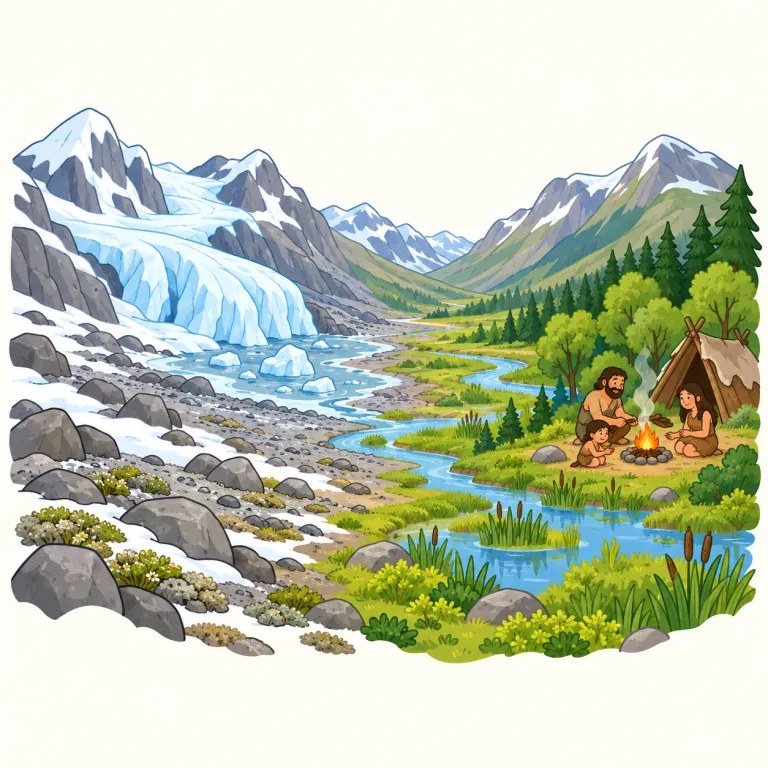
完新世
解説 Definition
holocene は地質時代の区分である完新世を指す固有名詞です。最後の氷期の後に始まった現在の地質時代を表し、学術的な文脈では通常 Holocene と大文字で書かれます。
The present geological epoch, beginning approximately 11,700 years ago after the last major glacial period. It includes the development of agriculture and human civilizations and is studied through sediments, fossils, climate records, and changes in sea level.
覚え方のコツ Memory Tip
通常は固有名詞として Holocene と大文字で書く。ギリシャ語系の holo-「全体の」と -cene「新しい時代」を組み合わせた名称で、「全体として新しい時代」と捉える。最後の氷期後に始まり、人類の農耕や文明の発達を含む現在の地質時代を、Holocene sediments、Holocene climate の組み合わせで覚える。
Write Holocene with a capital H when naming the geological epoch. Break it into holo-, “whole or entire,” and -cene, from a Greek word meaning “new or recent.” Think of it as the “wholly recent” epoch that began after the last major glacial period, about 11,700 years ago, and continues today. Anchor the term in combinations such as “Holocene sediments,” “Holocene climate,” and “the early Holocene.” Compare it with Pleistocene, the preceding epoch associated with repeated glaciations; that contrast fixes the Holocene’s place in geological time.
例文
The holocene began after the last major ice age.
完新世は最後の大きな氷期のあとに始まりました。
Scientists study holocene sediments to learn about past climates.
科学者たちは過去の気候を知るために完新世の堆積物を研究します。
The museum exhibit showed how sea levels changed during the holocene.
博物館の展示では、完新世に海面がどのように変化したかが示されていました。
holocene の類義語・関連語
紛らわしい語
holocene の語源・成り立ち Etymology
Holoceneはフランス語Holocèneから入り、ギリシャ語holo-「全体の」とkainos「新しい」を材料にした語です。「全体として新しい時代」という発想が完新世の名にそのまま出ており、holisticやPleistoceneを見ると部品がつながります。
Holocene entered English through French Holocène and was constructed from Greek elements: holos, meaning “whole” or “entire,” and kainos, meaning “new” or “recent.” The ending -cene appears in the names of several geological epochs, including Pleistocene and Miocene. Holocene was intended to convey the idea of an epoch that is entirely recent. In formal geological usage, it is treated as a proper name and normally capitalized.
同じレベルの語彙をもっと
外部辞書で調べる
この英単語をクイズで覚えよう