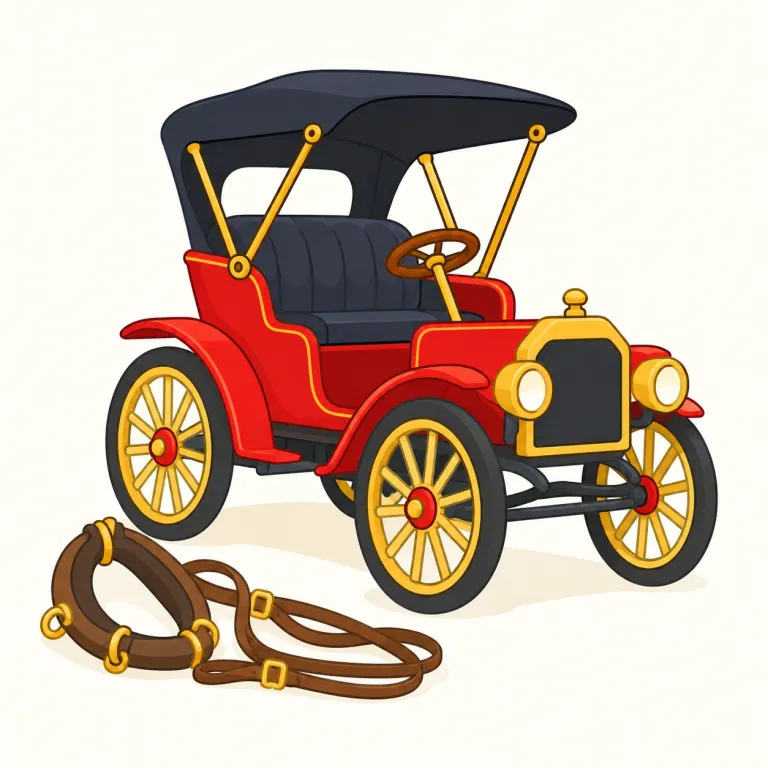
馬のいない
解説 Definition
馬がいない、または馬を使わない。初期の自動車などを指す形容詞。
Horseless means without horses. It is often used in historical contexts, especially when describing early vehicles or travel that no longer depended on horses.
覚え方のコツ Memory Tip
horse が分かればかなり覚えやすい語です。ポイントは接尾辞 -less で、「〜がない」を作る形。careless, helpless, childless などと同じ型なので、horseless =「horse がない」。実際には単に馬が見当たらないというより、馬を動力に使わないという含みで、歴史的には horseless carriage「馬なし馬車」= 初期の自動車でよく出ます。意味を直訳で取り、そこから「馬車の時代に馬なしで動くもの」という場面ごと覚えると定着しやすいです。
This word is very transparent: `horse + -less`. If you know words like `careless` or `helpless`, then `horseless` clearly means “without a horse.” A strong memory image is `horseless carriage`, the old way to describe an early car. Think of a vehicle from the horse-and-carriage age that moves without a horse.
例文
The horseless carriage was revolutionary.
初期の自動車であるホースレス・キャリッジは革命的であった。
Early horseless vehicles were often unreliable.
初期の馬を使わない車両は信頼性に欠けることが多かった。
Horseless carriages transformed society.
ホースレス・キャリッジは社会を変えた。
horseless の類義語・関連語
派生語
horseless の語源・成り立ち Etymology
horselessは古英語hors「馬」+ -less「…のない」から成る、意味が透けて見える語。horsemanやhorsepowerも同根で、直訳は「馬を欠く」。馬車時代には「動力源の馬がいない」新しさが、そのまま語の核心になった。
Horseless is a transparent compound from Old English hors and the suffix -less, meaning "without." It literally meant "without a horse." The word became important when new vehicles appeared and people described them by the surprising fact that they had no horse pulling them.
同じレベルの語彙をもっと
外部辞書で調べる
この英単語をクイズで覚えよう