(猿などが)甲高い声で鳴く
verb 動詞猿などの動物が、甲高く細かな声を素早く続けて発することを表します。人が恐怖や混乱から意味不明なことをしゃべる用法とは異なり、動物の連続的で騒がしい鳴き声を描写する際に使われます。
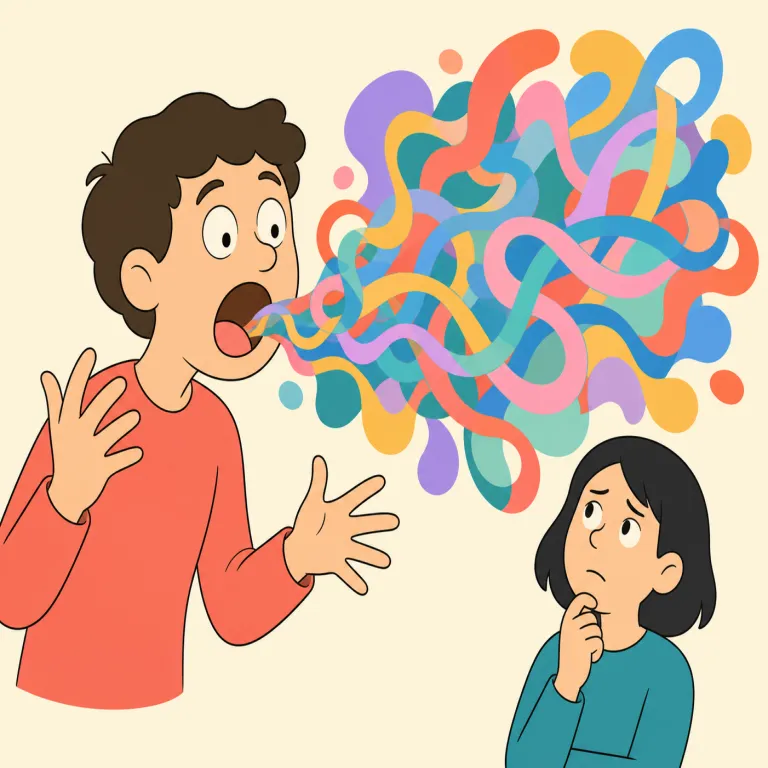
gibber の現在分詞形で、恐怖や興奮、混乱のために早口で意味不明なことを口走ることを表す。言葉が途切れたり内容が支離滅裂だったりして、聞き手にほとんど理解されないような話し方を描写するときに使われる。
Gibbering means speaking quickly and unclearly in a confused or emotional way. It often suggests fear, panic, madness, or extreme excitement, and it has a strong negative tone.
まず名詞の gibberish「わけの分からない話」を知っていると覚えやすいです。gibber はその動詞で、「意味不明なことを早口で口走る」、gibbering はその最中の姿。落ち着いて長く話す感じではなく、恐怖・興奮・混乱で言葉が崩れ、相手にほぼ通じない場面を思い浮かべると定着します。babbling よりも不気味さや切迫感が出やすく、a gibbering fool / gibbering in fear のような言い方で覚えると使い分けしやすいです。
Use `gibberish` as your anchor word. If `gibberish` is meaningless talk, then `gibbering` is the act of producing that kind of speech, often in fear or confusion. It usually sounds more tense and disturbing than softer words like `babbling`.
The terrified witness was gibbering so fast that no one could understand him.
おびえた目撃者はあまりに早口で支離滅裂にしゃべっていたので、誰にも理解できなかった。
After the shock, he sat in the corner gibbering to himself.
衝撃の後、彼は隅に座り込んで独り言のように意味不明なことをしゃべっていた。
She came out of the haunted house gibbering about ghosts.
彼女はお化け屋敷から出てくると、幽霊のことを支離滅裂にまくしたてていた。
文脈によって、次の意味でも使われます。
猿などの動物が、甲高く細かな声を素早く続けて発することを表します。人が恐怖や混乱から意味不明なことをしゃべる用法とは異なり、動物の連続的で騒がしい鳴き声を描写する際に使われます。
動詞gibberは16世紀の擬音語で、意味不明な早口を模倣した語。gibberishも同根。一説にはアラビアの錬金術師Jābir(ゲベル)の難解な著作に由来するとも。関連語:gibberish(ちんぷんかんぷん)、jabber(早口でまくしたてる)。
Gibbering comes from gibber, a verb that appeared in the 16th century as an imitative sound word for rapid, unclear speech. It is closely related to gibberish, and also resembles words like jabber. The main idea has always been speech that sounds meaningless or hard to understand. There is also an old theory linking it to the name of the scholar Jābir, but that is less certain.
この英単語をクイズで覚えよう