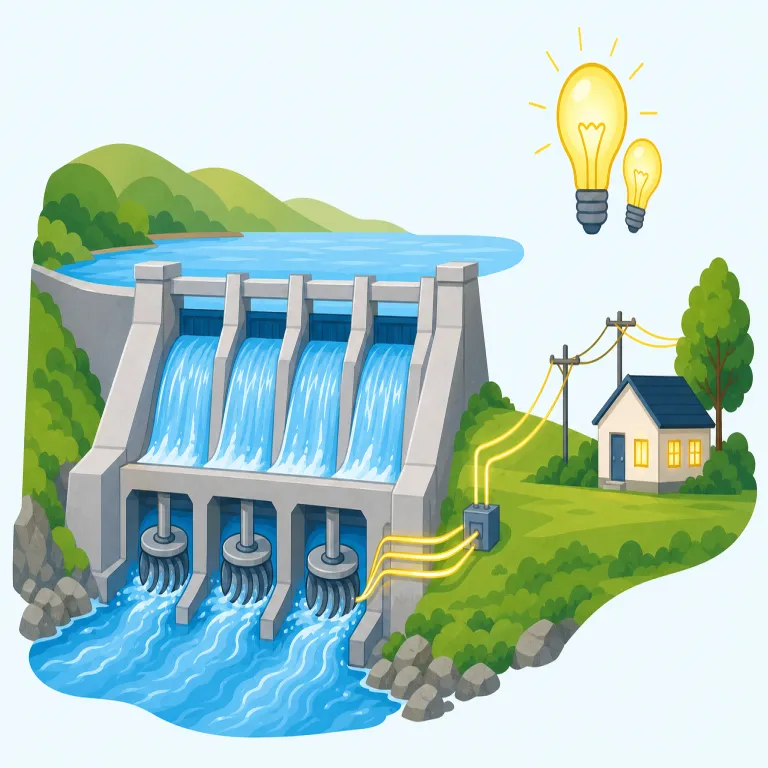
hydroelectricity
水力発電
解説 Definition
水力発電;水の流れで生成される電力。
Hydroelectricity is electricity produced from the power of moving water, usually at a dam or in a river. It is commonly discussed in energy, environment, and engineering contexts. It is considered a form of renewable energy.
覚え方のコツ Memory Tip
hydro + electric + -ity に分けると覚えやすい。hydraulic や hydrate で見る hydro は「水」、electric はそのまま「電気」、-ity は名詞化。つまり「水でつくる電気」。electricity が電気一般なのに対し、hydroelectricity は発電方法まで含んで「水力発電」を指す。hydroelectric power、a hydroelectric dam、hydroelectric plant の形でよく出るので、ダムや発電所の場面とセットで覚えると定着しやすい。
Split it into `hydro` + `electric` + `-ity`. `Hydro` means water, so the whole word becomes electricity made from water. It sticks better if you connect it with common phrases like `hydroelectric dam` or `hydroelectric power`.
例文
Hydroelectricity is a renewable energy source.
水力発電は再生可能エネルギー源である。
Dams produce hydroelectricity efficiently.
ダムは水力発電による電力を効率よく生み出す。
Many countries rely on hydroelectricity.
多くの国は水力発電に依存する。
hydroelectricity の類義語・関連語
紛らわしい語
hydroelectricity の語源・成り立ち Etymology
hydroelectricity は Greek hydor「水」の hydro- と Greek elektron 由来の electric、-ity から成る語です。hydrate や hydraulic も同じ hydor を含み、「水で電気を起こす」という発想が語形に見えます。
Hydroelectricity is made from hydro-, from Greek hydor meaning "water," and electricity, from Greek elektron, originally "amber." Related words like hydrate and hydraulic share the same water root. The form shows the idea of producing electric power from water.
同じレベルの語彙をもっと
外部辞書で調べる
この英単語をクイズで覚えよう