印象主義
noun 名詞音楽や文学で、明確な輪郭や直接的な叙述よりも、感覚的な雰囲気や一瞬の印象を表そうとする傾向を指す。美術の印象派から広がった用法で、特にドビュッシーなどの音楽を論じる際に使われる。
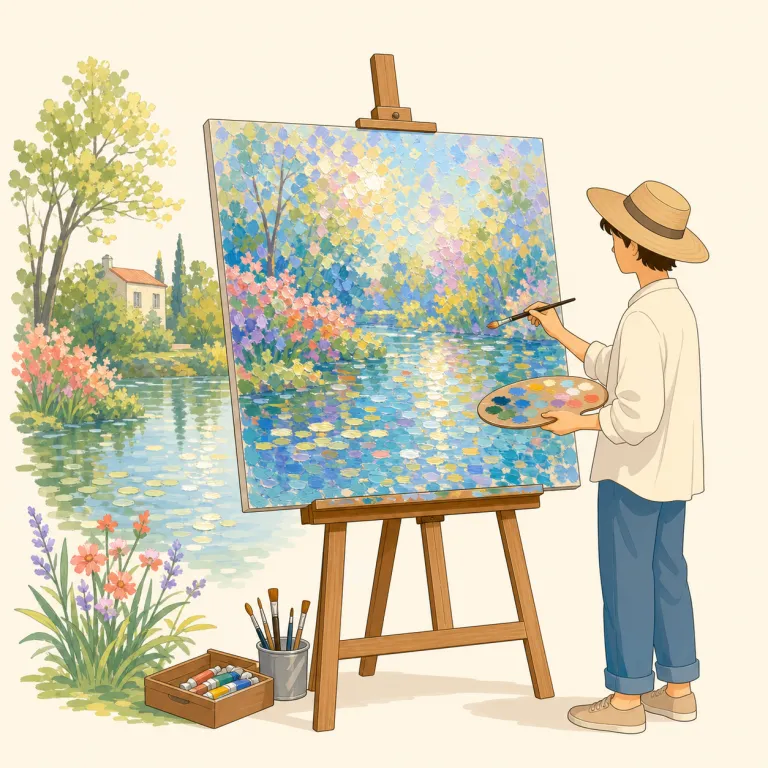
19世紀フランスで始まった美術運動です。光と色の表現に重点を置き、対象物の印象を描く芸術様式です。
Impressionism is a style of art, especially painting, that tries to show the general feeling or visual effect of a moment rather than small exact details. It is known for light, color, and quick-looking brushwork. The word is mainly used in discussions of art history and culture.
impression + -ism で捉えると覚えやすいです。まず impression は「印象」。そこに「主義・流派」を表す -ism が付いて、「印象を大事にする流派」だと考えると意味が自然に取れます。細部をきっちり再現するより、光・色・その瞬間に受けた感じを描く語。art history では impressionist, impressionist painting も一緒に覚えると定着しやすいです。expressionism と混同しやすいので注意。impressionism は外から受ける印象、expressionism は内面の表現寄りです。
Break it into `impression` and `-ism`. `Impression` is the feeling or effect something gives you, and `-ism` often means a style or movement. So `impressionism` is easy to remember as an art movement focused on impression rather than exact detail. Learn it together with `impressionist` and contrast it with `expressionism`, which is more about inner expression.
Impressionism revolutionized the art world in the late 19th century.
印象派は19世紀後半の美術界に革命をもたらしました。
Monet was one of the most famous impressionist painters.
モネは印象派の最も有名な画家の一人でした。
Impressionism emphasized light and color.
印象派は光と色を強調しました。
文脈によって、次の意味でも使われます。
音楽や文学で、明確な輪郭や直接的な叙述よりも、感覚的な雰囲気や一瞬の印象を表そうとする傾向を指す。美術の印象派から広がった用法で、特にドビュッシーなどの音楽を論じる際に使われる。
impressionismはimpression「印象」+ -ism「主義」からできた語です。impressionはラテン語imprimereに由来し、in-「中へ」+ premere「押す」で「心に押しつけられた像」が原感覚なので、細部より第一印象を重んじる芸術運動の名になりました。関連語はimpress、impressionist。
Impressionism was formed from impression + -ism. Impression comes from Latin imprimere, meaning "to press into," from in- + premere "to press," and it is related to impress. The name reflects an art movement that valued the immediate visual impression rather than exact detail.
この英単語をクイズで覚えよう