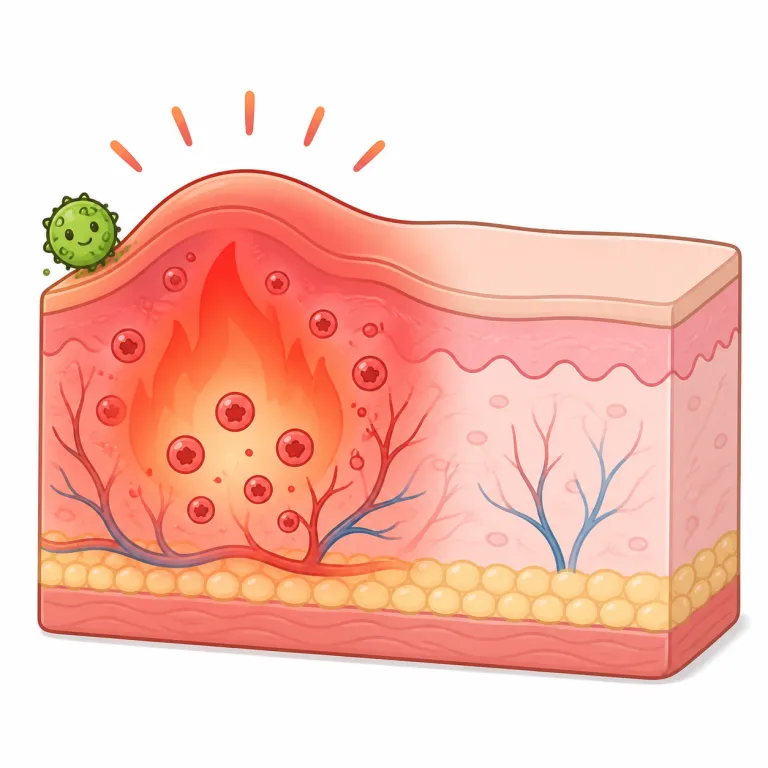
あおる、激化させる
verb 動詞怒りや憎しみなどの強い感情をかき立てたり、対立や緊張をさらに激しくしたりすることを表す。感情、世論、争いなどを目的語に取り、身体に炎症を生じさせる既存語義とは異なる比喩的用法である。
炎症を起こすは炎症反応を誘発することを意味します。組織に刺激や損傷を与えて、赤さ、腫脹、痛みを引き起こすことを指します。
Inflaming means making something stronger, more intense, or more disturbed. It can describe causing anger or conflict to grow, and it can also describe causing physical irritation or inflammation in the body. The word often suggests making an already bad situation worse.
flame(炎)と inflammation(炎症)を知っていると結びつけやすい語。inflaming は「炎みたいに熱を帯びさせ、赤く腫れさせる」とイメージすると残る。医学文脈では skin / tissue / chemical などが患部を刺激して炎症反応を起こす場面でよく出る。inflating とつづりが少し似るが、こちらは「ふくらませる」で別語。inflamed skin, substances inflaming the tissue のような形で覚えると、単なる heat ではなく「炎症を起こす」に固定しやすい。
See the word `flame` inside it. `Inflaming` suggests making something hot, red, and irritated like a flame, which helps connect it to `inflammation`. Be careful not to confuse it with `inflating`, which is about filling with air.
Certain foods can inflame the digestive system in sensitive individuals.
特定の食品は、影響を受けやすい人の消化器系に炎症を起こすことがあります。
The injury was inflaming the surrounding tissues.
けがは周囲の組織に炎症を起こしていました。
Environmental allergens can inflame respiratory passages.
環境中のアレルゲンは気道に炎症を起こすことがあります。
文脈によって、次の意味でも使われます。
怒りや憎しみなどの強い感情をかき立てたり、対立や緊張をさらに激しくしたりすることを表す。感情、世論、争いなどを目的語に取り、身体に炎症を生じさせる既存語義とは異なる比喩的用法である。
inflaming は in-「中へ」+ flame「炎」で、ラテン語 inflammare「火をつける」が直接の語源。flame や inflammation と同根で、文字どおり『火を入れる』感覚から、体を熱く腫らすことにも感情をあおることにも広がった。
Inflaming comes from inflame, from Latin inflammare, literally "to set on fire," from in- and flamma "flame." It is related to flame and inflammation. The meaning first had a literal sense of burning, then widened to swelling in the body and stirring up strong feelings.
この英単語をクイズで覚えよう