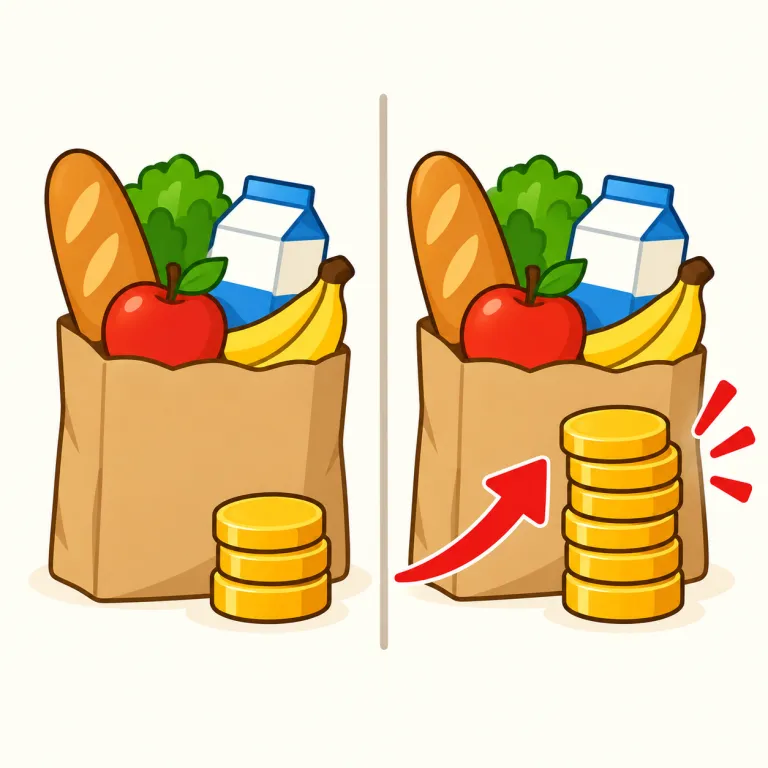
インフレ
解説 Definition
inflation は物価が全体的に上がり、お金の価値が下がる「インフレ」という意味です。日本語のカタカナ語とほぼ同じですが、英語では経済以外にも数値や量の膨張を指すことがあります。
Inflation is a general rise in the prices of goods and services over time, which reduces what a unit of money can buy. The word can also describe an excessive increase in a number, amount, or stated value outside economics.
覚え方のコツ Memory Tip
inflate「膨らませる」+名詞語尾 -ion と捉え、風船が膨らむ像を物価水準の上昇につなげる。経済では一商品の値上がりではなく、物価が全体として継続的に上がり、お金の購買力が下がる現象を指す。high inflation、control inflation、inflation rate という組み合わせで覚え、反対語 deflation と対にする。
Connect inflation with the verb inflate, “to fill with air or make larger.” Picture prices expanding like a balloon while the purchasing power of each unit of money becomes smaller. In economics, inflation is not merely one product becoming expensive; it is a broad rise in the overall price level. Learn common combinations such as high inflation, rising inflation, the inflation rate, control inflation, and reduce inflation. Pair it with deflation, a general decline in prices. Outside economics, inflation can also mean an excessive expansion, as in grade inflation or title inflation.
例文
Inflation made food more expensive.
インフレで食料品が高くなりました。
The government is trying to control inflation.
政府はインフレを抑えようとしています。
High inflation can make it harder for families to save money.
高いインフレは、家庭がお金を貯めるのを難しくすることがあります。
inflation の類義語・関連語
inflation の語源・成り立ち Etymology
ラテン語inflare(中に吹き込む)が語源で、in-(中へ)+flare(吹く)に分解できる。風船を膨らませるように通貨量が膨張し価値が下がる現象を指す。関連語: deflation(デフレ)、inflate(膨らませる)。
Inflation derives from Latin inflatio, “a blowing up or swelling,” based on inflare, “to blow into or inflate.” Inflare combines in-, “into,” with flare, “to blow.” English first used the noun for physical swelling or expansion. Its economic use developed from the idea of an expanded quantity of currency and later came to denote a broad rise in prices. The same word-forming family includes inflate, inflated, and deflation.
同じレベルの語彙をもっと
外部辞書で調べる
この英単語をクイズで覚えよう