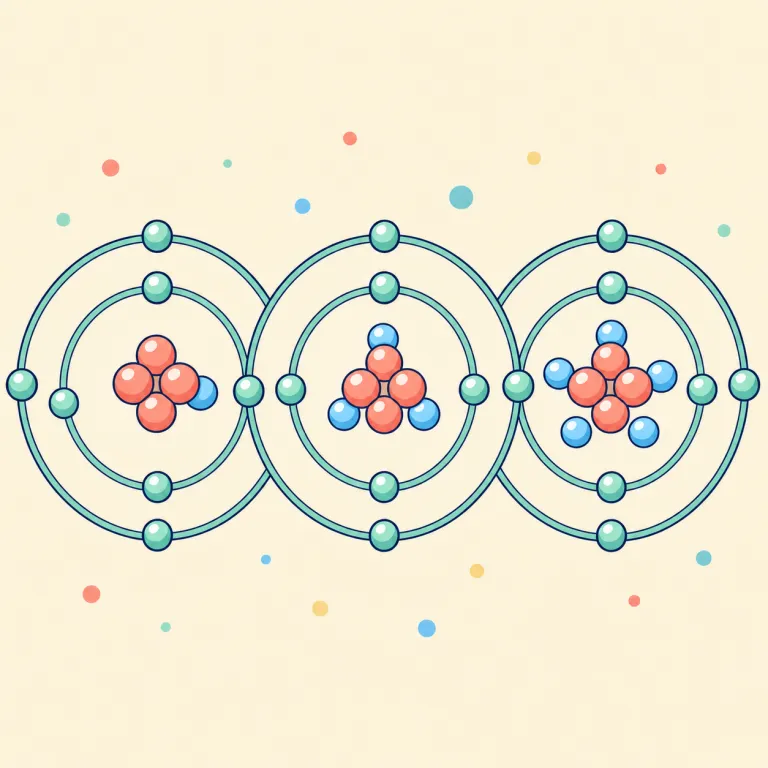
同位体の
解説 Definition
原子番号は同じですが、中性子数が異なり、質量数が異なる原子・核種に関する形容詞です。化学的性質はほぼ同じでも、原子核の性質や放射性の有無が異なる場合があります。科学用語として使用されます。
Isotopic means related to isotopes, which are forms of the same chemical element with different numbers of neutrons. This word is mainly used in chemistry, physics, and other scientific contexts.
覚え方のコツ Memory Tip
まず isotope を軸に覚える。iso- は isometric / isotonic などでも出る「同じ」、-ic は形容詞語尾なので、isotopic =「同位体に関する」。化学では「元素としては同じ仲間だが、中性子数が違って重さが違う版」を述べるときに使う。isotopic analysis, isotopic composition, isotopic labeling の形で見かけやすい。radioactive と違い「放射性そのもの」ではなく、同位体という分類・性質に焦点がある語だと整理すると残りやすい。
Remember the base word isotope first. The prefix iso- often means same, and -ic makes an adjective, so isotopic means related to isotopes. You will often meet it in scientific phrases like isotopic analysis or isotopic composition.
例文
Scientists used isotopic analysis to date the archaeological sample.
科学者たちは同位体分析を用いて考古試料の年代を測定した。
Carbon-12 and carbon-14 are isotopic forms of the same element.
炭素12と炭素14は同じ元素の同位体である。
Isotopic labeling is a powerful technique in biochemistry research.
同位体標識は、生化学研究における有力な手法である。
isotopic の類義語・関連語
isotopic の語源・成り立ち Etymology
isotopic はギリシャ語 isos「等しい」+ topos「場所」に由来します。元素が周期表で「同じ場所」を占めることから isotope「同位体」が生まれ、その形容詞が isotopic です。isometric や topology もそれぞれ同じ語根を含みます。
Isotopic comes from isotope, formed from Greek isos, meaning "equal," and topos, meaning "place." The term was created because isotopes of an element were understood to occupy the same place in the periodic table. Isotopic is the adjective form, and related roots appear in words like isometric and topology.
同じレベルの語彙をもっと
外部辞書で調べる
この英単語をクイズで覚えよう