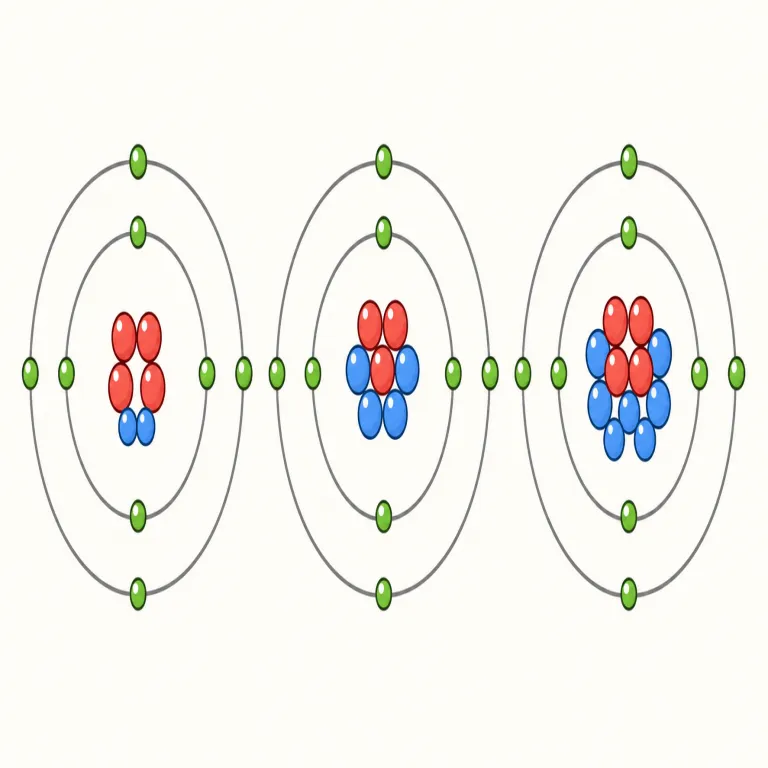
isotope
isotope は英検1級・TOEFL 100・IELTS 7.5レベルの英単語で、「同位体」という意味があります。発音記号は /ˈaɪsətoʊp/ です。
同位体
解説 Definition
同じ元素に属しながらも、原子核内の中性子の数が異なるため、質量数が異なる原子の変種を指します。化学的性質はほぼ同じですが、放射性を持つものもあります。
An isotope is a form of the same chemical element that has a different number of neutrons. Isotopes have the same basic chemical identity but different mass. The word is mainly used in science, especially chemistry and physics.
覚え方のコツ Memory Tip
isotope は chemistry で「同じ元素の別バージョン」とまとめて覚えると定着しやすい語です。日本語の同位体を丸暗記するより、「元素は同じ、でも重さが違う」という1本のイメージを持つのが近道。carbon isotope, radioactive isotope, stable isotope などの形でよく出ます。特に ion と混同しやすいですが、ion は電荷の違い、isotope は中性子数の違い。元素名+数字(carbon-14 など)を見たら isotope を連想すると結びつきます。
Remember `isotope` as a different version of the same element. A useful hook is `same element, different weight`, which is easier than memorizing the technical term alone. It often appears in phrases like `carbon isotope` or `radioactive isotope`, and it contrasts with `ion`, which is about charge, not this difference.
例文
Carbon-14 is a radioactive isotope used in dating ancient artifacts.
炭素14は古代遺物の年代測定に使用される放射性同位体です。
Different isotopes of uranium have different levels of radioactivity.
ウランの異なる同位体は異なるレベルの放射能を持っています。
Scientists use stable isotopes to track chemical reactions in organisms.
科学者は生物内の化学反応を追跡するために安定同位体を使用します。
isotope の類義語・関連語
isotope の語源・成り立ち Etymology
isotope はギリシャ語 isos「等しい」+ topos「場所」から作られた科学語です。元素表で「同じ場所」に入ることから同位体を表します。関連語に isometric、topography があります。
Isotope is a modern scientific word built from Greek isos "equal" and topos "place." It was created to describe forms of an element that occupy the same place in the periodic table. The meaning stayed close to that original idea. Related words include isometric and topography.
同じレベルの英単語をもっと
英検1級の一覧へ →外部辞書で調べる
この単語を英単語クイズで覚えよう