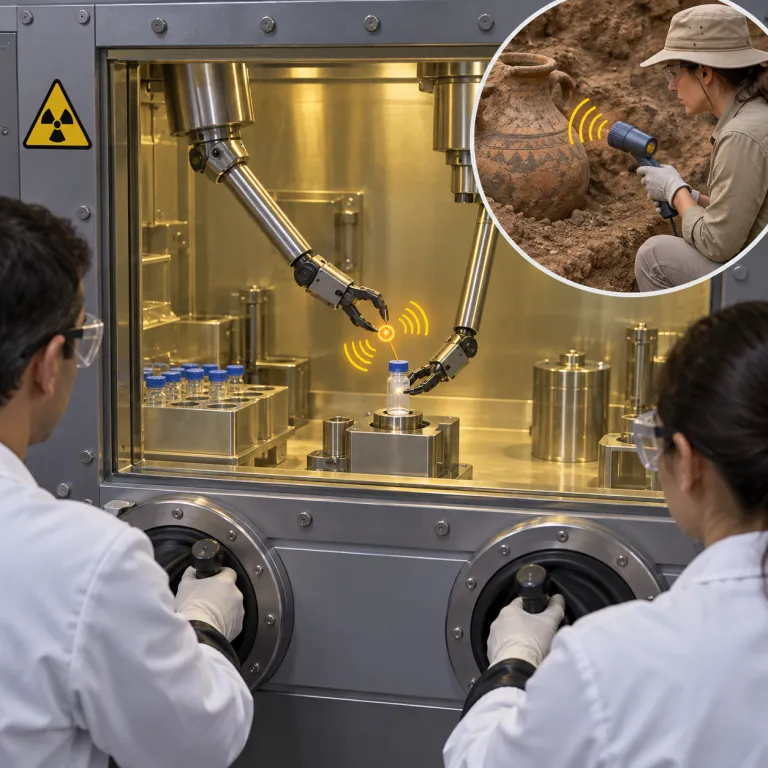
放射性同位体
解説 Definition
放射能を持つ同位体。医療診断、治療、エネルギー産業など様々な分野で利用されている。
A radioisotope is a form of a chemical element that gives off radiation because its atoms are unstable. It is used in science, medicine, and industry, for example in testing, imaging, or treatment.
覚え方のコツ Memory Tip
radio + isotope に分けて覚えるのが最短。radioactive や radiation の radio- を知っていれば、ここでも核になるのは 放射線・放射能 の感覚。isotope を 同位体 と固定すると、radioisotope は 放射線を出す同位体 とそのまま読める。medical radioisotope, use a radioisotope in diagnosis のように医療・検査文脈で出やすい。isotope 全般と混同せず、stable isotope ではなく 放射性 をもつほうだと対比で覚えると残りやすい。
Split it into `radio-` and `isotope`. If `radioactive` or `radiation` is familiar, the first part already points you to the right idea. Then contrast it with a `stable isotope`: a `radioisotope` is the isotope that gives off radiation.
例文
Radioisotopes are used extensively in medical imaging.
放射性同位体は医用画像診断で広く使用されている。
The laboratory handles radioisotopes under strict safety procedures.
その研究所では、厳格な安全手順に従って放射性同位体を扱っている。
Carbon-14 is a radioisotope used in radiocarbon dating.
炭素14は放射性炭素年代測定に使用される放射性同位体である。
radioisotope の類義語・関連語
radioisotope の語源・成り立ち Etymology
radioisotope は radio-「放射線」と isotope「同位体」から成り、isotope はギリシャ語 isos「等しい」+ topos「場所」に由来します。isobar と同系で、「周期表の同じ場所に属しつつ放射線を出す原子」と捉えると意味がすっとつながります。
Radioisotope combines radio-, meaning radiation, with isotope. Isotope comes from Greek isos, "equal," and topos, "place," because isotopes hold the same place in the periodic table. The full word later came to mean an isotope that gives off radiation.
同じレベルの語彙をもっと
外部辞書で調べる
この英単語をクイズで覚えよう