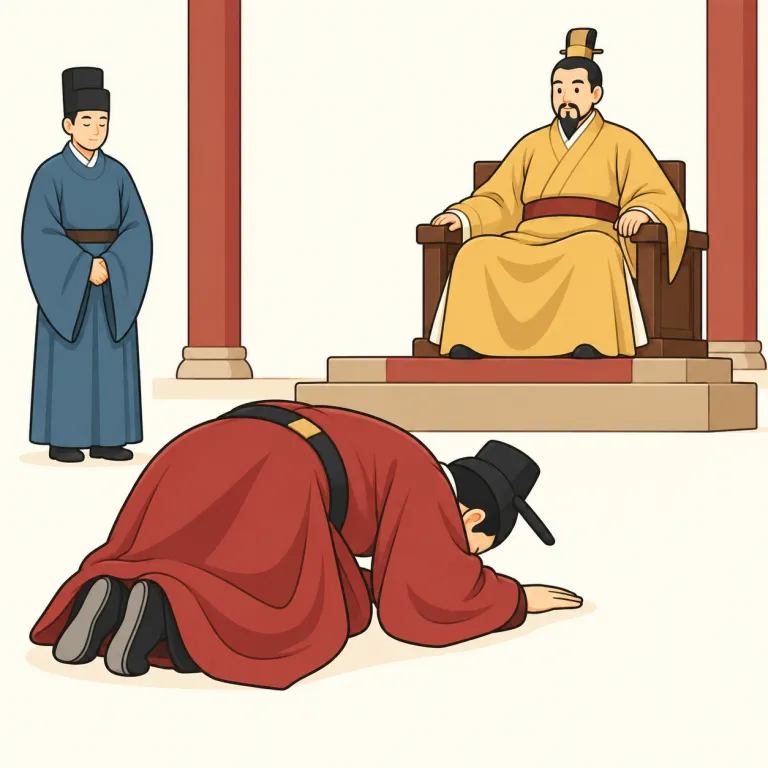
ひれ伏す、へりくだる
解説 Definition
相手への敬意や服従を示して深くひれ伏すことを表す動詞。もとは中国の叩頭礼のように額を地面につける礼を指したが、現代では権威者や強い立場の相手に必要以上にへりくだったり、迎合したりするという比喩的な意味でもよく使われる。
Kowtow means to act in an overly obedient or humble way toward someone powerful. It is often used in a negative sense when someone shows too much respect to gain approval or avoid trouble. Originally, it referred to kneeling and bowing deeply.
覚え方のコツ Memory Tip
まず普通の bow は「おじぎする」。kowtow はそこから一段強く、相手に逆らえず、床に届きそうなくらい深く頭を下げるような「過剰な服従・迎合」の語として覚えると定着しやすいです。実際も kowtow to authority / pressure / a boss の形でよく出て、「権威や圧力に屈してへりくだる」と読めます。単なる丁寧さなら respect や defer、kowtow は「媚びるほど下手に出る」というマイナス寄りの響きがある、と対比で押さえると混同しにくいです。
Start from `bow`, then imagine a much deeper, more submissive bow. `Kowtow` is often used with `to`, as in `kowtow to authority` or `kowtow to a boss`. It has a negative feeling, closer to obeying too much or flattering someone, not just showing normal respect.
例文
The diplomatic protocol required officials to kowtow before the emperor.
その外交儀礼では、役人たちは皇帝の前でひれ伏すことを求められた。
She refused to kowtow to authoritarian demands.
彼女は権威主義的な要求に屈することを拒んだ。
He won't kowtow to wealthy clients just to keep the contract.
彼は契約を失わないためだけに裕福な顧客に迎合しようとはしない。
kowtow の類義語・関連語
kowtow の語源・成り立ち Etymology
kowtow は中国語 kòutóu に由来し、kou「叩く」+ tou「頭」で文字どおり「頭を床に打ちつける」こと。そこから英語では、相手にへりくだりすぎる態度まで表すようになった。関連語は kotow、kowtowing。
Kowtow comes from Chinese koutou, literally meaning "knock the head," from kou "knock" and tou "head." It first referred to the act of bowing so deeply that the head touched the ground. In English, the meaning later widened to include acting in an overly submissive or flattering way. A related form is kotow.
同じレベルの語彙をもっと
外部辞書で調べる
この英単語をクイズで覚えよう