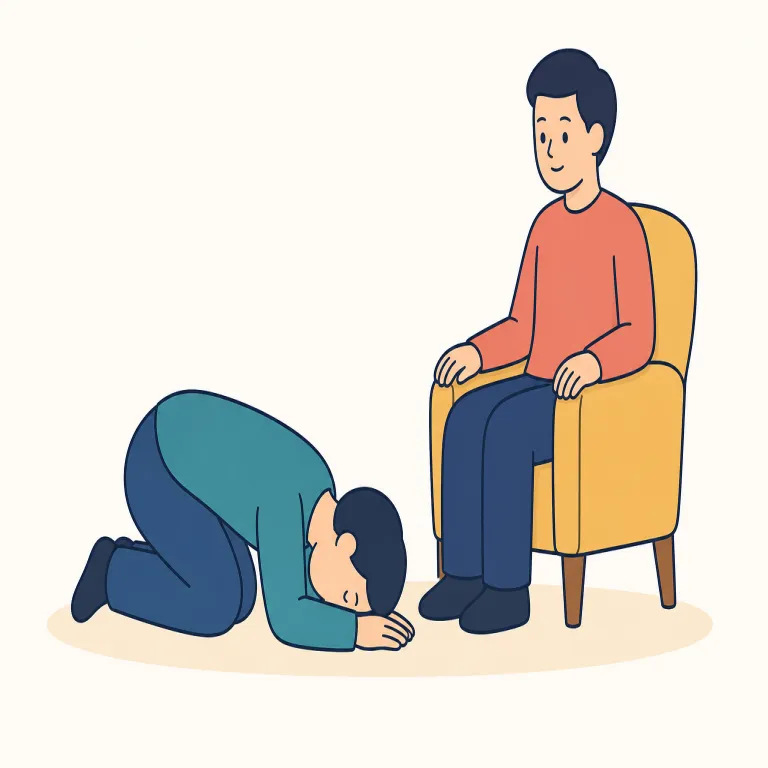
へつらう、卑屈に従う
verb 動詞権力や影響力のある相手に、過度に敬意を示して機嫌を取ったり服従したりすることを表す。通例 kowtow to someone の形で使い、実際に地面へひれ伏す動作を伴わない比喩的用法である。
ひれ伏す、または深く敬う行為。特に敬意を示すために地に身を低くすることを指します。
Kowtowing means acting in an extremely respectful or submissive way toward someone, often too much. It is used especially when talking about power, authority, politics, or social status. The word usually has a negative meaning and suggests weak or dishonest respect.
kowtow を基本形で覚えると整理しやすいです。意味は単に bow するより重く、深い敬意を示すために地面近くまで身を低くして「ひれ伏す」動作を表します。courtiers kowtowing to the emperor のように、相手への敬意や服従を示す場面で出やすい語。比喩では「へつらう」にもなりますが、この行ではまず実際の礼法としての平伏、と押さえるとずれません。
First remember the base form `kowtow`, then see `kowtowing` as the ongoing action. It is stronger and more negative than simply `bowing` because it suggests excessive obedience. The pattern `kowtow to` someone or something is also a useful memory hook.
The courtiers were kowtowing to the emperor.
その廷臣たちは皇帝にひれ伏していました。
Kowtowing is a gesture of deep respect.
ひれ伏すことは深い敬意の表現です。
The tradition of kowtowing persists in ceremonies.
ひれ伏す伝統は儀式の中に今も残っています。
文脈によって、次の意味でも使われます。
権力や影響力のある相手に、過度に敬意を示して機嫌を取ったり服従したりすることを表す。通例 kowtow to someone の形で使い、実際に地面へひれ伏す動作を伴わない比喩的用法である。
kowtowing は中国語の叩頭(kòu tóu)に由来し、kow- が「叩く」、tow が「頭」に当たる。もとは頭を地につけるほど深く礼をする動作名で、そこから英語でも「深い敬意を示してひれ伏す」という意味になります。異綴りの kotow も同語源です。
Kowtowing comes from Chinese koutou, literally "knock the head," from kou "knock" and tou "head." It first referred to the physical act of bowing deeply as a sign of respect. In English, the meaning widened into a figurative sense of acting too humbly or obediently; kotow is a related spelling.
この英単語をクイズで覚えよう