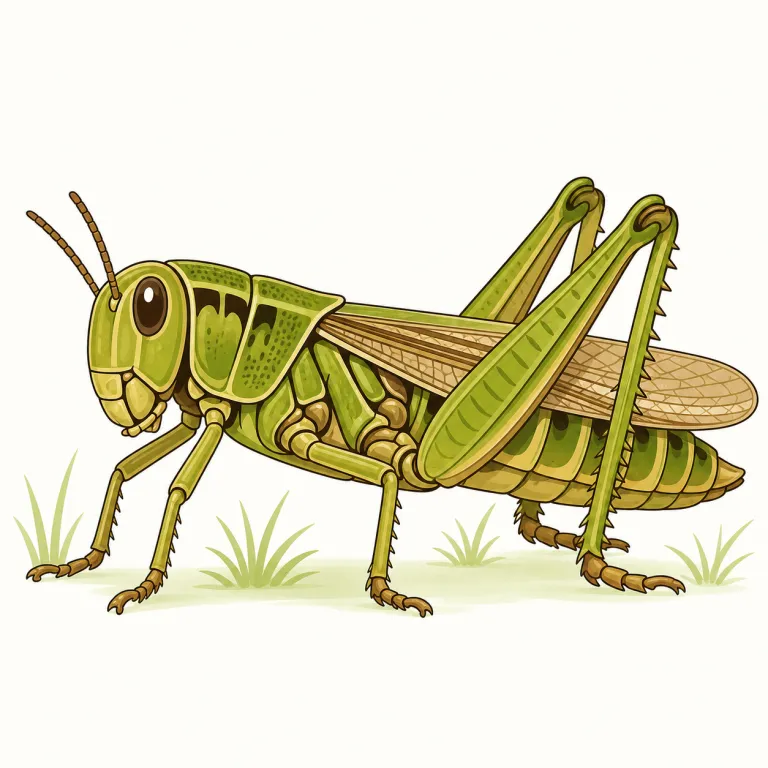
イナゴ
解説 Definition
群れで大量に移動する大型の昆虫を意味します。農作物に大きな被害をもたらすことで知られています。
A locust is a type of large grasshopper that can travel in huge groups. The word is often used in farming or nature contexts because these insects can destroy crops very quickly.
覚え方のコツ Memory Tip
locust は単独の虫名として覚えるより、swarm of locusts(イナゴの大群)、locust plague(イナゴ被害)、desert locust(サバクトビバッタ)と一緒に覚えると残りやすい語です。grasshopper が「バッタ一般」なのに対し、locust は「群れで押し寄せ、作物を食い荒らす」という災害イメージが強いのが核心。crop damage や devour fields の場面と結び付けると、ただの昆虫名ではなく“農業に大打撃を与える群生バッタ”として定着します。
Do not remember `locust` as just another insect. It is strongly linked with phrases like `a swarm of locusts` or `locust plague`, which give it a disaster image. That is a good contrast with `grasshopper`, which is more general and does not suggest huge crop damage.
例文
A swarm of locusts destroyed the entire crop in a single day.
イナゴの群れは、たった1日で作物をすべて食い荒らしました。
Locust plagues have been recorded throughout history.
バッタの大発生は歴史を通じて記録されてきました。
The farmers sprayed pesticide to protect their fields from locusts.
農民はバッタからの被害を防ぐために農薬を散布しました。
locust の類義語・関連語
類義語
locust の語源・成り立ち Etymology
locust は中英語を経て古フランス語 locuste、さらにラテン語 locusta にさかのぼります。locusta はイナゴだけでなくロブスターも指した語で、節だった体つきの連想が共通していました。関連語に lobster, langouste があり、この語が群飛する大きなバッタの名に定着しました。
Locust came through Old French and Middle English from Latin locusta. In Latin, locusta could refer to a locust but also to a lobster, probably because of a similar segmented body shape. Over time, English kept the word for the large grasshopper, while related forms survived elsewhere, such as lobster and French langouste.
同じレベルの英単語をもっと
外部辞書で調べる
この単語を英単語クイズで覚えよう