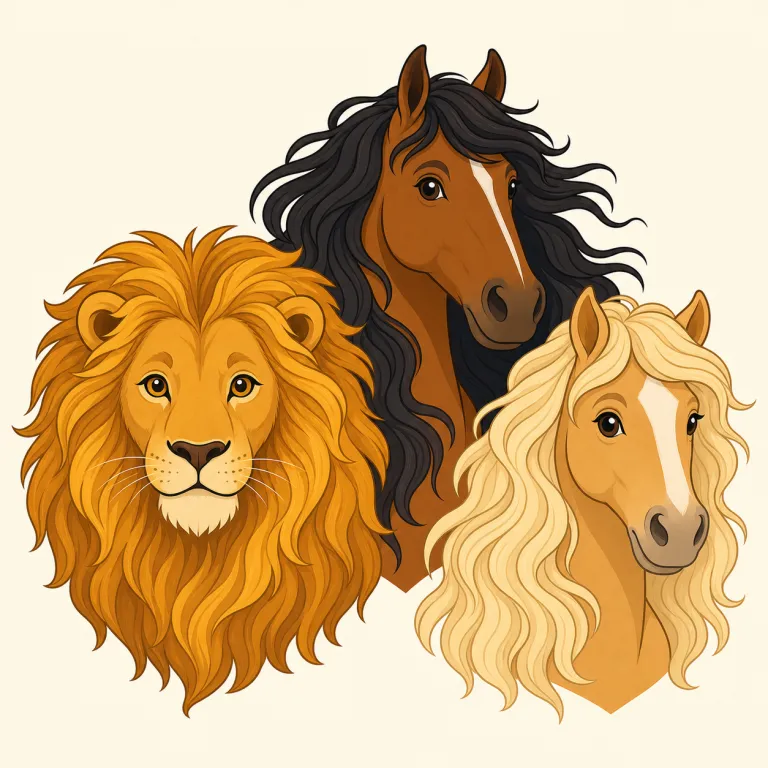
(人の)長く豊かな髪(複数形)
noun 名詞mane の複数形で、人の長く豊かな髪や、たてがみのように目立つ髪を指す。特に複数の人について、それぞれの量感のある髪や流れるような髪を印象的に描写する場合に使われる。
mane の複数形で、馬やライオンなどの首筋に生える長いたてがみを複数について述べるときに使う名詞。複数の動物のたてがみをまとめて言う場合や、それぞれのたてがみが印象的な場面を描写するときに用いられ、英語では複数であることが形に表れる。
Manes are the long, thick hair that grows along the neck of some animals, especially horses and lions. The word is usually used when talking about an animal's appearance, movement, or care.
mane を先に固定すると覚えやすい。馬やライオンの首まわりの長い毛を 1つなら mane、複数の動物や複数場面でまとめて言うと manes。horse mane, lion mane を知っていれば、その複数形と考えるだけでよい。見た目は names に少し似るので混同注意。写真集や動物描写で flowing manes, dark manes のように複数のたてがみを並べて語る場面を思い浮かべると定着しやすい。
Start with the singular word `mane`, which is common in `horse mane` and `lion mane`. `Manes` is just the plural form, used when you picture several animals or several flowing necks in one scene. Be careful not to mix it up with `names`, because the spelling looks similar.
The horses' manes were braided beautifully for the competition.
競技会に向けて、馬たちのたてがみは美しく編み込まれていた。
Wild stallions with flowing manes galloped across the open plain.
流れるようなたてがみを持つ野生の雄馬たちが、広い平原を駆け抜けた。
The groom brushed the ponies' manes before the parade.
馬丁はパレードの前にポニーたちのたてがみをとかした。
文脈によって、次の意味でも使われます。
mane の複数形で、人の長く豊かな髪や、たてがみのように目立つ髪を指す。特に複数の人について、それぞれの量感のある髪や流れるような髪を印象的に描写する場合に使われる。
manes は mane の複数形で、語源は古英語 manu。古高ドイツ語 mana と同系で、首もとに垂れる長い毛を表しました。関連語は maned。もともと『首飾りのように首を囲む毛』という感覚があり、そこから馬やライオンのたてがみの意味になったと考えると分かりやすいです。
Manes is the plural of mane, which comes from Old English manu. It is related to similar Germanic forms, such as Old High German mana. The word originally referred to the long hair around the neck, and this idea later settled into its usual use for the neck hair of horses, lions, and similar animals.
この英単語をクイズで覚えよう