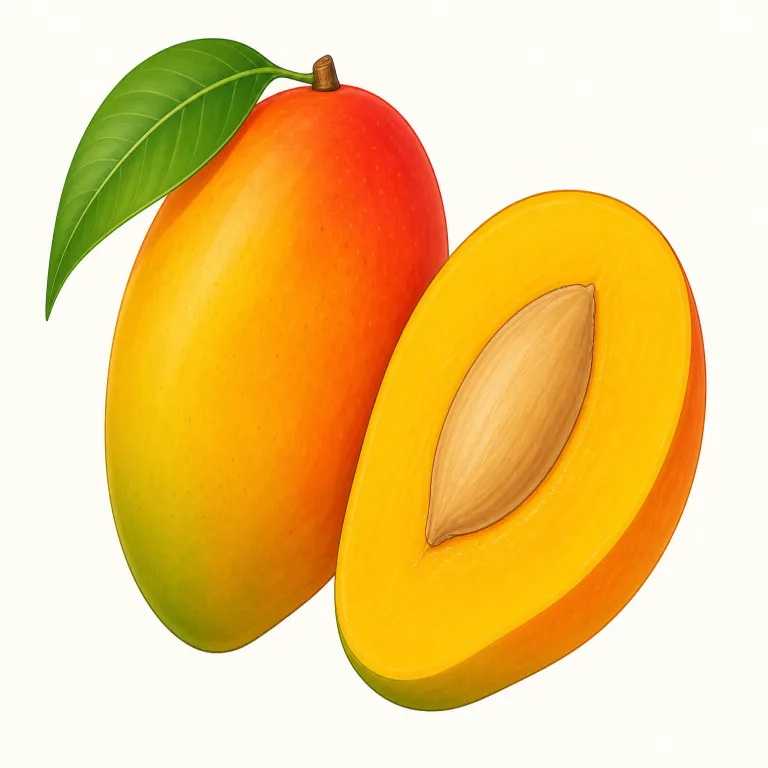
マンゴー
解説 Definition
mango は、甘い熱帯の果物であるマンゴーという意味です。日本語の「マンゴー」とほぼ同じで、果物そのものや味を表すときに使います。
A mango is a sweet, juicy tropical fruit with smooth skin, soft yellow or orange flesh, and a large flat stone in the center. The word can also identify the fruit’s flavor.
覚え方のコツ Memory Tip
日本語の「マンゴー」とほぼ同じですが、英語の発音は /ˈmæŋɡoʊ/ で、最初の母音は「ア」と「エ」の中間です。a mango は果実一個、mango flavor はマンゴー味を表します。eat、cut、peel、sweet など、果物を食べたり調理したりする語と一緒に覚えましょう。
The Japanese loanword マンゴー already gives you the meaning, but remember the English pronunciation /ˈmæŋɡoʊ/: the first vowel is the same sound heard in man, not a long Japanese ア. Picture cutting a ripe mango around its large, flat stone and eating the sweet orange flesh. Useful combinations include a ripe mango, mango slices, mango juice, and mango flavor. Use a mango when counting one whole fruit, and mango as a modifier before another noun.
例文
I ate a mango for breakfast.
私は朝食にマンゴーを食べました。
This mango is very sweet.
このマンゴーはとても甘いです。
She cut the mango into small pieces.
彼女はマンゴーを小さく切りました。
mango の類義語・関連語
派生語
紛らわしい語
mango の語源・成り立ち Etymology
マレー語 mangga からポルトガル語 manga を経て英語に入った。元はタミル語 māṅkāy(マンゴーの実)に由来し、mā(マンゴーの木)+ kāy(果実)の合成語。大航海時代にポルトガル商人がインドから持ち帰り、世界に広まった語。関連語: mangrove(同じマレー語圏由来)。
Mango entered English through Portuguese manga during the period of Portuguese trade in South Asia. The Portuguese form came from a Dravidian language of southern India, commonly traced to Tamil māṅkāy, a compound referring to the fruit of the mango tree. Related forms also passed through Malay, including mangga. The word spread internationally with the fruit and with maritime trade.
同じレベルの語彙をもっと
外部辞書で調べる
この英単語をクイズで覚えよう