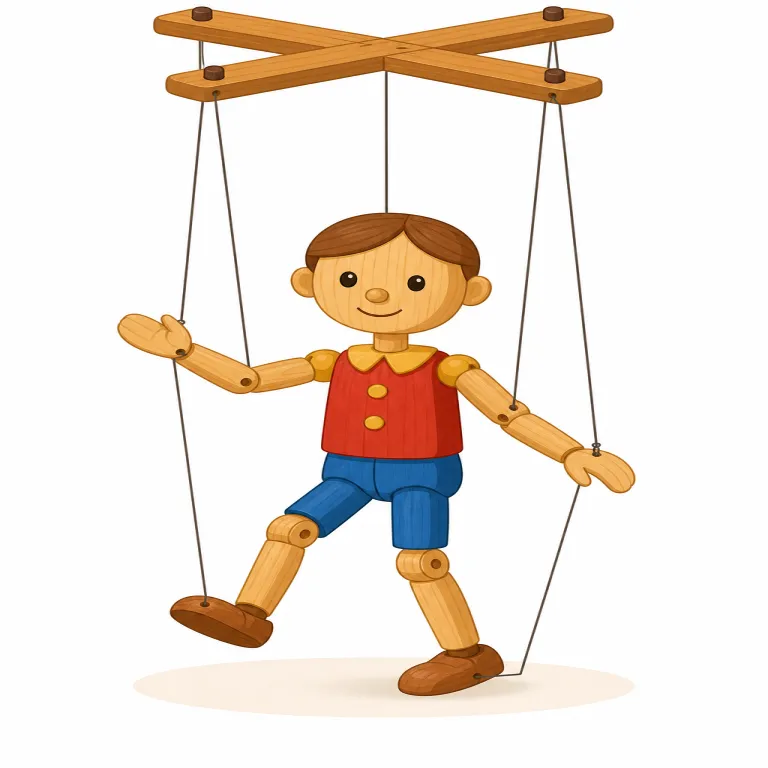
操り人形、傀儡
noun 名詞比喩的に、背後の権力者などの意のままに動かされ、自分の意思や判断で行動できない人を指す。政治や組織の文脈で、表向きの地位はあっても実権を持たない指導者などを批判的に表す際に使われる。
糸で操る人形のこと。上から糸を引いて手足を動かす操り人形劇に使われる。
A marionette is a puppet that is moved by strings from above. It is used in traditional puppet theater and can also describe someone controlled by another person.
puppet は操り人形全般、doll はただの人形。marionette はその中でも、舞台の上から複数の糸で手足や頭を動かす“糸操り人形”に限定されやすい、とカテゴリで整理すると覚えやすい。手を入れて動かす hand puppet とは別物。ニュースや小説では a marionette of 〜 で「背後に操られる人物」の比喩にもなるので、「糸が見えるほど他人に動かされる」という場面で記憶すると定着する。
Put it under the bigger category `puppet`. A `marionette` is the type controlled by strings from above, unlike a hand puppet. That string image is also useful in figurative use, for a person controlled by someone else.
The puppeteer skillfully controlled the marionette with a set of thin strings.
人形遣いは細い糸でマリオネットを巧みに操った。
The children were fascinated by the marionette show at the festival.
子供たちはお祭りのマリオネットショーに魅了された。
Each marionette in the collection was hand-carved and painted by local artisans.
コレクションの各マリオネットは地元の職人が手彫りし、彩色したものだった。
文脈によって、次の意味でも使われます。
比喩的に、背後の権力者などの意のままに動かされ、自分の意思や判断で行動できない人を指す。政治や組織の文脈で、表向きの地位はあっても実権を持たない指導者などを批判的に表す際に使われる。
marionette はフランス語 marionnette に由来し、Marion(Marie の愛称)+ 指小辞 -ette で「小さなマリー」の意です。Marion や Marie も同根で、もとは聖母マリアの小像を指したため、人形を糸で操る語義へ広がったと分かると腑に落ちます。
"Marionette" comes from French "marionnette," built from "Marion," a pet form of "Marie," and the diminutive ending "-ette." It originally referred to a little figure of the Virgin Mary. From that sense, it widened to mean a small puppet moved by strings.
この英単語をクイズで覚えよう