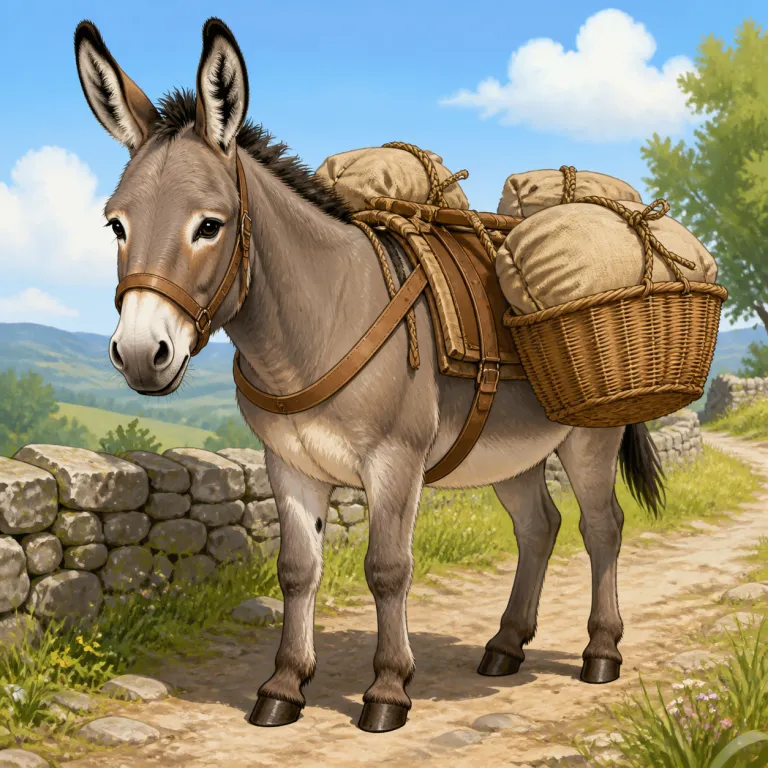
ロバ
解説 Definition
主に英国英語のやや古い言い方で、ロバを指す名詞。日常会話で広く使われる語ではないが、荷物を運ぶ家畜としてのロバを述べる文脈で見られることがある。侮蔑的な俗語用法もあるため、学習用としてはまず「ロバ」の意味で押さえるのが適切。
A moke is a donkey. This is an informal or old-fashioned word, so it is not common in everyday modern English. It may appear in older texts, regional speech, or humorous use.
覚え方のコツ Memory Tip
まず基本語の donkey を軸に置き、moke は「英国寄り・古め・くだけた言い方の別名」として覚えると整理しやすいです。見た目は bloke や joke のような短い口語語に近く、辞書ではやや俗っぽい周辺語だと意識すると定着します。荷物を運ぶ、家畜として扱う文脈で出やすく、まずは a moke = a donkey と結び付ければ十分。mule は「ラバ」なので混同注意。人に使うと侮蔑的になることがあるため、学習段階では動物名として覚えるのが安全です。
Anchor it to the basic word `donkey`. `Moke` is a less common, more informal or old-fashioned word for the same animal, so the easiest memory hook is simply `moke = donkey`. Keep it separate from `mule`, which is a different animal.
例文
The moke carried heavy loads up the hill.
そのロバは丘の上まで重い荷物を運んだ。
The old moke refused to move.
その年老いたロバは動こうとしなかった。
The farmer fed the moke before sunrise.
農夫は日の出前にそのロバに餌をやった。
moke の類義語・関連語
類義語
moke の語源・成り立ち Etymology
19世紀の英俗語で、語源は確定しておらず、英国方言や人名由来の説があります。まず「ロバ」を指し、その鈍さや野暮ったさの連想から「つまらない人」に広がりました。起源不詳なので確実な同根語は挙げにくい語です。
Moke is a 19th-century English slang word with uncertain origin. It first referred to a donkey, and later was used for a dull or uninteresting person by association with the animal. Because its source is unclear, there are no certain related English words from the same root.
同じレベルの語彙をもっと
外部辞書で調べる
この英単語をクイズで覚えよう