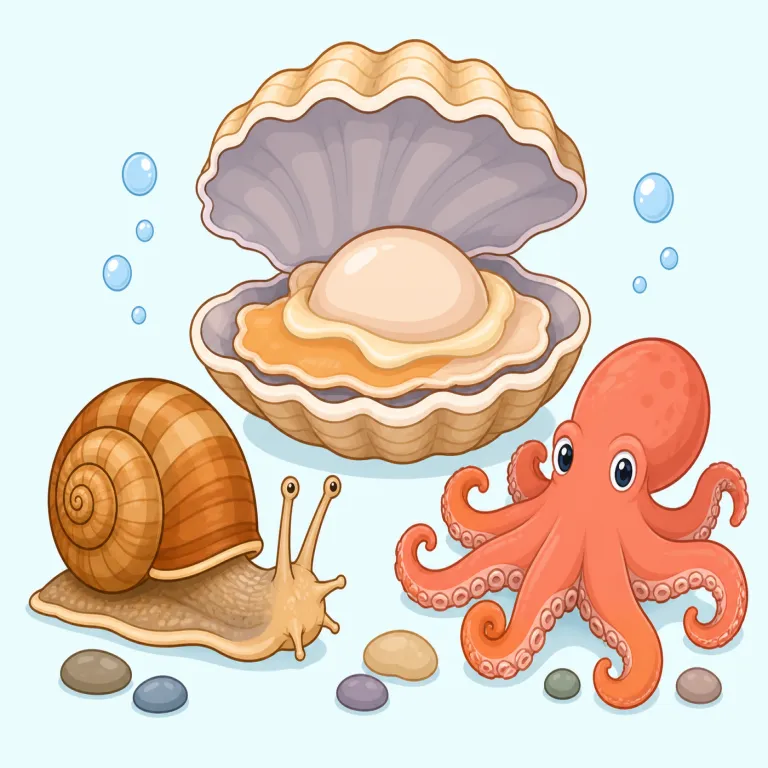
軟体動物
解説 Definition
軟らかい体を持つ無脊椎動物で、多くの場合貝殻を備えている。イカ、タコ、貝類などが含まれる生物分類の総称。
A mollusk is a soft-bodied animal such as a snail, clam, oyster, or octopus. Many mollusks have shells, but some do not. The word is mainly used in biology and nature topics.
覚え方のコツ Memory Tip
mollusk は「貝」より広く、「やわらかい体をもつ生き物のグループ」として覚えると定着しやすい。mollify のような moll- に触れたことがあれば「和らげる・柔らかくする」感覚を足場にできる。octopus, squid, snail, clam まで含む分類名で、特定の一種ではない点が重要。shellfish と近い場面でも使われるが、タコやカタツムリも入るので shellfish より広い。図鑑や生物説明で marine mollusks とあれば「海の軟体動物全般」と取る。
Remember that `mollusk` is not just one animal like a clam. It is a group name for soft-bodied creatures, including snails, squid, and octopuses. That makes it easier to keep apart from narrower words like `shellfish`.
例文
A mollusk can retract into its shell for protection.
軟体動物は身を守るために殻の中に引っ込むことができる。
Octopuses and squids are examples of mollusks without external shells.
タコとイカは外部の殻を持たない軟体動物の例である。
Many mollusks have a muscular foot used for locomotion.
多くの軟体動物は移動に使用される筋肉質の足を持っている。
mollusk の類義語・関連語
派生語
紛らわしい語
mollusk の語源・成り立ち Etymology
mollusk はフランス語 mollusque を経て、ラテン語 molluscus「柔らかいもの」にさかのぼります。語根は mollis「柔らかい」で、殻よりも体の柔らかさに注目した命名です。関連語 emollient, mollify にも「柔らかくする」という感覚が残っています。
Mollusk came into English through French mollusque from Latin molluscus, meaning "soft thing." Its root is Latin mollis, meaning "soft." The name was based on the soft body of the animal rather than its shell. Related English words with the same root include mollify and emollient.
同じレベルの語彙をもっと
外部辞書で調べる
この英単語をクイズで覚えよう