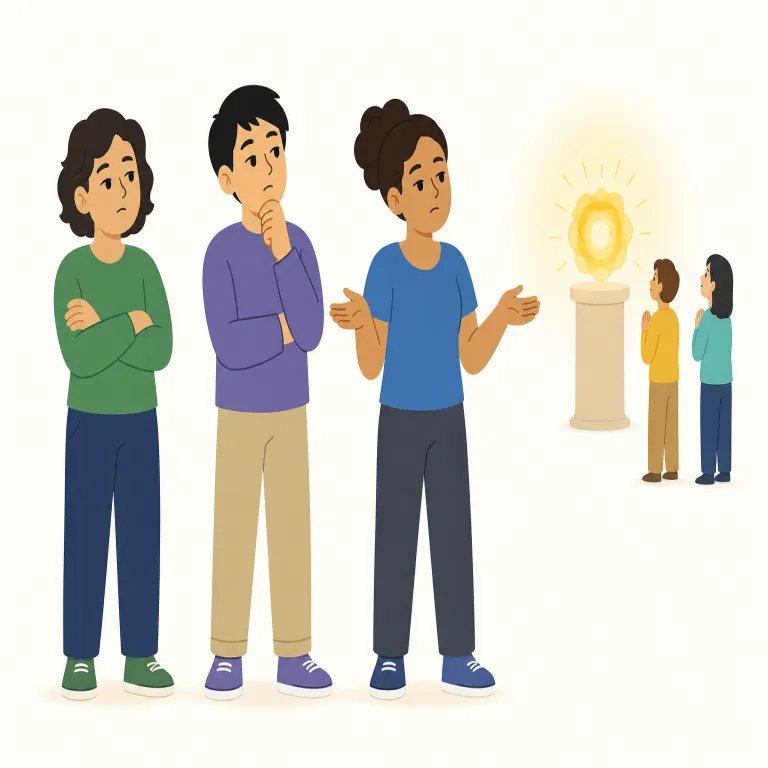
信じない人々、懐疑派
noun 名詞宗教に限らず、ある主張・考え・計画などを真実または有効だと信じない人々を指す。nonbelievers in the project のように、特定の対象への疑念を示す文脈で使われる。
宗教的信仰を持たない、または宗教的信仰を拒否する人々の複数形。無神論者や不可知論者を指すことが多い。
Nonbelievers are people who do not believe in a particular religion, god, or set of religious teachings. The word can also be used more generally for people who do not accept a certain idea or claim. It is often used in discussions about faith and belief.
まず believer を「信じる人」として押さえると覚えやすいです。believe, belief, believable などの仲間が見えれば核は一貫して「信じる」。そこに否定の接頭辞 non- が付いて nonbeliever で「信じない人」、-s で複数。宗教文脈でよく「非信者たち」を指しますが、形としては非常に素直です。unknown の un- のような否定と同じ発想で見て、believer を中心に組み立てると忘れにくくなります。なお unbeliever も近い形ですが、nonbeliever のほうがやや説明的で客観的に見えやすいです。
Build it in parts: `believer` is a person who believes, and `non-` means "not." Then add `-s` for the plural: `nonbelievers`. It is easy to remember if you already know the family `believe`, `belief`, and `believer`.
Although they had no religious faith, the nonbelievers were invited to join the community event.
宗教的な信仰を持たない非信者たちも、地域の催しに招かれた。
The philosopher's work appealed to both believers and nonbelievers.
その哲学者の作品は信者と非信者の両方に訴えかけた。
Statistics show that more people now identify as nonbelievers with no religious faith.
統計によると、宗教的な信仰を持たない非信者だと自認する人が増えている。
文脈によって、次の意味でも使われます。
宗教に限らず、ある主張・考え・計画などを真実または有効だと信じない人々を指す。nonbelievers in the project のように、特定の対象への疑念を示す文脈で使われる。
nonbelievers は non-「〜でない」+ believe「信じる」+ -er(s) で、believe は古英語 gelefan「信頼する」に由来する。belief や believable も同根で、『信頼を置かない人たち』という感覚が非信者の意味の芯にある。
Nonbelievers is built from non- "not," believe, and the plural ending on believer. Believe comes from Old English gelefan, meaning "to trust" or "to hold dear as true." The word first meant people who do not place trust or faith in something, and it is related to English words like belief and believable.
この英単語をクイズで覚えよう