離れ、付属建物
noun 名詞主に英国英語で、母屋とは別に建てられた納屋、物置、作業小屋などの付属建物を指します。可算名詞で、複数形 outhouses は敷地内にある複数の離れを表します。
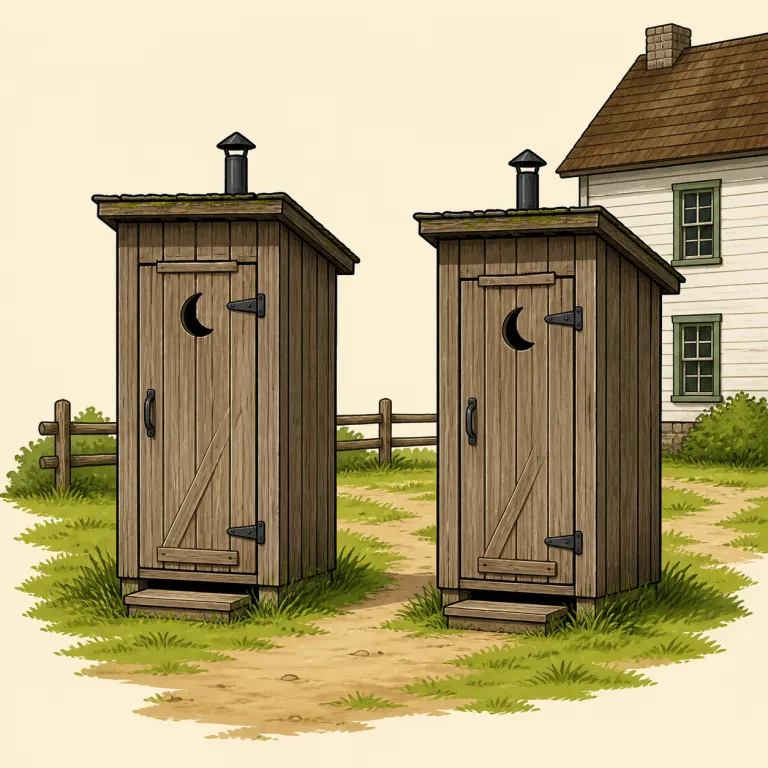
主に北米英語で、家の外に独立して設けられた簡易トイレを指す語。上下水道が十分でない場所や昔の農村部で見られることが多く、outhouses はそのような屋外便所が複数あることを表す。
Outhouses are small buildings outside a house that contain a toilet. They are common in places without indoor plumbing or modern bathroom systems. The word is practical and usually refers to older or rural settings.
out + house と見て、「家の中の bathroom ではなく、外に独立してある小屋」をまず頭に固定すると覚えやすいです。普通の toilet / restroom よりかなり限定的で、上下水道が十分でない場所、昔の農村、キャンプ地のような場面を思い浮かべると定着します。shed のような小さな別棟を連想すると形がつかみやすく、outhouses はその屋外便所が複数ある状態です。
See it as "out + house": a small building outside, not a bathroom inside the home. That picture makes the word easier to keep. It is more specific than "toilet" or "restroom," and often fits older rural places or campsites.
The old farmhouse still has two wooden outhouses behind it.
その古い農家の裏には、今でも木造の屋外便所が二つ残っている。
Campers were told to use the outhouses near the parking area.
キャンプ客は駐車場近くの屋外便所を使うように言われた。
The museum preserved the outhouses to show how people lived in the past.
その博物館は、昔の暮らしを示すために屋外便所を保存していた。
文脈によって、次の意味でも使われます。
主に英国英語で、母屋とは別に建てられた納屋、物置、作業小屋などの付属建物を指します。可算名詞で、複数形 outhouses は敷地内にある複数の離れを表します。
out-「外の」+ house「家」から成る語で、house は古英語 hus に由来します。主屋の外に置かれる建物という発想がそのまま「離れ家」や「物置」、さらに「便所小屋」の意味へ広がりました。housing や household も同じ語根です。
Outhouses is made from out- "outside" and house, from Old English hus. The original idea was simply a building outside the main house. Over time, it came to refer especially to small separate buildings such as sheds and later outdoor toilets.
この英単語をクイズで覚えよう