荷造りを済ませた
adjective 形容詞旅行などに必要な持ち物をかばん等に詰め終え、出発の準備ができている状態を表す。Are you packed? のように人を主語にして使い、場所が人や物で満員である既存語義とは異なる。
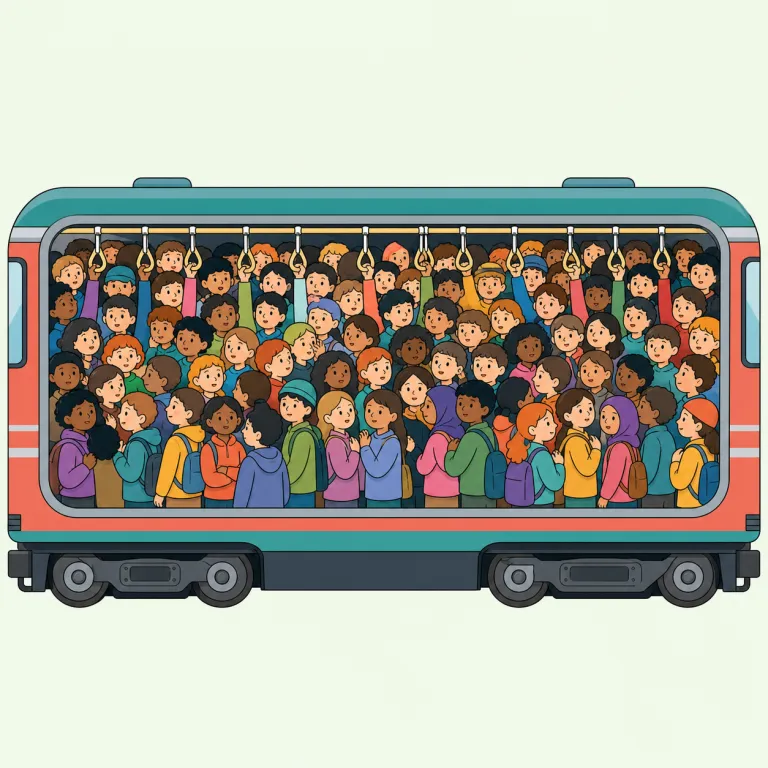
場所に人や物が隙間なく入り、非常に混雑しているさま。packed with の形で「〜でいっぱいの」とも表す。
So full of people or things that almost no space remains. It often describes an extremely crowded place.
pack「荷物を詰める」から、「人や物が荷物のようにぎっしり詰まった」状態を packed と表します。a packed train「満員電車」、a packed stadium「満員の競技場」、be packed with people「人でいっぱいだ」が典型表現です。単なる full よりも、隙間がないほど混雑している場面を思い浮かべると使い分けやすくなります。
Connect packed with pack, meaning 'put things tightly into a space.' Picture passengers squeezed together like luggage in a full bag. Remember 'a packed train' and 'packed with people.'
The train was packed with commuters.
電車は通勤客で満員だった。
The restaurant was packed on Friday night.
金曜の夜、そのレストランは大勢の客で混み合っていた。
We left early because the beach was packed.
海岸がひどく混んでいたので、私たちは早めに帰った。
文脈によって、次の意味でも使われます。
旅行などに必要な持ち物をかばん等に詰め終え、出発の準備ができている状態を表す。Are you packed? のように人を主語にして使い、場所が人や物で満員である既存語義とは異なる。
動詞 pack「詰める」の過去分詞が形容詞化した語です。pack は中期英語で「包み、束」を表した語に由来します。「ぎっしり詰められた」という状態から、人で混雑した場所を表すようになりました。
This adjective comes from the past participle of pack, meaning 'fill or put things together.' Pack derives from a Middle English word for a bundle, and the idea of being tightly filled extended to crowded places.
この英単語をクイズで覚えよう