気孔率
解説 Definition
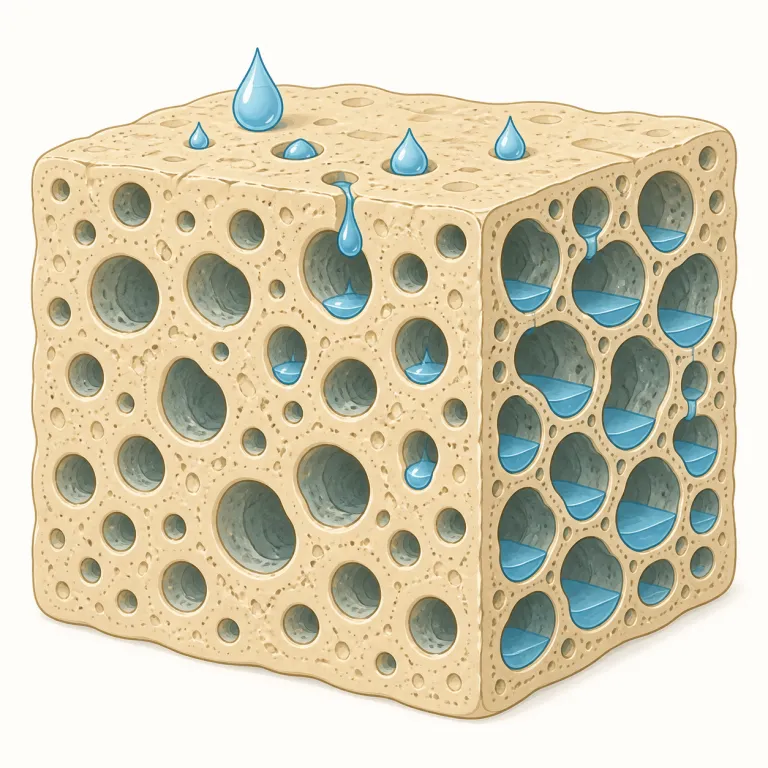
気孔率とは、物質内の空隙や孔が全体に占める割合を指します。多孔質材料の透水性や強度などの物理的特性に重要な影響を与えます。
Porosity is the condition of having many very small holes or spaces in a material. It is used in science, engineering, and manufacturing to talk about how easily air, liquid, or gas can pass through something. Higher porosity means more open space inside the material.
覚え方のコツ Memory Tip
porous(穴の多い)を知っていれば、その名詞形が porosity。語尾 -ity は「性質・度合い」なので、active→activity と同じ感覚で「多孔質である度合い」と覚えると定着しやすい。pore(毛穴・小さな穴)ともセットで見ると、「孔そのもの」ではなく「孔の多さ・空隙の割合」を表す語だと整理できる。材料の説明では high porosity / low porosity が頻出。permeability は“液体が通りやすい性質”で、porosity は“孔がどれだけあるか”なので、近いが同義ではない点も覚えておくと強い。
Start from `pore`, a tiny hole, then add `-osity`, which turns it into a quality that can be measured. In science and engineering, this word often appears in phrases like `high porosity` or `measure porosity`, so think of a number, not just a general image. Keep it separate from `permeability`, which is about how easily something passes through.
例文
The porosity of the rock determines its water absorption capacity.
岩石の気孔率は吸水性を左右します。
High porosity in soil allows better water drainage.
土壌の気孔率が高いと、水はけがよくなります。
The engineer measured the ceramic's porosity to determine how much empty space it contained.
エンジニアは内部の空隙の割合を調べるため、セラミックの気孔率を測定しました。
porosity の類義語・関連語
派生語
porosity の語源・成り立ち Etymology
porosity は「小さな穴を通す性質」の意で、古フランス語 porosite を経て、中世ラテン語 porositas、さらにギリシャ語 poros「通り道・孔」にさかのぼります。porous「多孔質の」+ -ity「性質」ででき、関連語に pore, porous があり、「穴がある状態だから気孔率」という意味が見えます。
Porosity comes through French and Medieval Latin from Greek poros, meaning a passage, pore, or opening. In English it is built from porous plus -ity, meaning "the quality of being porous." The sense developed from having small openings to the more exact idea of how much empty space or how many pores a material has. Related words include pore and porous.
同じレベルの語彙をもっと
外部辞書で調べる
この英単語をクイズで覚えよう