接頭辞
解説 Definition
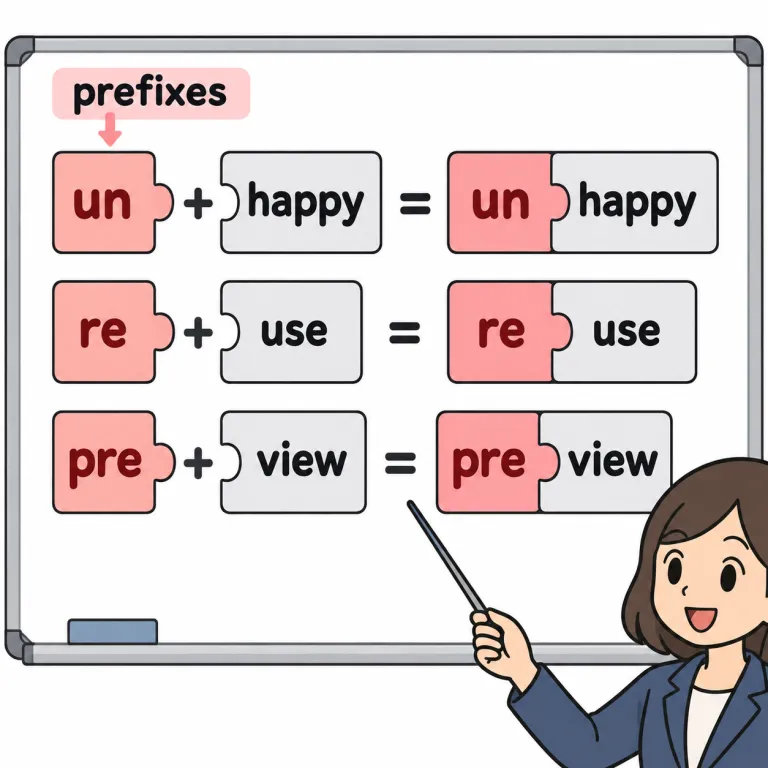
prefixes は prefix(接頭辞)の複数形です。単語や語の土台の前に付いて意味などを変える要素で、un-、re-、pre- などがあります。
Meaning-bearing elements placed at the beginning of words or bases to modify their meaning or grammatical function. Examples include un- in unhappy, re- in rewrite, and pre- in prewar.
使い方 Usage
使い分け Common distinctions
- prefixes は前に付く「接頭辞」、suffixes は後ろに付く「接尾辞」です。 Prefixes come before a base; suffixes come after it.
覚え方のコツ Memory Tip
pre-「前」+fix「付ける」で、「前に付けるもの」と覚えましょう。prefix は語末が x なので複数形は -es を付けた prefixes となり、複数語尾は /ɪz/ と発音します。
Think pre-, before, plus fix, attach: something attached at the front. Since prefix ends in x, add -es to make prefixes. The plural ending is pronounced /ɪz/.
例文
We learned three common prefixes in class.
授業でよく使われる接頭辞を三つ学びました。
Some prefixes change the meaning of a word completely.
接頭辞の中には、単語の意味を完全に変えるものがあります。
prefixes の類義語・関連語
prefixes の語源・成り立ち Etymology
prefixes は prefix の複数形で、語源はラテン語 praefigere「前に固定する」です。pre-「前に」+ fix「付ける」がそのまま入っており、『語の前にくっついて意味を足すもの』と考えると接頭辞の役割がよく見えます。関連語は affix, suffix。
Prefixes is the regular plural of prefix. Prefix ultimately comes from Latin praefigere, “to fasten in front,” formed from prae-, “before,” and figere, “to fasten or fix.” English first used the term more generally for something placed before another thing, and it became a standard grammatical label for an element attached to the beginning of a word or base. The plural uses -es after final x.
同じレベルの語彙をもっと
外部辞書で調べる
この英単語をクイズで覚えよう