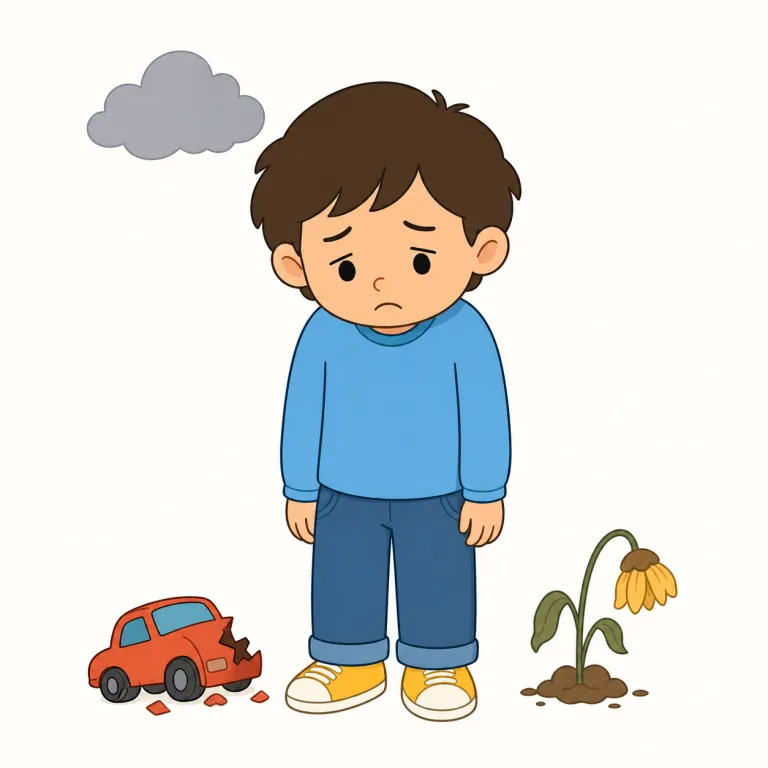
unhappy
unhappy は英検3級・TOEIC 600レベルの英単語で、「悲しい、不幸な、不満な」という意味があります。発音記号は /ʌnˈhæpiː/ です。
悲しい、不幸な、不満な
解説 Definition
unhappy は、悲しい、満たされない、不満がある、あるいは不幸な状態にあることを表す形容詞です。感情として落ち込んでいる場合にも、サービスや結果に満足していない場合にも使え、文脈によって「悲しい」と「不満な」のどちらにも寄ります。
Unhappy means feeling sad, disappointed, or not satisfied. It can describe a person’s emotions or a situation that is not pleasant. It is often used for everyday feelings, from small dissatisfaction to deeper sadness.
覚え方のコツ Memory Tip
un- は「反対・否定」、happy が分かればまず「幸せではない」と組み立てて覚えると定着しやすい語です。意味は単なる「悲しい」より広く、気分が沈むだけでなく「不満だ」にもなるのがポイント。be unhappy with/about で「〜に不満」、an unhappy marriage なら「不幸な結婚」。sad より原因や状況の悪さを含みやすく、「満たされていない感じ」を核にすると使い分けしやすいです。
Start with the prefix: `un-` means "not," so `unhappy` is easy to build from `happy`. Remember it is wider than `sad` and often appears in phrases like `unhappy with` or `unhappy about`. Think: not satisfied, not at ease, not in a good state.
例文
The boy is unhappy because he lost his favorite toy.
その男の子はお気に入りのおもちゃをなくして悲しんでいます。
She looks unhappy because her friend is sick.
友達が病気なので、彼女は悲しそうです。
I feel unhappy because I failed the test.
テストに落ちたので、悲しい気持ちです。
えいたんごクイズでの正答率
この語をはじめて出題された 43人 のうち 40人 が正解しました(93%)。
えいたんごクイズの回答から集計した独自データです。1人につき最初に出題されたときの1回だけを数えており、復習や2回目以降の回答、「わからない」と時間切れは含みません。 集計時点は 2026年9月19日 です。
unhappy の類義語・関連語
unhappy の語源・成り立ち Etymology
中英語で接頭辞 un-(否定、古英語由来)+ happy(幸せな)の構成。happy は古ノルド語 happ(幸運)に由来する。同根語に happen(起こる)、perhaps(おそらく)がある。「幸運でない」が原義で、そこから「不幸な、不満な」の意味になった。
This word was formed in Middle English from the negative prefix un- and happy. Happy came from Old Norse happ, meaning luck or good fortune. So the earliest idea was "not fortunate," which later developed into the modern sense of emotional dissatisfaction or sadness. Related English words include happen and perhaps.
同じレベルの語彙をもっと
英検3級の一覧へ →外部辞書で調べる
この英単語をクイズで覚えよう