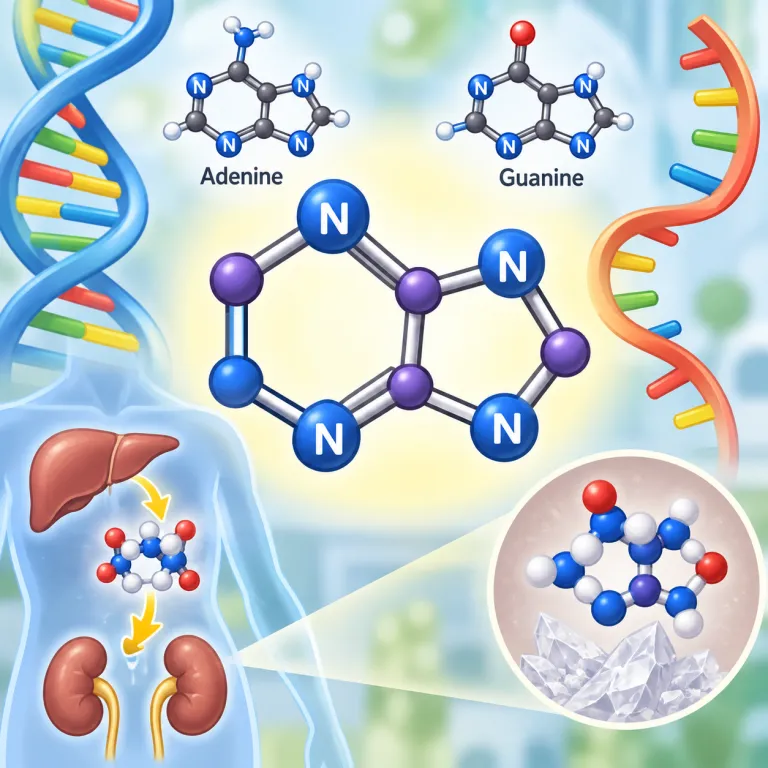
プリン(含窒素有機化合物)
解説 Definition
二つの環をもつ含窒素複素環化合物で、アデニンやグアニンなどの塩基の基本構造として知られる。DNAやRNAの成分に関わるほか、体内で代謝されると尿酸が生じ、蓄積しすぎると痛風の一因になるため医学や栄養学でも重要である。
A purine is a natural chemical substance found in the body and in many foods. Purines are important in biology because they are part of DNA and other body processes. The word is mainly used in science, medicine, and nutrition.
覚え方のコツ Memory Tip
purine は単独の意味を丸暗記するより、「adenine と guanine を入れる箱の名前」として覚えると残りやすい。化学では -ine が物質名によく出るので、caffeine, nicotine, adenine の並びと同じ“物質っぽい形”として見る。出会いやすいのは purine base, purine metabolism, high-purine foods で、核酸・代謝・尿酸の3場面をセット化すると定着しやすい。混同しやすい pyrimidine は別グループで、こちらは一つの環の塩基側だと対比で覚える。
Do not try to memorize it alone; connect it to `adenine` and `guanine`, which belong to the purine group. The `-ine` ending is common in chemical names, like `caffeine` or `nicotine`, so it already looks like a substance word. It also helps to remember it by contrast with `pyrimidine`, the other base group.
例文
Adenine and guanine are purines found in DNA and RNA.
アデニンとグアニンは、DNAやRNAに含まれるプリン系塩基である。
Purine metabolism produces uric acid in the body.
プリンの代謝によって体内で尿酸が生じる。
Doctors often advise gout patients to avoid foods high in purines.
医師は痛風の患者に、プリン体の多い食品を避けるよう助言することが多い。
purine の類義語・関連語
類義語
紛らわしい語
purine の語源・成り立ち Etymology
purineは19世紀ドイツ語Purinからで、ラテン語purus「純粋な」とuric「尿酸の」を組み合わせ、化学語尾-ineを付けた名です。つまり“尿酸に関わる純粋な塩基”という名づけで、核酸成分を指す語になりました。関連語はpure、uric。
Purine comes from 19th-century German Purin. It was formed from Latin purus "pure" and uric, with the chemical ending -ine. The name originally pointed to a "pure" substance connected with uric acid, and later became the scientific term for a class of bases found in nucleic acids. Related English words include pure and uric.
同じレベルの語彙をもっと
外部辞書で調べる
この英単語をクイズで覚えよう