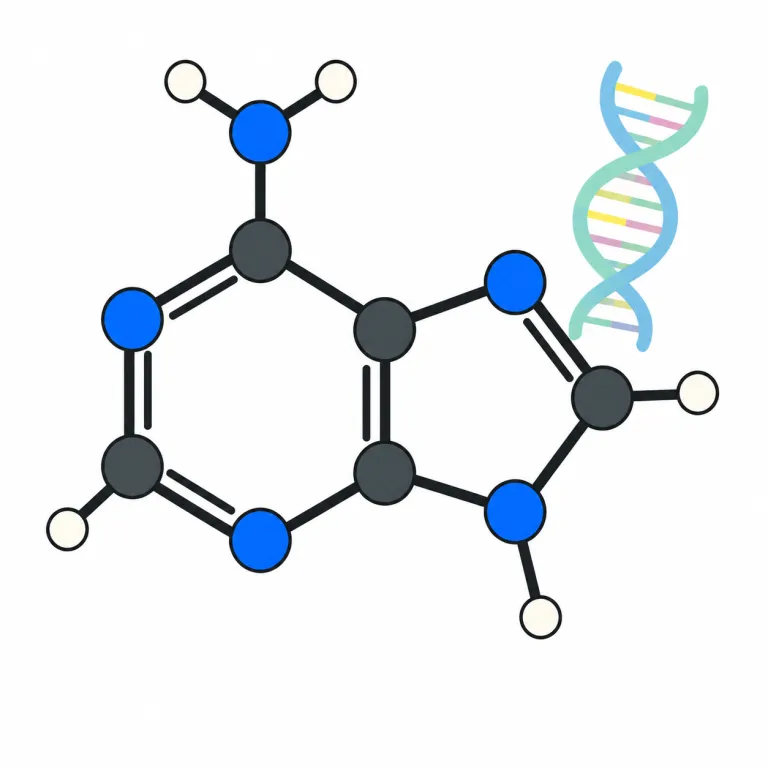
アデニン
解説 Definition
DNAやRNAを構成する4つの塩基の一つ。チミンやウラシルと塩基対を形成する。
Adenine is one of the basic chemical parts that make up DNA and RNA. It is also involved in important energy processes in living cells. This word is used mainly in biology and chemistry.
覚え方のコツ Memory Tip
DNAの塩基は A・G・C・T の4文字でまず整理すると覚えやすく、adenine はその先頭の A。教科書でも配列でも A と略されるので「A=adenine」を最優先で固定します。次に、DNA では A-T、RNA では A-U と“相手”ごと覚えると混乱しにくい。guanine も purine なので並べて出ますが、G は guanine、A は adenine と頭文字で切り分けるのが安全。さらに adenosine、ATP など A 系の語に触れると、この塩基の存在感が強まり記憶に残ります。
Fix the shortcut first: in DNA, `A` stands for `adenine`. Then connect it to the base-pair rule: A pairs with T in DNA, and with U in RNA. Keeping `A = adenine` clear helps you avoid mixing it up with `guanine`.
例文
Adenine pairs with thymine in the double helix structure of DNA.
アデニンはDNAの二重らせん構造においてチミンと塩基対を形成する。
The concentration of adenine in the sample was measured using spectroscopy.
サンプル中のアデニンの濃度は分光法を用いて測定された。
Adenine is one of the four nucleotide bases found in both DNA and RNA.
アデニンはDNAとRNAの両方に見られる4つのヌクレオチド塩基の一つである。
adenine の類義語・関連語
紛らわしい語
adenine の語源・成り立ち Etymology
adenine はギリシャ語 aden「腺」+ 化学語尾 -ine に由来し、最初に膵臓などの腺組織から得られたことが名の背景です。関連語は adenoid、adenoma。DNA の塩基名に「腺」が残るので、発見場所がそのまま語になったとわかります。
Adenine comes from Greek aden, meaning gland, with the chemical ending -ine. The name reflects the fact that the substance was first obtained from gland tissue. So its modern scientific use still preserves the place where it was first identified. Related words include adenoid and adenoma.
同じレベルの語彙をもっと
外部辞書で調べる
この英単語をクイズで覚えよう