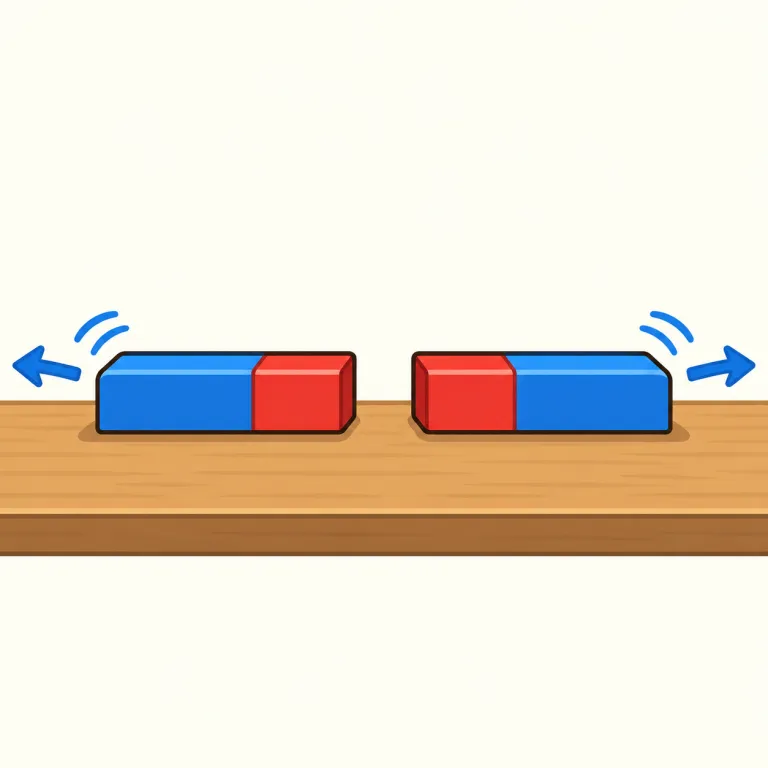
反発する
解説 Definition
repelling は repel の現在分詞・動名詞で、力で物を押し返したり、水や虫などを寄せつけなかったりする動作を表します。
Repelling is the present participle or gerund of “repel.” It describes pushing something away through physical force or preventing a substance, insect, or other unwanted thing from approaching or remaining nearby.
使い方 Usage
- be動詞+repelling で「反発している・押し返している」。repelling each other は「互いに反発している」です。 Use be + repelling for an ongoing action. Repelling each other describes things pushing one another away.
- for repelling mosquitoes は「蚊を寄せつけないために」。前置詞 for の後ろでは動名詞として使います。 In for repelling mosquitoes, repelling is a gerund after the preposition for and describes the purpose of keeping mosquitoes away.
覚え方のコツ Memory Tip
磁石が反発する、水をはじく、虫を寄せつけない、という「対象を遠ざける」イメージで覚えましょう。repel の語末の l を重ねて repelling と書きます。
Picture something being kept away: magnets repel each other, water is repelled, and insects are kept away. Double the final l of repel before adding -ing: repelling.
例文
The magnets are repelling each other on the table.
その磁石はテーブルの上で互いに反発しています。
This spray is useful for repelling mosquitoes in summer.
このスプレーは夏に蚊を寄せつけないのに役立ちます。
The coating works by repelling water from the surface.
そのコーティングは表面から水をはじくことで機能します。
repelling の類義語・関連語
類義語
対義語
紛らわしい語
repelling の語源・成り立ち Etymology
ラテン語 repellere(追い返す)に由来。re-(後ろへ)+ pellere(押す・打つ)の構成で、「押し返す→反発する」の意味になった。同根語に compel(強いる=共に押す)、propel(推進する=前へ押す)がある。
Repelling is formed from repel plus the participial ending -ing, with the final l doubled. Repel comes through French and Latin from Latin repellere, composed of re-, meaning “back,” and pellere, meaning “to drive or strike.” Its literal structure therefore suggests driving something back. The same Latin root appears in compel and propel, although their prefixes create different directions and meanings.
同じレベルの語彙をもっと
外部辞書で調べる
この英単語をクイズで覚えよう