くる病
解説 Definition
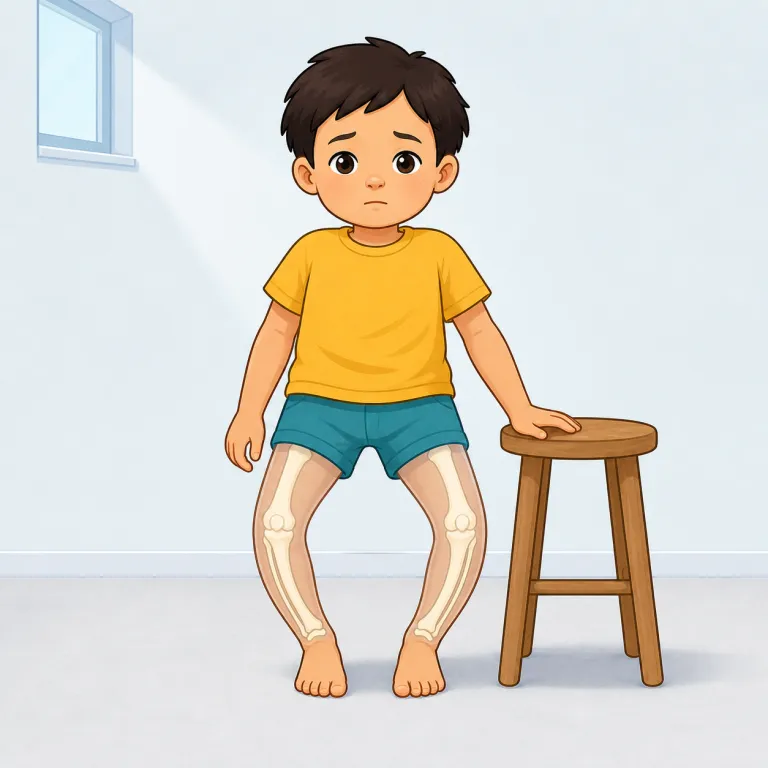
ビタミンD不足によって骨が軟化・変形する小児の病気。骨の発育障害を引き起こす。
Rickets is a disease in children that causes bones to become soft and weak, usually because the body does not get enough vitamin D, calcium, or phosphate. It is a medical word used in health and nutrition contexts. The condition can affect bone growth and cause the legs or other bones to bend.
覚え方のコツ Memory Tip
rickets は形が -s で終わるので複数形に見えますが、病名として1語で覚えるのがコツ。まず rickety「ガタガタの・弱々しい」をセットで連想すると、骨がしっかり育たず、脚が曲がりやすい子どもの病気という像が出ます。文脈では vitamin D deficiency, soft bones, bowed legs と一緒に出やすいので、「子ども・ビタミンD不足・骨がやわらかく変形」の3点をまとめて覚えると定着しやすいです。
Be careful: even though it ends in `-s`, `rickets` is the name of one disease, not a plural noun. A useful memory hook is `rickety`, meaning weak or shaky, because the words sound similar. That connection can help you remember the idea of weak bone development.
例文
Rickets was once common among children who lacked adequate sunlight exposure.
くる病はかつて、十分な日光を浴びない子どもたちの間でよく見られました。
Vitamin D supplementation has dramatically reduced the incidence of rickets worldwide.
ビタミンDの補給により、世界中でくる病の発生率が劇的に減少しました。
The child's bowed legs were a classic sign of rickets caused by nutritional deficiency.
その子どもの湾曲した脚は、栄養不足によるくる病の典型的な兆候でした。
rickets の類義語・関連語
紛らわしい語
rickets の語源・成り立ち Etymology
rickets は語源未詳ですが、一説では古英語系 wrickken「ねじる・ゆがめる」に結びつき、骨が曲がる症状を映した語とされます。体つきが「ねじれていく」病名だと見ると腑に落ち、rickety や wry にも同じゆがみのイメージが通います。
The origin of "rickets" is uncertain. One common theory connects it with old Germanic or Old English words meaning to twist or bend, reflecting the idea of bones becoming crooked. That history fits the related English word "rickety," which keeps the sense of weakness or distortion. The exact source, however, is still not fully settled.
同じレベルの語彙をもっと
外部辞書で調べる
この英単語をクイズで覚えよう