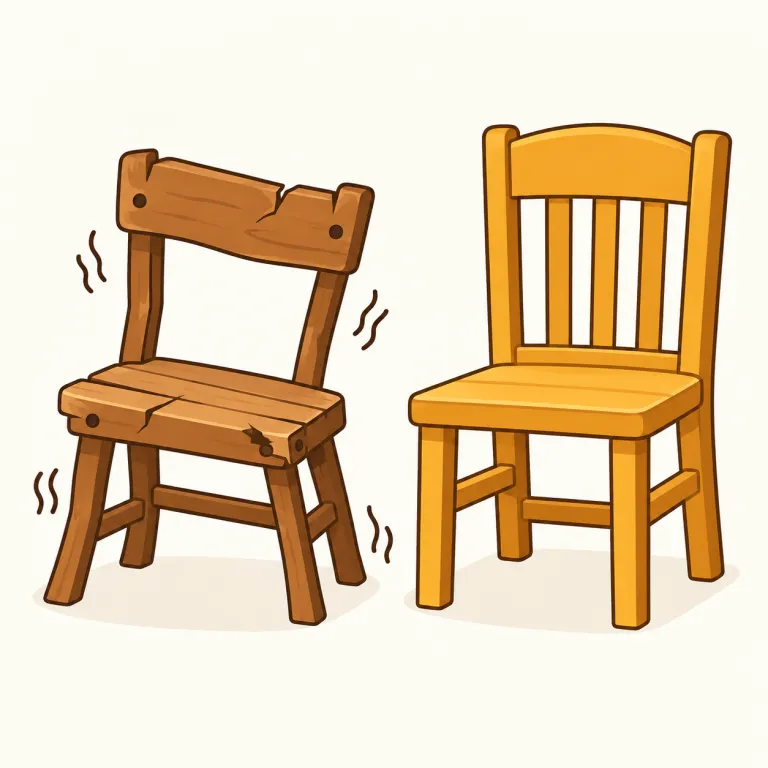
ガタガタ
解説 Definition
rickety は、古くて弱く、ガタガタして壊れそうな様子を表す形容詞です。日本語の「ガタガタ」に近いですが、音だけでなく構造が不安定で頼りないことを強く含みます。
Rickety describes a structure or object that is weak, unstable, and likely to shake or collapse, often because it is old or poorly made. It commonly modifies things such as chairs, bridges, stairs, and ladders.
覚え方のコツ Memory Tip
rickets「くる病」に形容詞語尾 -y が付いた語で、骨が弱く不安定な状態から、椅子・橋・はしごなどが「古くてガタガタし、壊れそうな」様子へ意味が広がりました。単なる shaky より、構造そのものの弱さや頼りなさを意識して覚えます。
Link rickety with rickets, a disease historically associated with weak or poorly formed bones. The adjective first referred to that physical weakness and later came to describe objects whose structures seem similarly weak and unstable. Picture a rickety chair, bridge, or ladder: it wobbles, creaks, and may not safely support weight. Unlike shaky, which can describe temporary movement, rickety usually suggests that the object itself is old, badly built, or structurally unreliable. The common pattern “too rickety to use” captures both instability and danger.
例文
The old man sat on a rickety chair by the window.
その老人は窓際のガタガタする椅子に座りました。
We crossed a rickety wooden bridge over the stream.
私たちは小川にかかる古くて不安定な木の橋を渡りました。
The ladder looked too rickety to use safely.
そのはしごは安全に使うにはあまりにもガタガタに見えました。
rickety の類義語・関連語
rickety の語源・成り立ち Etymology
rickety はもともと rickets「くる病」にかかった、を意味した形容詞で、rickets に形容詞語尾 -y が付いた語です。くる病で骨が弱くぐらつくイメージから、建物や椅子などにも広がって「ガタガタの」という意味になりました。
Rickety was formed from rickets with the adjective-forming suffix -y. Its earliest uses described someone affected by rickets, a condition that can weaken and deform bones. The word was subsequently applied figuratively to furniture, buildings, vehicles, and other structures that appeared weak, poorly supported, or likely to collapse. The modern sense therefore preserves the historical association with physical weakness and instability.
同じレベルの語彙をもっと
外部辞書で調べる
この英単語をクイズで覚えよう