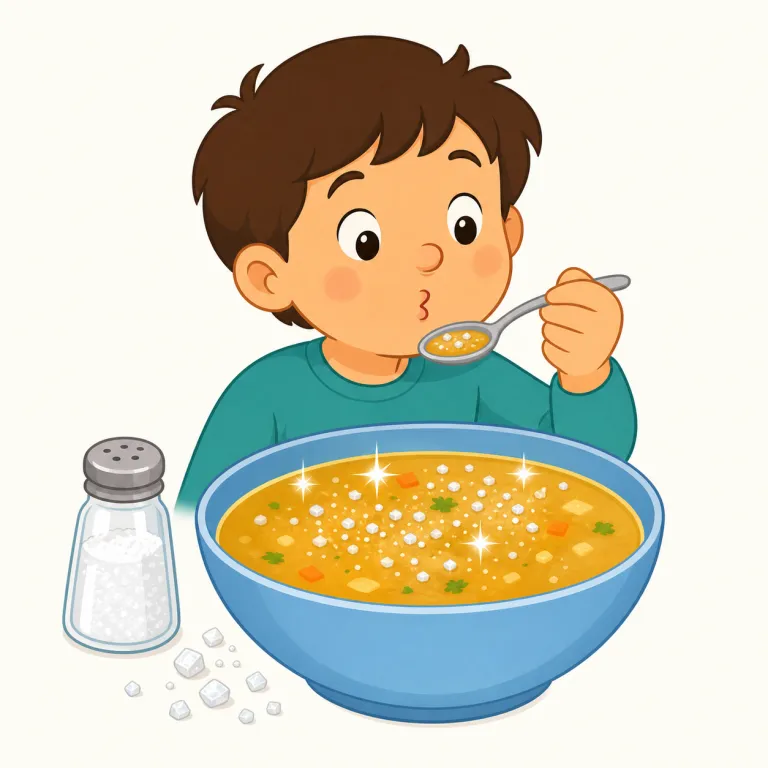
不機嫌さ、恨みがましさ
noun 名詞口語・俗語で、批判や敗北などに腹を立てた不機嫌さや恨みがましさを指す。人の態度や発言に表れる感情について the saltiness of ... などの形で使われ、味の塩辛さとは区別される。
塩辛い味の性質や特質。塩が多く含まれている状態の度合い。食べ物の塩味の強さを表現する。
Saltiness is the taste or quality of having salt in it. It is commonly used for food, drinks, or water. The word helps describe how strongly salty something tastes.
まず `salt` が「塩」、`salty` が「塩辛い」と分かれば、その後ろに性質を名詞化する `-ness` が付いた `saltiness` はそのまま「塩辛さ・塩味の強さ」と取れる。`happy → happiness` と同じ形なので覚えやすい。料理の文脈で `reduce the saltiness`(塩味を抑える)、`balance sweetness and saltiness`(甘味と塩味のバランスを取る)のように出ることが多い。単なる `salt`(塩)そのものではなく、「どれくらい塩っぽいか」という度合いを表す語だと押さえると残りやすい。
Build it step by step: `salt` to `salty`, then add `-ness`, just like `happy` to `happiness`. That makes `saltiness` easy to remember as the quality or level of being salty. It often appears in food phrases like `reduce the saltiness` or `balance sweetness and saltiness`.
The saltiness of the soup was overpowering.
そのスープは塩味が強すぎた。
We adjusted the saltiness of the dish by adding water.
私たちは水を加えることで、料理の塩辛さを調整した。
The saltiness of soy sauce enhances the flavor of Asian cuisine.
醤油の塩味はアジア料理の風味を引き立てる。
文脈によって、次の意味でも使われます。
口語・俗語で、批判や敗北などに腹を立てた不機嫌さや恨みがましさを指す。人の態度や発言に表れる感情について the saltiness of ... などの形で使われ、味の塩辛さとは区別される。
「saltiness」は salt + -y + -ness で、「塩っぽい性質」をそのまま名詞化した形です。salt は古英語 sealt、さらに印欧祖語 *sal- にさかのぼり、saline や salad も同系なので、「塩そのものの感じ」が中心義だと見えてきます。
Saltiness is formed from salt, the adjective suffix -y, and the noun suffix -ness. Salt comes from Old English sealt and goes back to an ancient Indo-European root *sal-. The word first meant the quality of being salty, directly built from the basic idea of salt itself. Related words include saline, and salad is also historically connected to the same root.
この英単語をクイズで覚えよう