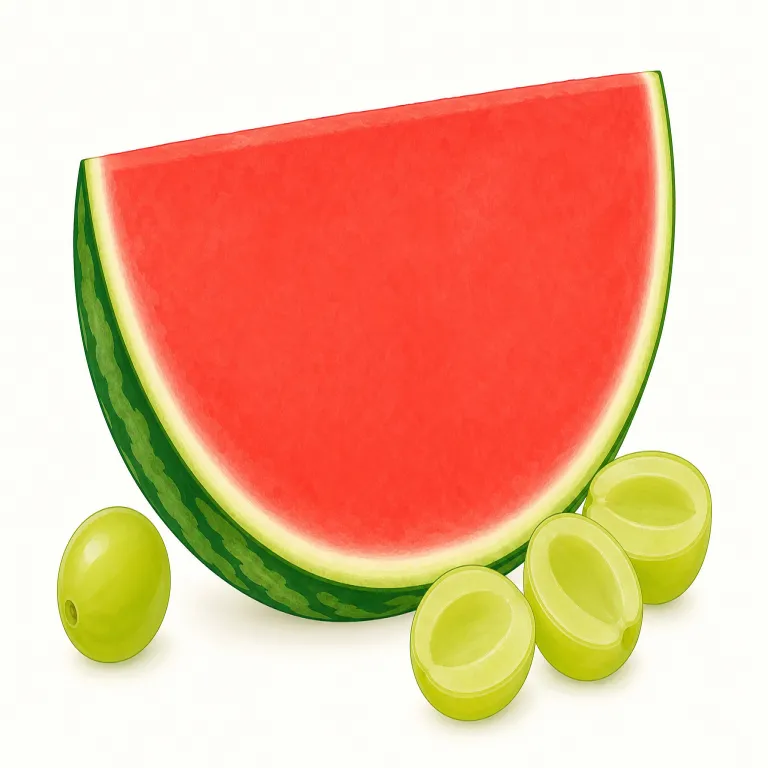
種なし
解説 Definition
種が除去された果物や野菜。ぶどうやスイカなどで種がない品種。
Seedless means having no seeds. It is most often used to describe fruit, such as grapes or watermelons, that are easier to eat because the seeds have been removed or do not develop. It can also be used more generally for anything naturally without seeds.
覚え方のコツ Memory Tip
seed を知っていれば「種」、-less は careless, harmless, sugarless などと同じ「〜がない」。この2つに分けて seedless=「種のない」と即読できるようにするのが近道。覚える場面は seedless grapes, seedless watermelon が定番。ed で終わるので過去分詞風に見えるが、これは seed + less の形容詞。意味は「誰かが種を抜いた」より「種がない品種・状態」に寄りやすい。
This one is easy if you know `seed` and the suffix `-less`, as in `careless` or `sugarless`. Put them together: `seedless` means “without seeds.” Remember it with common examples like `seedless grapes` and `seedless watermelon`.
例文
These seedless grapes are perfect for snacking.
この種なしブドウはおやつに最適です。
Seedless watermelons are more convenient for families.
種なしスイカは家族にとってより便利です。
The seedless orange variety became popular in supermarkets.
種なしオレンジの品種がスーパーで人気になった。
seedless の類義語・関連語
seedless の語源・成り立ち Etymology
seedless は seed + -less「〜がない」から成り、seed は古英語 saed「種」、-less も古英語 -leas「欠いた」に由来します。sow や semen も同じ「種まき」の語族で、文字どおり「種を欠く」と分けるだけで、果物の性質をそのまま言い当てた語だとわかります。
Seedless is a native English formation from seed and the suffix -less, meaning "without." Both parts go back to Old English: seed from saed and -less from -leas. Its history is very direct: it simply meant "lacking seeds." Seed is related to other words from the same wider family, such as sow and semen.
同じレベルの英単語をもっと
外部辞書で調べる
この単語を英単語クイズで覚えよう