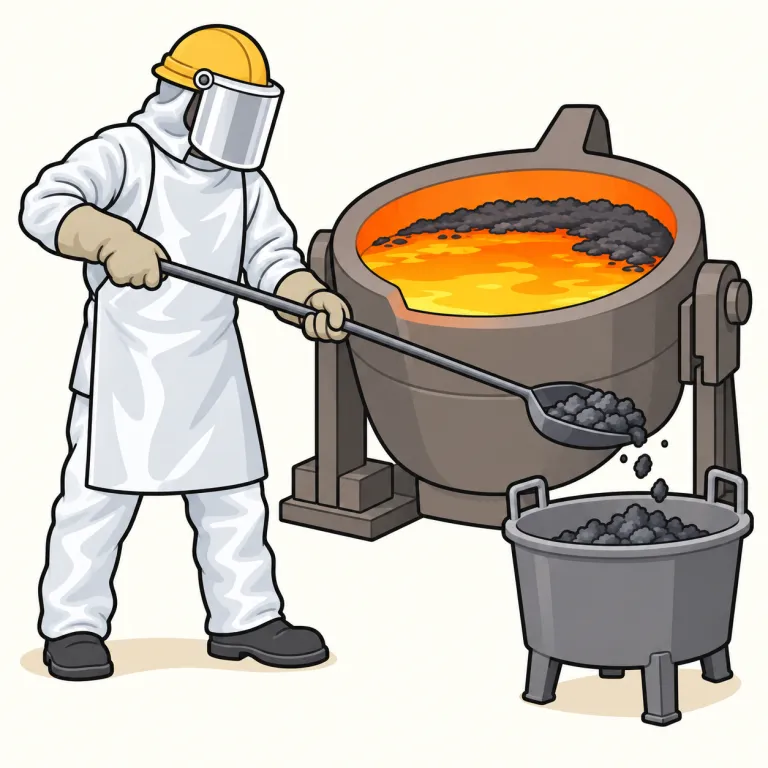
スラグ
解説 Definition
slag は、金属を精錬するときに分離される鉱さい「スラグ」を表す名詞です。日本語の専門語「スラグ」とほぼ同じ意味で使われます。
Slag is the waste or stony material separated from metal during smelting or refining. It consists largely of impurities and added fluxes, and some types can be processed for reuse in construction materials such as roads or cement.
使い方 Usage
使い分け Common distinctions
- ore は金属を得るための原料「鉱石」、metal は「金属」、slag は精錬時に分離される副産物です。 Ore is the raw material processed to obtain metal; metal is the desired product; slag is the by-product separated during smelting or refining.
覚え方のコツ Memory Tip
炉の中の溶融金属から、不要な鉱物質の層を取り除く場面を思い浮かべましょう。日本語の工業用語「スラグ」と英語の綴り slag を結び付けます。
Picture unwanted mineral material being separated from molten metal in a furnace. Connect the Japanese industrial term スラグ directly with the English spelling slag.
例文
The factory removes slag from the melted metal.
その工場では溶けた金属からスラグを取り除きます。
Slag can be reused in some road materials.
スラグは一部の道路材料に再利用できます。
Workers checked the amount of slag after the process.
作業員たちは工程の後でスラグの量を確認しました。
slag の類義語・関連語
slag の語源・成り立ち Etymology
中低ドイツ語 slagge(鍛冶の滓)に由来し、schlagen(打つ)と同根。金属を打って精錬する際に出る不純物の意。英語 slay(打ち殺す)やドイツ語 Schlag(打撃)と同じ語根を持ち、「打つ行為から生じるもの」が原義。
Slag entered English from a Low German or related Germanic form comparable to Middle Low German slagge, referring to waste from metalworking. It is historically associated with Germanic words connected with striking or hammering, reflecting early smithing practices. In English, the industrial noun became established for the nonmetallic material separated during smelting and refining. Its modern technical sense is more precise than its broader figurative or informal uses.
同じレベルの語彙をもっと
外部辞書で調べる
この英単語をクイズで覚えよう