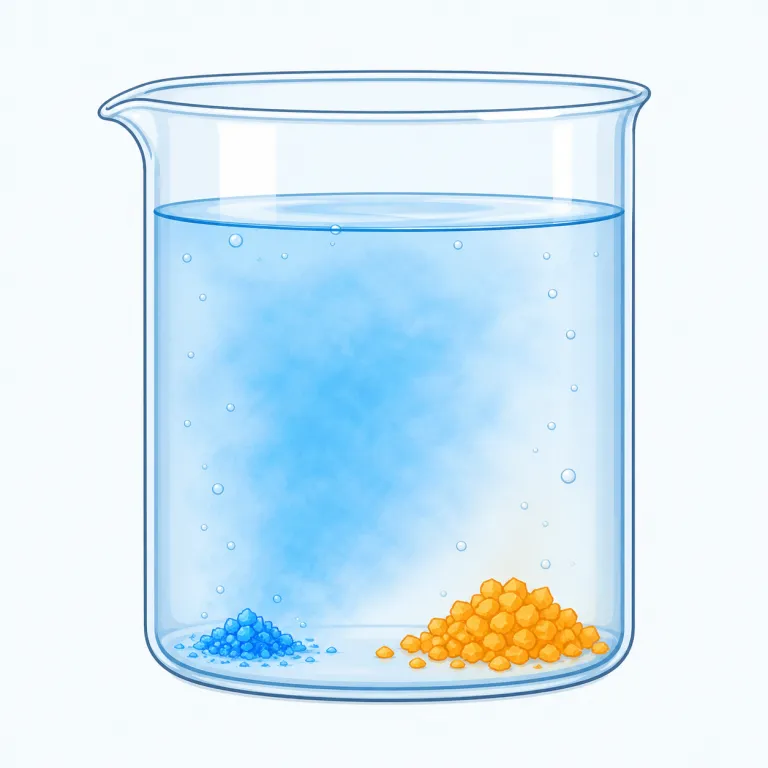
solubility
solubility はTOEFL 80・IELTS 6.5レベルの英単語で、「溶解度」という意味があります。発音記号は /ˌsɑːljəˈbɪləti/ です。
溶解度
解説 Definition
物質がある液体に溶ける能力や程度を表します。特定の環境における溶解のしやすさを数値または比率で示す物理化学的性質です。
Solubility is the ability of a substance to dissolve in a liquid, especially in water. It is often discussed in chemistry, medicine, and materials science. The word can also refer to how much of the substance can dissolve under certain conditions.
覚え方のコツ Memory Tip
まず soluble「溶ける」を土台にし、-ity が付くと「性質・度合い」を表す名詞になる、とまとめて覚えると整理しやすいです。つまり solubility は「溶ける性質の強さ」。化学では water solubility、high/low solubility の形で非常によく出ます。dissolve は「実際に溶ける動作」、soluble は「溶けやすいという性質」、solubility はその性質を測ったもの、と3語を並べると記憶に残りやすいです。
First remember `soluble`, then add `-ity`, which often turns an adjective into a quality or degree. That makes `solubility` the measurable quality behind `soluble`. It is easy to keep in mind with common pairs like `high solubility` and `low solubility`.
例文
The solubility of salt in water increases with temperature.
水に対する塩の溶解度は温度とともに増加する。
Scientists measure the solubility of different compounds in laboratories.
科学者は実験室で異なる化合物の溶解度を測定する。
The drug's solubility was improved through chemical modification.
その薬の溶解度は化学修飾によって改善された。
solubility の類義語・関連語
派生語
紛らわしい語
solubility の語源・成り立ち Etymology
solubility は soluble「溶ける性質のある」に -ity「性質」が付いた語で、ラテン語 solvere「ほどく・ゆるめる」にさかのぼります。もとは「結び目がほどける」感覚なので、物質がほどけるように液体に混じることから「溶解度」という意味になります。関連語は solve, solution。
"Solubility" comes from "soluble" plus the suffix "-ity," which makes a noun of quality. The deeper root is Latin "solvere," meaning "to loosen" or "untie." From the idea of something being loosened apart, the meaning developed into the ability of a substance to dissolve; related words include "solve" and "solution."
同じレベルの語彙をもっと
TOEFL 80の一覧へ →外部辞書で調べる
この英単語をクイズで覚えよう