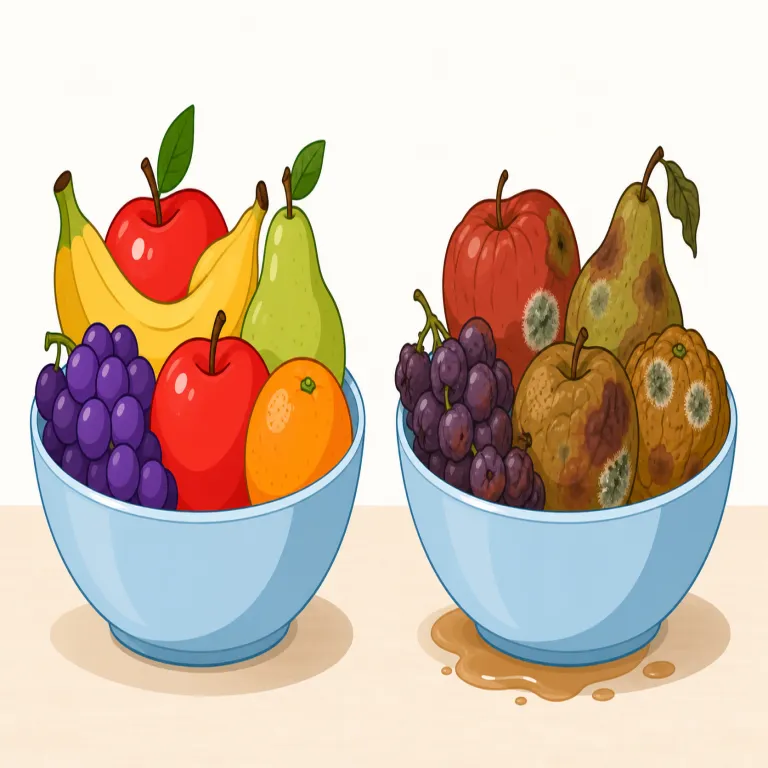
傷んだ
解説 Definition
腐りかけたり、傷んだりした様子。良好な状態ではなく、品質が低下した食べ物や物を指します。また、わがままで甘えている人を表すこともあります。
Spoiled describes a person, especially a child, who is given too much attention or too many things and becomes selfish or difficult. It is often used when someone expects special treatment and does not handle disappointment well. It can also describe food that has gone bad, but for people it usually has this negative meaning.
覚え方のコツ Memory Tip
spoil は『だめにする・台無しにする』。核は一貫して『良い状態を壊す』で、spoiled は『その結果、だめになった状態』と押さえると広く使えます。食べ物なら spoiled milk で『傷んだ牛乳』、人なら a spoiled child で『甘やかされて性格がだめになった子』。surprise を spoil するのも同じ発想です。rotten は腐敗そのものに寄り、spoiled は『本来よかったものが損なわれた』感覚が強い、と比べると残りやすいです。
Start from the verb `spoil`, which means something good becomes bad. So `spoiled` is the result: milk can be spoiled, and a child can be spoiled too. It often appears in pairs like `spoiled milk` and `a spoiled child`, which helps you connect the word to two common situations.
例文
We threw away the spoiled fruit.
私たちは傷んだ果物を捨てた。
The spoiled milk smelled bad, so I did not drink it.
傷んだ牛乳は嫌なにおいがしたので、私は飲まなかった。
I found a spoiled egg in the fridge.
冷蔵庫の中で傷んだ卵を見つけた。
腐った
(意味 2)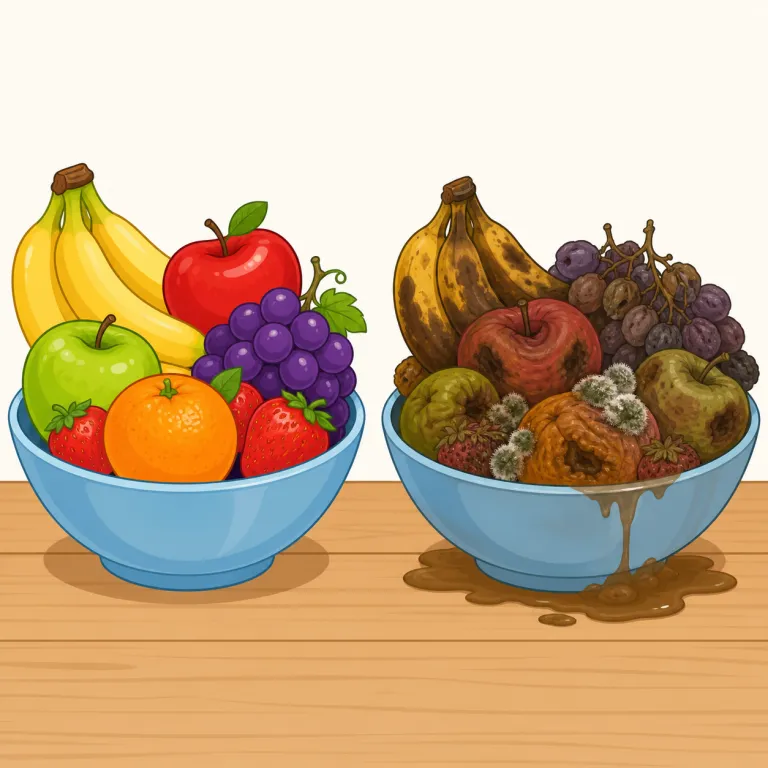
解説 Definition
主に食べ物が時間の経過や保存状態の悪さで傷み、食べられない、または食べるのが危険な状態を表します。milk, meat, fruit などによく使われます。人や性格についての「甘やかされた」という意味とは別です。
No longer fit to eat or drink because the food has gone bad. This often happens when it is kept too long or stored poorly.
例文
The milk is spoiled, so don't drink it.
その牛乳は腐っているので、飲まないで。
Some of the fruit was spoiled after the long trip.
長い輸送のあとで、果物の一部は腐っていた。
The spoiled meat gave off a terrible smell.
腐った肉はひどいにおいを放っていた。
台無しの
(意味 3)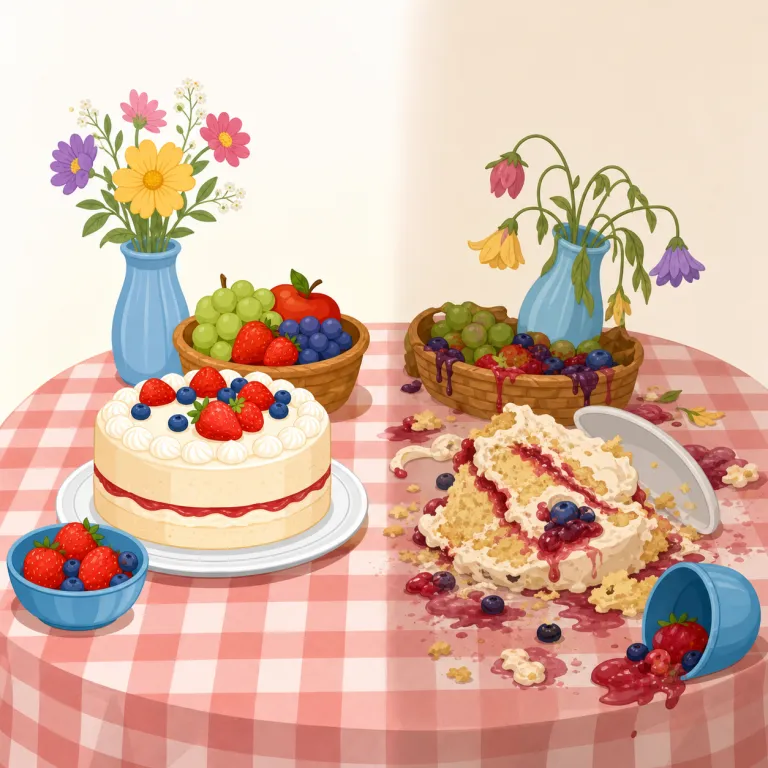
解説 Definition
物事が損なわれて価値や楽しさが失われた状態を表します。計画、気分、見た目、機会など幅広い対象に使えます。食べ物が腐ったという意味ではなく、何かがだめになったという比喩的で一般的な用法です。
Damaged or negatively affected so that something has lost its value, usefulness, or enjoyment. It can describe a holiday, surprise, plan, or other experience that has been ruined.
例文
Days of rain meant a spoiled holiday for the family.
何日も雨が続き、家族の休暇は台無しになった。
The spoiled surprise disappointed everyone.
台無しになったサプライズに皆ががっかりした。
The spoiled film left us with no clear photos.
台無しになったフィルムのせいで、鮮明な写真は一枚も残らなかった。
spoiled の類義語・関連語
派生語
紛らわしい語
spoiled の語源・成り立ち Etymology
spoiled はラテン語 spoliare「はぎ取る・略奪する」が古フランス語を経て英語に入った語です。spoil は本来「だめにする」で、despoil も同根。子どもが spoiled なのは、物を与えすぎて性格を「損なった」と考えると腑に落ちます。
"Spoiled" comes from the verb "spoil," which entered English through Old French from Latin "spoliare," meaning "to strip" or "plunder." It first had the sense of taking away or damaging something. From the idea of being ruined or harmed, it later came to describe a child whose character is harmed by being given too much. Related words include "spoil" and "despoil."
同じレベルの語彙をもっと
外部辞書で調べる
この英単語をクイズで覚えよう