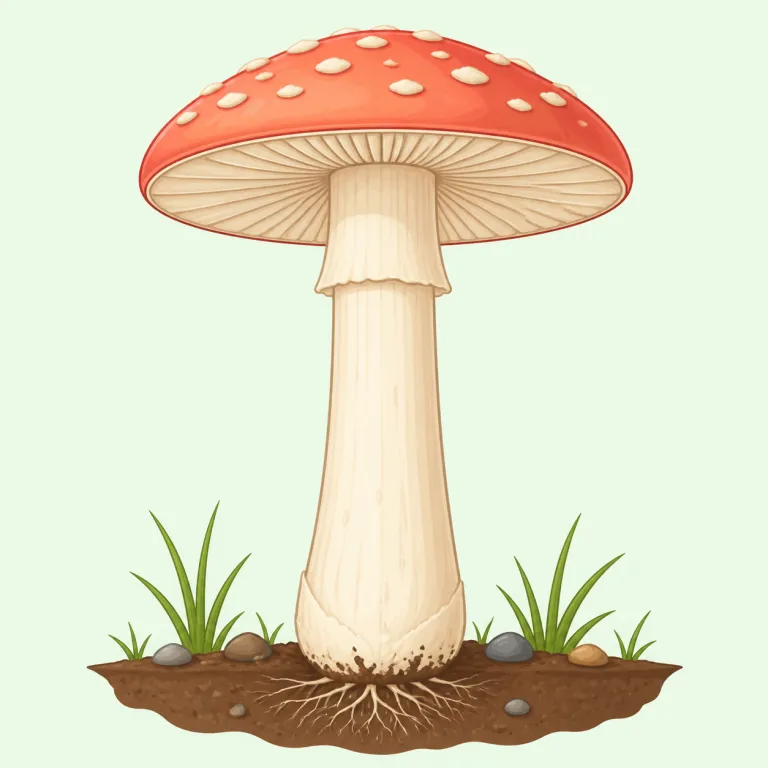
柄
解説 Definition
植物の茎、特にキノコやシダなどの軸の部分。植物体を支持する構造である。
A stipe is a thin stalk or stem that supports part of a plant, mushroom, seaweed, or similar living thing. It is a technical word used in biology and is not common in everyday English. It often refers to a stem-like part that is not exactly the same as a normal plant stem.
覚え方のコツ Memory Tip
まず stem や stalk の専門寄り言い換えとして覚えると定着しやすい語です。とくに mushroom の「傘を支える部分」、fern や seaweed の細い軸を指す場面で出やすいので、「植物一般の茎」よりも「図鑑や生物学で部位名をきっちり言う語」と考えるとよいです。日常会話なら stem/stalk で済むことが多く、stipe は限定的。stripe とつづりが近いですが無関係なので混同注意。cap and stipe という定番の組み合わせで、上を支える細い柱の像を固定すると覚えやすいです。
Remember `stipe` as a more technical cousin of `stem` or `stalk`. It often appears in biology, especially with mushrooms: think of `cap and stipe` together. Also watch the spelling: it looks a bit like `stripe`, but the two words are unrelated.
例文
The mushroom's stipe is thick and pale, indicating its age and variety.
キノコの柄は太く色が薄く、そこから生育段階や種類が分かる。
The stipe of the tree fern can grow quite tall and sturdy.
木生シダの葉柄はかなり長く、丈夫に育つことがある。
A mushroom expert checks the stipe to identify the species.
キノコの専門家は、種類を見分けるために柄を調べる。
stipe の類義語・関連語
類義語
紛らわしい語
stipe の語源・成り立ち Etymology
stipe は新ラテン語 stipes、さらにラテン語 stipes「木の幹・柱」に由来します。きのこや海藻の柄を小さな幹のように見た語で、だから「支える細い軸」の意味になりました。関連語は stipitate、遠い同根に stiff。
Stipe comes from New Latin stipes, based on Latin stipes, meaning "tree trunk" or "post." It was used for the stem of a mushroom or seaweed because it looked like a small trunk supporting the rest. Related forms include stipitate, and it may be distantly linked with stiff.
同じレベルの語彙をもっと
外部辞書で調べる
この英単語をクイズで覚えよう