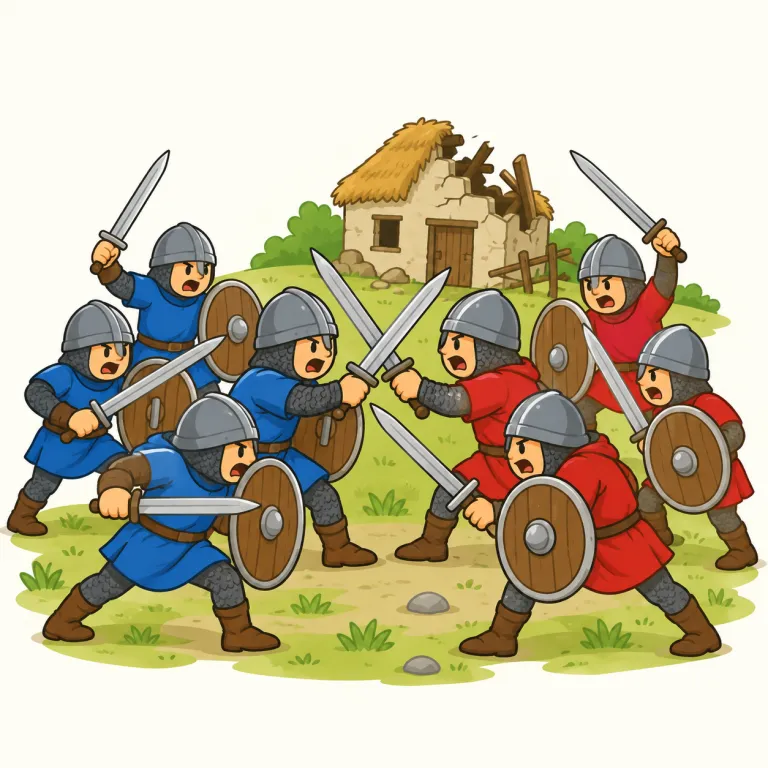
騒乱
解説 Definition
古い英語で紛争、戦い、または騒乱を意味する言葉。現代ではほとんど使用されず、主に中世文学や歴史的な文脈でのみ見られる古語。
An archaic or dialectal noun for a fierce conflict, battle, or period of turmoil. It occurs chiefly in medieval, historical, poetic, or Scots contexts rather than in ordinary modern English.
覚え方のコツ Memory Tip
storm(嵐)と同根で、激しく荒れる状況から「戦い・騒乱」を連想する。現代の日常語ではなく、中世の戦闘を描く年代記やスコットランド系の古風な文章で出会う語と覚える。battle より歴史的・詩的な響きが強く、the stour between kingdoms のように使われる。
Connect stour with storm: the two words share a historical Germanic association with violent disturbance. Picture an old chronicle describing kingdoms caught in a storm of fighting; that turbulent battle is a stour. Unlike the everyday words battle or conflict, stour sounds archaic, poetic, or regional, especially Scots. Remember it through historical combinations such as “a fierce stour” or “the stour between two kingdoms,” not as a normal term for a modern disagreement.
例文
The stour between the two kingdoms lasted for many years.
その二つの王国間の紛争は長年続いた。
In medieval literature, 'stour' often referred to fierce battles.
中世文学では『stour』はしばしば激しい戦闘を指した。
The chronicler documented the stour that devastated the countryside.
年代記者は田舎を荒廃させた紛争を記録した。
stour の類義語・関連語
stour の語源・成り立ち Etymology
古フランス語 estour(戦闘・騒動)を経て、ゲルマン祖語 *sturmaz(嵐)に遡る。英語 storm(嵐)と同根で、「激しく荒れる」イメージが騒乱・混乱の意味に転じた。主にスコットランド英語や方言で用いられる古風な語である。
Middle English stour came through Old French estour, meaning a battle or violent attack. The French word is of Germanic origin and is related to the ancestral word behind English storm. The shared semantic image is violent agitation: a physical storm becomes a useful image for the confusion and force of combat. The noun survived particularly in Scots and northern dialectal use and now usually appears in archaic, literary, or historical writing.
同じレベルの語彙をもっと
外部辞書で調べる
この英単語をクイズで覚えよう