意味一覧 (3件)
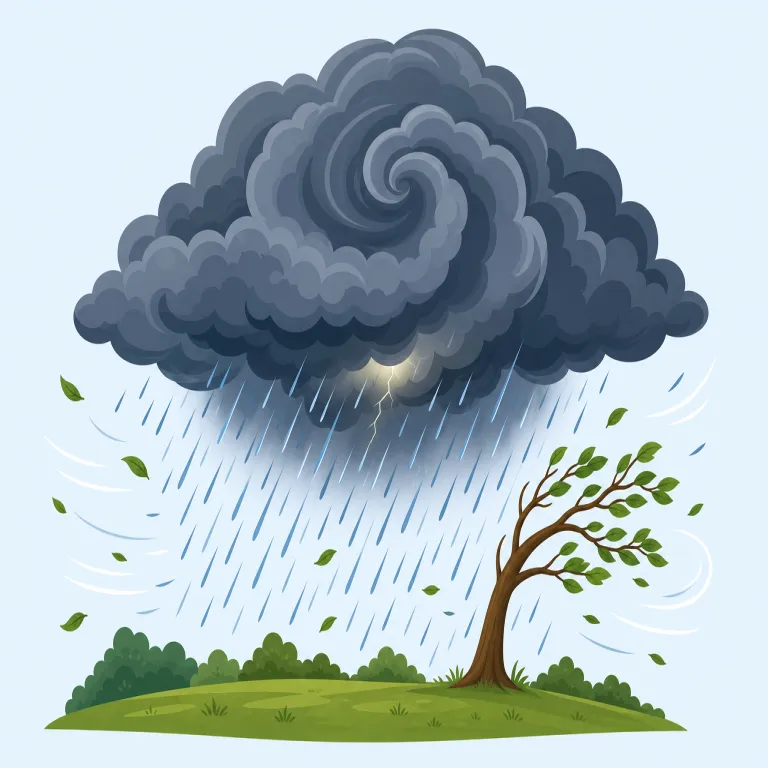
嵐、暴風雨
解説 Definition
強い風と激しい雨、または雷などをともなう、とても荒れた天気を表します。外に出るのが危険になることもある、強い悪天候のことです。
A storm is very bad weather with strong wind, heavy rain, thunder, or similar conditions. It can make being outside dangerous.
覚え方のコツ Memory Tip
storm は、強い風だけでなく、激しい雨や雷も重なって外が大荒れになる「嵐、暴風雨」です。窓の外で木が大きく揺れ、雨が打ちつけるため、家の中で待つ場面を思い浮かべると覚えやすくなります。strong storm「強い嵐」、a storm comes「嵐が来る」、be caught in a storm「嵐に遭う」がよく使う形です。stormy weather の stormy は「嵐のような天気の」という形容詞です。普通の rain よりも、風雨が激しく危険な悪天候だと押さえると混同しにくいでしょう。
Picture the sky turning dark, rain falling hard, and strong wind blowing. That dangerous bad weather is a storm.
例文
A storm comes at night.
夜に嵐が来ます。
The storm is very strong.
その嵐はとても強いです。
We stay home in a storm.
嵐のときは家にいます。
襲撃する
(意味 2)
解説 Definition
急速に、強い力で攻撃したり激しく襲いかかったりする動作を表す動詞です。軍隊や集団が目標を一気に制圧しようとするときによく使われます。
To storm means to attack or enter a place suddenly, forcefully, and often violently. It is often used for soldiers, police, crowds, or angry people. The word suggests fast movement and strong emotion or power.
覚え方のコツ Memory Tip
storm はまず名詞の「嵐」を思い出すと定着しやすい。動詞では「嵐そのものになる」のではなく、「嵐みたいな勢いで一気に押し寄せて襲う」と捉えるとよい。storm the castle, storm the building のように、防御された場所へどっと突入する形が典型。attack よりも短時間で荒々しく突破する感じが強い。さらに storm into the room だと「怒ってどかどか入る」で、目的地に突進する用法。take by storm も有名なので、勢いで制圧する核イメージを一本化して覚えると混ざりにくい。
As a verb, `storm` suggests rushing into a protected place with force. Learn it in patterns like `storm the building` or `storm the gate`. It feels stronger and more sudden than just `attack`, and it can also describe an angry rush, as in `storm into the room`.
例文
The protesters stormed the city hall at dawn.
抗議者たちは夜明けに市庁舎を襲撃した。
The protesters stormed the company’s headquarters after the leak.
漏洩のあと、抗議者たちはその会社の本社を襲撃した。
The soldiers stormed the building to rescue hostages.
兵士たちは人質を救出するために建物を襲撃した。
怒って入る、出て行く
(意味 3)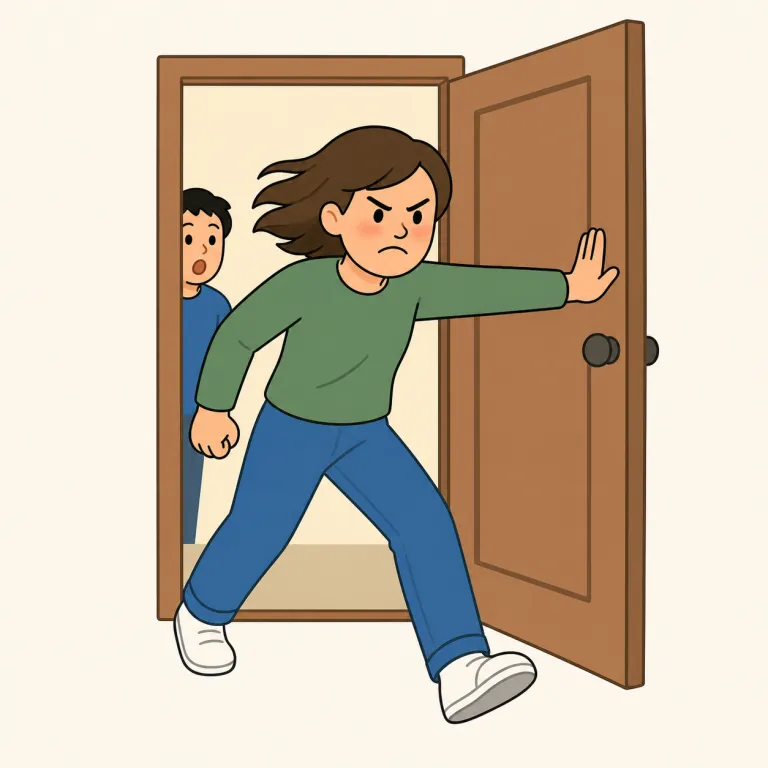
解説 Definition
人が怒りやいら立ちをあらわにして、勢いよくどこかへ入ったり、そこから出て行ったりすることを表す動詞です。足音や態度が荒く、周囲に強い感情が伝わる場面でよく使います。物理的な襲撃ではなく、人の荒々しい移動を述べる語です。
To enter, leave, or move away from a place quickly and forcefully while clearly showing anger. The person's heavy movements or rough manner make the strong emotion obvious to others.
覚え方のコツ Memory Tip
storm は名詞の「嵐」を人の動きに重ねた動詞で、怒りを隠さず、嵐のような勢いで入る・出て行く様子を表します。ただ walk out よりも感情が激しく、足音、乱暴なドア、険しい表情まで周囲に伝わる場面を思い浮かべましょう。storm into the office は「怒って事務所へ入る」、storm out of the meeting は「怒って会議から出る」、storm off to his room は「怒って自室へ立ち去る」。前置詞まで一組で覚えると使いやすいです。
Picture an angry person moving with the force and noise of a storm. Learn storm into for entering angrily, storm out of for leaving angrily, and storm off for angrily moving away.
例文
She stormed out of the meeting after the argument.
口論のあと、彼女は怒って会議室を出て行った。
He stormed into the manager's office without knocking.
彼はノックもせず、上司の部屋に怒ってずかずか入っていった。
My son stormed off to his room when I took his phone away.
私が息子のスマホを取り上げると、彼は怒って自分の部屋へずかずか行ってしまった。
storm の類義語・関連語
storm を含む表現
句動詞・イディオムなど 2 件。クリックで各表現の詳細へ。
storm の語源・成り立ち Etymology
古い英語の storm に由来し、もともと強い風や激しい天気を表す語でした。さらに古いゲルマン系の語にもつながり、荒れた天気という意味で長く使われてきました。
Storm comes from Old English storm, meaning a violent disturbance of the weather. It is related to older Germanic words used for strong wind or rough weather.
同じレベルの語彙をもっと
外部辞書で調べる
この英単語をクイズで覚えよう