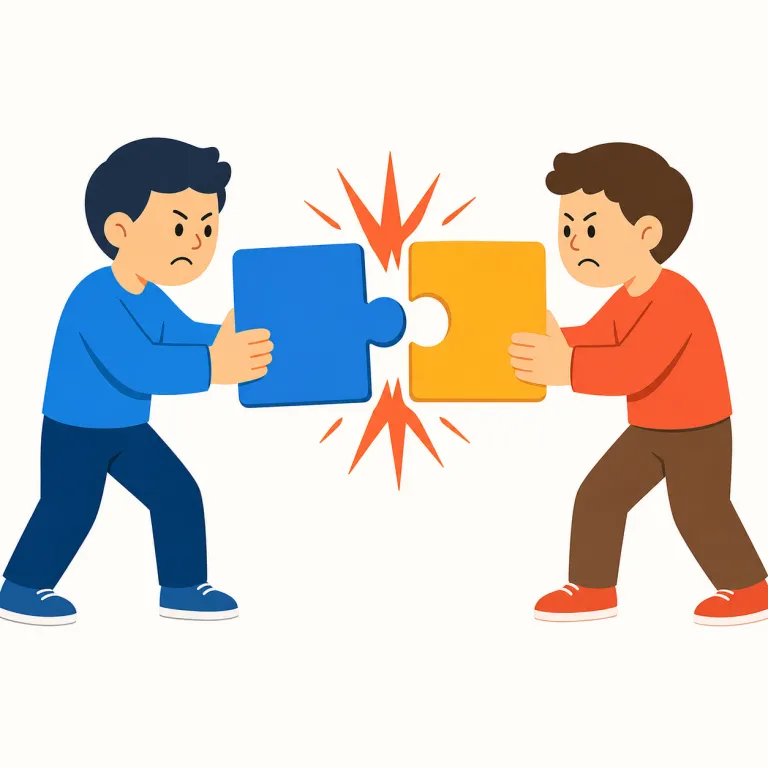
conflict
conflict は英検準2級・TOEIC 730・TOEFL 60・IELTS 5.5レベルの英単語で、「対立、衝突、対立する」という意味があります。発音記号は /ˈkɑːnflɪkt/ です。
対立、衝突
/ verb 動詞 対立する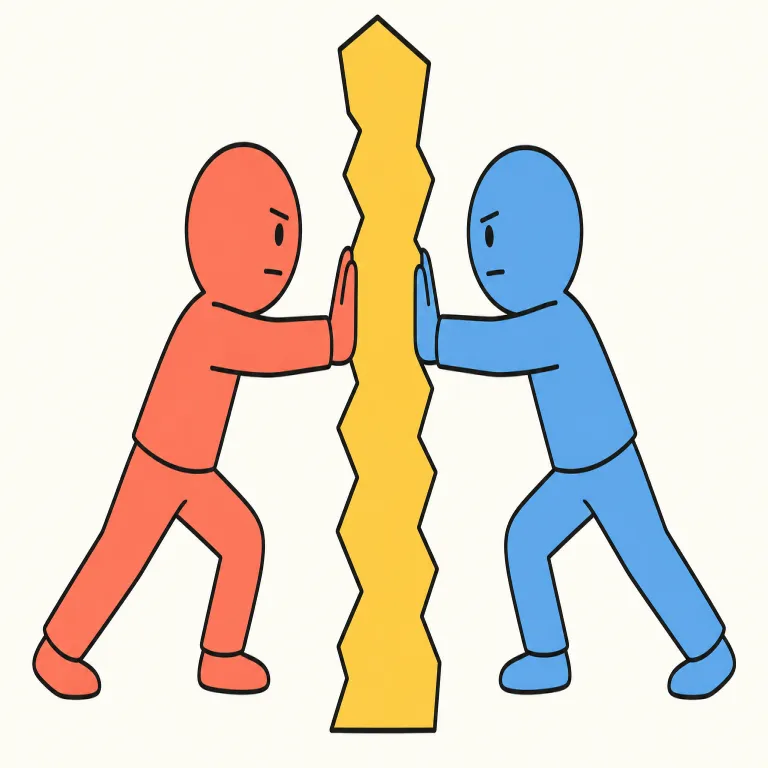
解説 Definition
人や集団、意見や利害などがぶつかり合って一致しない状態を表す名詞です。日常の人間関係から政治・社会問題まで幅広く使われ、強い緊張や争いを含む文脈でよく用いられます。
A state of strong disagreement or opposition between people, groups, ideas, or interests. It often involves tension or struggle because the opposing sides cannot easily agree or work together.
覚え方のコツ Memory Tip
conflict は、まず conflicts with ... の形で丸ごと覚えると定着しやすい語。人同士が争う場面だけでなく、schedule, interests, information など抽象的なものが「食い違う」ときにも広く使う。disagree が意見の不一致、contradict が発言や事実の矛盾に寄りやすいのに対し、conflict は利害・予定・考えがぶつかって両立しない感じ。動詞でも名詞でも頻出なので、the two plans conflict の型ごと覚えると強い。
Picture two groups pulling in opposite directions because their interests clash. Remember a conflict between groups and be in conflict with someone. These noun patterns connect the word with opposing aims or views.
例文
The conflict between my friends makes me sad.
友達同士の対立で私は悲しい。
Two school clubs are in conflict.
学校の二つの部活が対立している。
A conflict over the game splits our class.
試合をめぐる対立でクラスが二つに割れている。
conflict の類義語・関連語
conflict を含む表現
句動詞・イディオムなど 4 件。クリックで各表現の詳細へ。
conflict の語源・成り立ち Etymology
ラテン語 confligere(ぶつかり合う)から。con-(共に)+ fligere(打つ)の構成で、「互いに打ち合う」が原義。関連語:inflict(打撃を与える)、afflict(苦しめる)。物理的な衝突から意見や利害の対立へと意味が広がった。
The word comes from Latin confligere, meaning to clash, combining con-, meaning together, with fligere, meaning to strike. The idea of a physical clash extended to opposition between opinions or interests.
同じレベルの語彙をもっと
英検準2級の一覧へ →外部辞書で調べる
この英単語をクイズで覚えよう