水分を多く必要とする、燃料を大量に使う
adjective 形容詞植物や土地などが成長や維持のために多量の水を必要とすることを表す。また、くだけた表現では thirsty car や thirsty engine のように、車やエンジンの燃料消費量が多いこともいう。
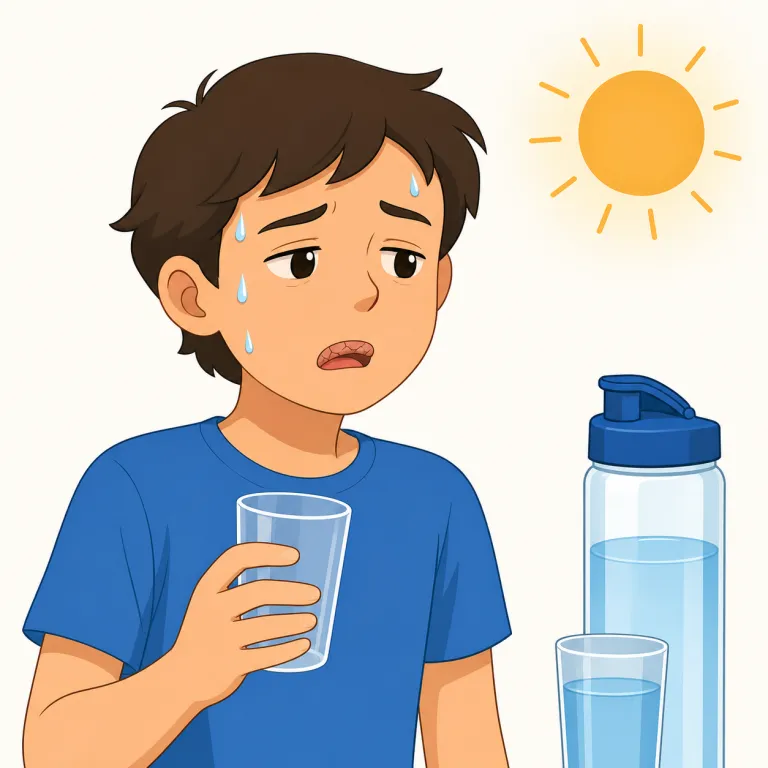
thirsty は英検3級・TOEIC 600レベルの英単語で、「のどが渇いた、〜を渇望する」という意味があります。発音記号は /ˈθɜrsti/ です。
水分を欲してのどが渇いている状態を表す形容詞です。そこから比喩的に、知識、成功、勝利などを強く求めている、渇望しているという意味でも使われます。for を伴って、何かを切実に欲している気持ちを表す形が典型です。
If you are thirsty, you feel that you need a drink, especially water. It is mainly used for a physical need, but it can also describe a strong desire for something in a more figurative way.
thirst(渇き)を知っていれば、-y が付いて「渇いている状態」の形容詞だと押さえやすいです。まずは hungry と対で覚えると混同しにくく、thirsty は食べ物ではなく飲み物・水分がほしいとき。会話では I’m thirsty. が基本形で、運動後・暑い日・長時間話した後などの場面と結びつけると定着します。さらに thirsty for ... で「〜を強く求める」となり、知識・成功・注目にも広がります。thirst=渇き/渇望という芯を一本で覚えるのがコツです。
Start from the noun `thirst`, then add `-y` like in `rainy` or `cloudy` to make an adjective. Learn it as a pair with `hungry`: `hungry` is for food, `thirsty` is for drink. The basic sentence `I'm thirsty` is very common, so connect it to hot days, exercise, or talking for a long time.
I am thirsty now.
私は今のどが渇いています。
The boy is thirsty.
その男の子はのどが渇いています。
She feels thirsty after lunch.
彼女は昼食のあとでのどが渇きます。
文脈によって、次の意味でも使われます。
植物や土地などが成長や維持のために多量の水を必要とすることを表す。また、くだけた表現では thirsty car や thirsty engine のように、車やエンジンの燃料消費量が多いこともいう。
古英語þurstig「のどが渇いた」に由来し、thirst+形容詞語尾-yで成るゲルマン系の古い語です。さらに印欧祖語*ters-「乾く」にさかのぼり、thirstやbloodthirstyにも通じるので、「乾いて強く欲する」が意味の芯です。
Thirsty comes from Old English `thurstig`, an old Germanic word built from `thirst` and the adjective ending `-y`. It goes back to the Proto-Indo-European root `*ters-`, meaning "to dry." The idea developed from being physically dry to strongly wanting something, which is also seen in related words like `thirst` and `bloodthirsty`.
この英単語をクイズで覚えよう