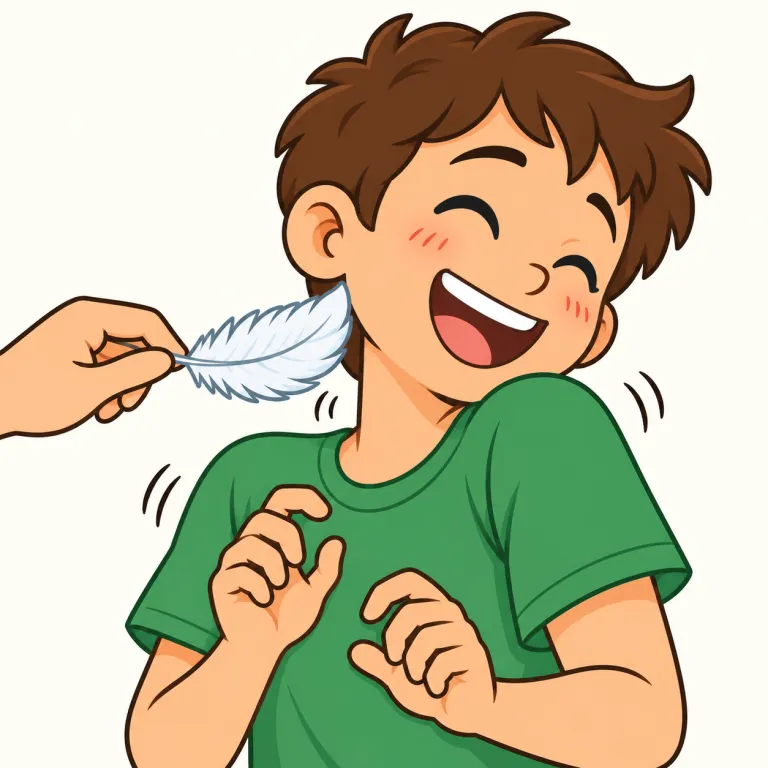
くすぐったい
解説 Definition
tickling は tickle(くすぐる、むずむずさせる)の現在分詞・動名詞です。体をくすぐる動作や、軽くむずむずする感覚を表すときに使います。
Tickling is the action of touching someone lightly in a way that causes involuntary laughter or a tingling sensation. It can also describe a light, irritating, or prickling feeling on the skin or inside the nose or throat.
覚え方のコツ Memory Tip
原形 tickle「くすぐる」の語末の e を落として -ing を付けた現在分詞・動名詞が tickling です。発音では tickle の /əl/ が保たれます。tickling someone's feet は意図的にくすぐる動作、a tickling sensation や something is tickling my nose は軽い接触によるむずむず感です。ticklish「くすぐったがりの」と対にして覚えましょう。
Link tickling to the base verb tickle. To form the -ing form, drop the final e and add -ing: tickle becomes tickling. The word covers both an action and a sensation. Tickling someone’s feet describes repeated light touches intended to cause laughter, while a feather tickling your neck or a tickling sensation in your nose describes a mild, irritating feeling. Compare ticklish, which describes a person or body part that reacts easily to this kind of touch.
例文
The feather is tickling my neck.
羽が首に当たってくすぐったいです。
Stop tickling your brother while he is eating.
弟が食べている間にくすぐるのはやめなさい。
I felt a tickling sensation in my nose.
鼻がむずむずする感じがしました。
tickling の類義語・関連語
tickling の語源・成り立ち Etymology
古ノルド語kitlaに由来し、中英語tikelenを経て定着。語根kitl-に状態接尾辞-ingが付いた構造だ。同語根のticklishと対照すれば、軽くて反復する接触が皮膚の微小な神経を揺さぶり、くすぐったさが生まれる理屈がわかる。
Tickling is formed from the verb tickle plus -ing, with the final silent e removed. Tickle comes through Middle English tikelen and is related to Old English tinclian and Middle Low German or other Germanic forms describing light touching. Some accounts also compare Old Norse kitla. Its long-standing central sense is producing a tingling or laughing response through repeated, gentle contact.
同じレベルの語彙をもっと
外部辞書で調べる
この英単語をクイズで覚えよう