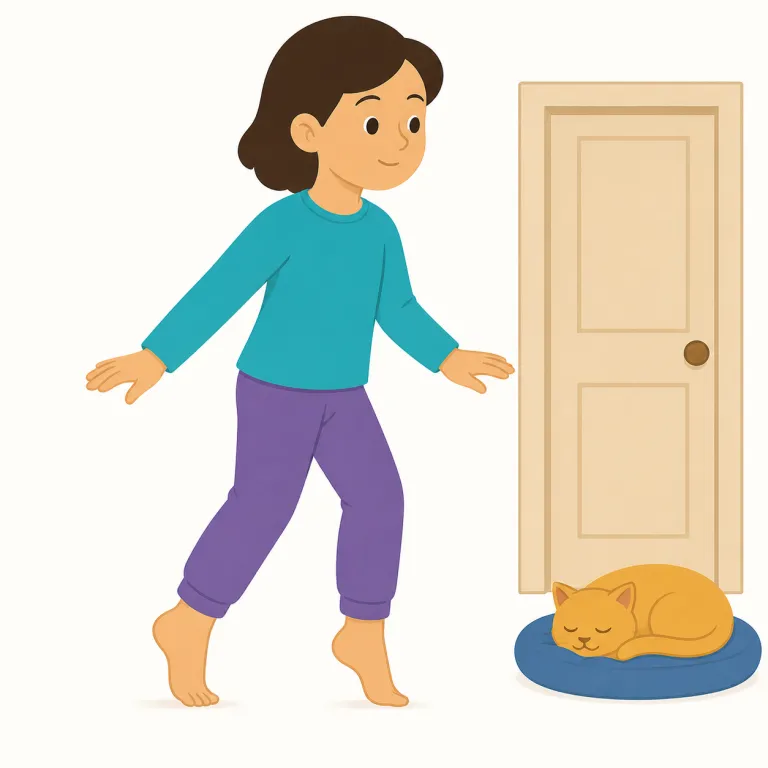
tiptoeing
tiptoeing はTOEIC 860・TOEFL 80・IELTS 6.5レベルの英単語で、「つま先歩き」という意味があります。発音記号は /ˈtɪpˌtoʊɪŋ/ です。
つま先歩き
解説 Definition
つま先だけで静かに歩くこと。物理的に足音を立てないように歩く、または比喩的に注意深く事柄に対処することを指します。
Tiptoeing is the action of walking on the front part of your feet with your heels raised. People do this to move quietly or carefully. The word can also suggest being cautious in a situation, though its basic meaning is physical movement.
覚え方のコツ Memory Tip
tiptoeing は tiptoe の -ing 形。まず tip「先端」と toe「つま先」が見えるので、語の形そのものが意味の手がかりになります。toe を含むので足先の感覚が強く、tiptoe で「つま先でそっと歩く」。普通の walk より足音を消す感じで、sneak ほど「こっそり隠れる」よりも「慎重に動く」ニュアンスが前に出やすい語です。そこから比喩的に「問題や相手に神経を使って扱う」にも広がるので、tiptoeing around the issue のような表現まで一緒に覚えると定着します。
The word shows its own meaning: `tip` + `toe` already gives the image of walking on your toes. Add `-ing`, and you get the action of moving quietly and carefully. It also extends into expressions like `tiptoeing around the issue`, where the idea is being cautious, not direct.
例文
His tiptoeing across the room made no sound.
彼が部屋を横切るときのつま先歩きは、まったく音を立てなかった。
Careful tiptoeing helped her avoid the broken glass.
慎重なつま先歩きのおかげで、彼女は割れたガラスを避けられた。
All that tiptoeing around the issue frustrated the committee.
その問題を腫れ物に触るように扱い続けたことで、委員会はいら立った。
tiptoeing の類義語・関連語
tiptoeing の語源・成り立ち Etymology
tiptoeingはtip「先端」+ toe「つま先」+ -ingから成る語です。tipは中英語、toeは古英語由来で、「足指の先でそっと進む」が原義なので、意味がそのまま動作の姿を描いています。fingertipやtiptopも同じtipの仲間です。
"Tiptoeing" comes from "tiptoe" plus the ending "-ing." "Tip" is from Middle English and suggests the pointed end of something, while "toe" comes from Old English. The combined form originally described moving on the tips of the toes, and the meaning stayed very close to that physical image. Related words include "fingertip" and "tiptop."
同じレベルの語彙をもっと
TOEIC 860の一覧へ →外部辞書で調べる
この英単語をクイズで覚えよう