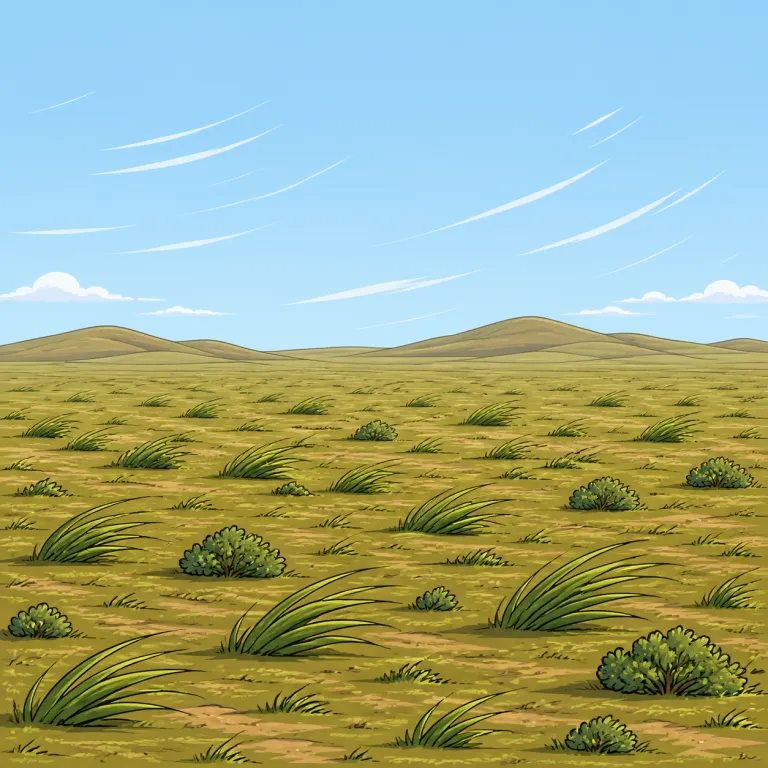
木のない
解説 Definition
樹木がない、または樹木が存在しない状態を表す形容詞です。草原や砂漠など、植生が限定された地形を説明するのに用いられます。
Treeless describes a place that has no trees or almost no trees. It is often used for land such as plains, hills, or cold northern areas. The word helps describe the natural appearance of a landscape.
覚え方のコツ Memory Tip
tree + -less とそのまま分解すると覚えやすい。-less は helpless, useless, homeless と同じ「〜がない」を作る頻出接尾辞で、名詞に付くと欠如を表す形容詞になる。だから treeless は「木が一本もないような景色」。a treeless plain, a treeless hill のように草原・丘・寒冷地の描写で出やすい。wooded や forested の反対に置くと定着しやすく、woodless よりも「木がない景色」には treeless が自然に使われやすい点にも注意。
This one is very clear: `tree` + `-less`. The suffix `-less` means "without," as in `homeless` or `helpless`. So if you remember those, `treeless` becomes easy to recognize in phrases like `a treeless plain`.
例文
The treeless landscape of the tundra stretches for miles.
ツンドラの木のない風景は何マイルも続いています。
The treeless plains provided little shelter from the wind.
木のない平原には、風を遮るものがほとんどありませんでした。
In the treeless region, shrubs were the primary vegetation.
木のない地域では、低木が主な植生でした。
treeless の類義語・関連語
派生語
紛らわしい語
treeless の語源・成り立ち Etymology
古英語 trēow「木」←ゲルマン祖語 *trewą に、古英語 -lēas 由来の接尾辞 -less「〜がない」が付いた語です。tree+-less で文字どおり「木なし」なので「木のない」。関連語に treehouse、treetop があり、核の意味がそのまま見えます。
Treeless is built in English from tree and the suffix -less. Tree comes from Old English treow, from an older Germanic root, while -less comes from Old English -leas, meaning "without." The word developed very directly from the idea of "without trees." Related English formations include treetop, treehouse, and countless other -less words.
同じレベルの語彙をもっと
外部辞書で調べる
この英単語をクイズで覚えよう