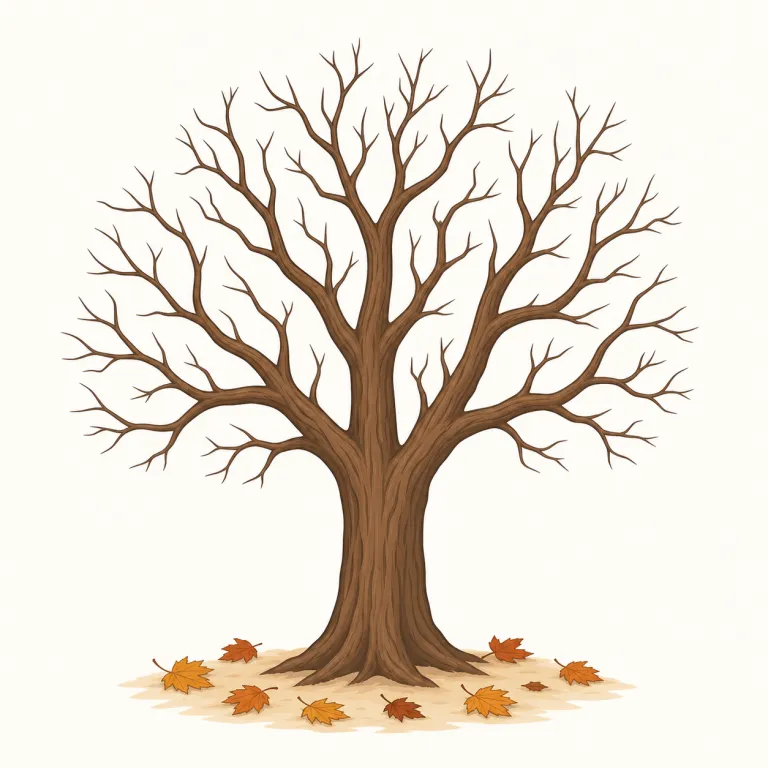
葉のない
解説 Definition
葉が全くない状態の、または自然的に葉を持たない。落葉時期の樹木や、先天的に葉がない植物。
Leafless means without leaves. It is usually used for trees or plants, especially in winter, in dry conditions, or after damage. The word simply describes appearance and does not always mean the plant is dead.
覚え方のコツ Memory Tip
leaf + -less で「葉がない」とそのまま分解すると覚えやすい。-less は homeless, careless, endless などの「〜がない」に広く出る型なので、この語だけでなく接尾辞ごと覚えると語彙が増やしやすい。leafy が「葉の茂った」なので、leafless と対にすると定着しやすい。leafless trees のように、冬の木や枝だけの景色を思い浮かべると意味がぶれにくい。tree がないのではなく、木はあるが葉だけがない状態。bare に近いが、leafless は特に“葉の不在”に焦点がある。
This one is very clear if you split it: `leaf` + `-less`. The suffix `-less` means "without," like in `homeless` or `careless`. Picture leafless trees in winter: the tree is still there, but the leaves are gone.
例文
In winter, many trees appear leafless against the cold sky.
冬には、多くの木々が寒空の下で葉を落とした姿に見える。
The leafless branches of the old oak tree created an eerie silhouette.
古いオークの葉のない枝が、不気味なシルエットを作り出していた。
Some desert plants are leafless to reduce water loss.
砂漠の一部の植物は、水分の損失を減らすために葉がない。
leafless の類義語・関連語
紛らわしい語
leafless の語源・成り立ち Etymology
leafless は Old English 由来の leaf「葉」に、接尾辞 -less「ない」が付いた形。意味は文字通り「葉がない」だが、冬木の裸の姿をそのまま語にしたような透明さがあり、一度分かると忘れにくい。leafy や endless も、同じ語根・接尾辞の働きを見せる。
Leafless is built from leaf and the suffix -less, meaning "without." Leaf comes from Old English, so the word is native English in form and structure. Its history is very direct: it simply meant "without leaves," especially of trees in winter. Related formations include leafy and endless.
同じレベルの英単語をもっと
外部辞書で調べる
この単語を英単語クイズで覚えよう