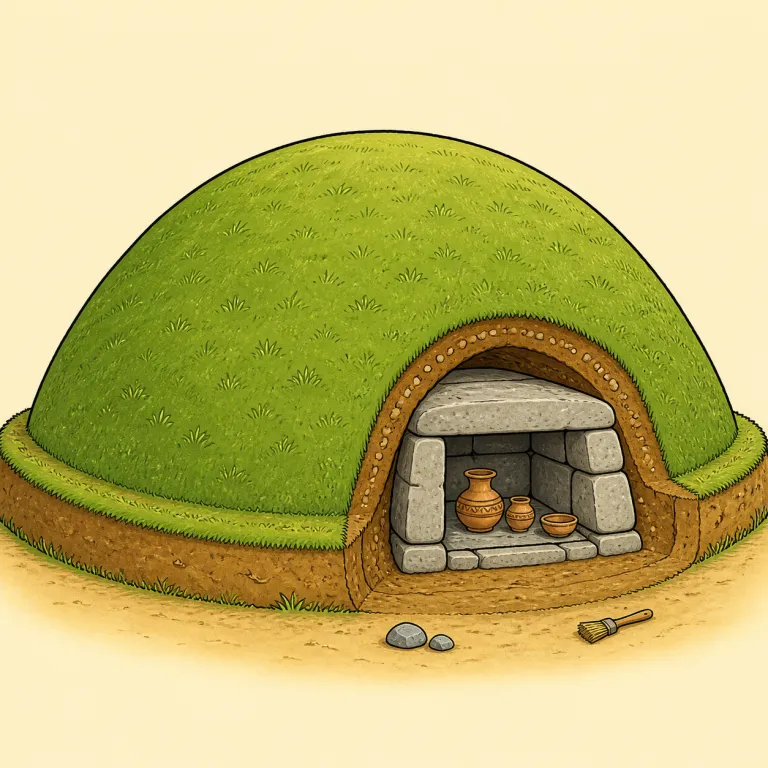
古墳
解説 Definition
古墳;古代の埋葬塚。先史時代の土塚。
A tumulus is a mound of earth or stones built over a grave. It is an archaeological or historical term often used for ancient burial sites. The word is formal and usually appears in history, museum, or academic contexts.
覚え方のコツ Memory Tip
まずはやさしい言い換えの `burial mound` を先に頭に置くと覚えやすいです。`burial` は埋葬、`mound` は土の盛り上がりなので、tumulus は「古代の墓そのもの」より「土を盛ってできた塚・古墳」という像で固定すると残ります。`tomb` が墓・墓室全般を指せるのに対し、tumulus は外から見える“盛り土の形”に意識がある語。考古学・歴史で `ancient tumulus` `burial site` と並びやすく、語尾の `-us` も学術的な名詞だと意識すると記憶に引っかかります。
A good memory hook is the easier phrase `burial mound`. `Tumulus` is a more formal, academic word for that same image, especially in archaeology or history. It points to the raised earth shape, so it is more specific than the general word `tomb`.
例文
The tumulus was constructed thousands of years ago.
古墳は数千年前に建設された。
Archaeological excavations revealed artifacts inside the tumulus.
考古学的な発掘により、古墳の内部から遺物が見つかった。
The tumulus served as a burial site for ancient people.
古墳は古代の人々の埋葬地として機能していた。
tumulus の類義語・関連語
紛らわしい語
tumulus の語源・成り立ち Etymology
tumulus はラテン語 tumulus「小高い丘・土盛り」に由来し、英語には「墓を覆う土の盛り上がり」として入った語です。土がこんもり盛られた形がそのまま「古墳」の意味になったと考えると分かりやすく、関連語に tomb、tumular があります。
"Tumulus" comes directly from Latin tumulus, meaning a mound or small hill. In English it was used especially for an earthen mound raised over a grave. The meaning stayed close to the original image of a heap of earth, then became a technical word in archaeology.
同じレベルの語彙をもっと
外部辞書で調べる
この英単語をクイズで覚えよう