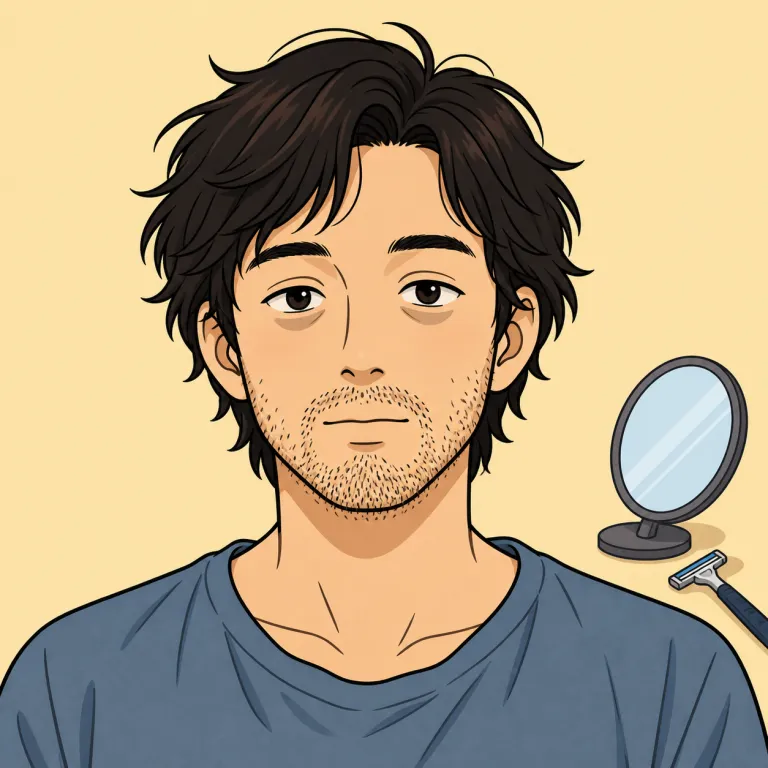
ひげを剃っていない、無精ひげの
解説 Definition
ひげをしばらく剃っておらず、あごや口元にひげが伸びている状態を表す形容詞。単に身だしなみが整っていない様子だけでなく、わざとラフで無骨な印象を出す見た目について使われることもある。
If a man is unshaven, he has hair on his face because he has not shaved recently. It often describes a rough, tired, or untidy appearance. The word is usually used for the face rather than for body hair in general.
覚え方のコツ Memory Tip
un- は unhappy などと同じ「〜でない」。shave(ひげを剃る)が分かれば、unshaven は「剃っていない」と直感しやすい。見た目では clean-shaven(きれいに剃った)との対比で覚えると定着する。an unshaven man, look unshaven の形で出やすく、単なる dirty ではなく「数日剃っていない顔」「少しラフで無骨な印象」に寄る語。bearded は「ひげがある」全般なので、無精ひげっぽさは unshaven。
If you know `shave`, this word is simple: `un-` + `shaven` means "not shaved." It is easy to remember beside `clean-shaven`, which is the neat opposite. `Bearded` just means having a beard, but `unshaven` gives the image of a few days without shaving.
例文
He showed up to the meeting unshaven, with dark circles under his eyes.
彼はひげを剃らないまま、目の下にくまを作って会議に現れた。
The detective noticed that the suspect was unshaven and appeared to have slept in his clothes.
刑事は、容疑者がひげを剃っておらず、服を着たまま寝たような様子であることに気づいた。
His deliberately unshaven look was part of his rugged, casual style.
あえて無精ひげを生やした彼の風貌は、無骨でカジュアルなスタイルの一部だった。
unshaven の類義語・関連語
unshaven の語源・成り立ち Etymology
unshaven は un-「〜でない」+ shave「剃る」+ -en(過去分詞形)から成り、shave は古英語 sceafan「削る・こそげる」に由来します。shave, shaving と同根で、「剃られていない」がそのまま「ひげを剃っていない、無精ひげの」の意味になりました。
Unshaven is formed from un- "not" and shaven, the past participle of shave. Shave goes back to Old English sceafan, meaning "to scrape" or "to shave." The word kept the simple idea of "not shaved," especially for a face with beard growth. Related words include shave and shaving.
同じレベルの語彙をもっと
外部辞書で調べる
この英単語をクイズで覚えよう