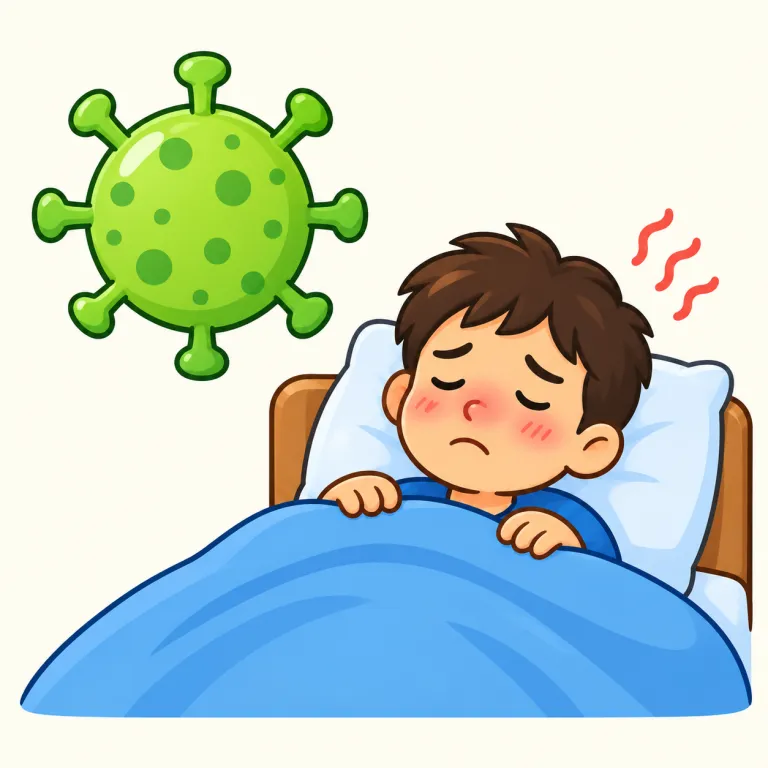
ウイルス
解説 Definition
virus は、病気を引き起こすことがあるウイルスという意味です。コンピューターに害を与えるプログラムを指す場合もありますが、ここでは主に医学・生物の意味で使います。
A virus is an extremely small infectious agent that reproduces only inside the living cells of an organism. It can cause illnesses in humans, other animals, plants, and microorganisms.
覚え方のコツ Memory Tip
日本語でも「ウイルス」と言うので、病気を起こし、人から人へ spread する微小な感染因子を思い浮かべます。viral infection(ウイルス感染)、catch a virus(ウイルスに感染する)の組み合わせで覚えましょう。細菌を指す bacterium とは別物です。
Connect virus with familiar combinations such as viral infection, catch a virus, and the virus spreads. Picture a doctor testing someone for a tiny infectious agent that can reproduce only after entering living cells. This distinguishes a virus from a bacterium: bacteria are cellular organisms, while viruses depend on host cells for reproduction. The adjective viral is especially useful because it appears frequently in medical expressions such as viral disease and viral transmission.
例文
The virus made many people sick.
そのウイルスで多くの人が体調を崩しました。
A doctor tested him for the virus.
医師は彼がそのウイルスに感染しているか検査しました。
This virus spreads easily in winter.
このウイルスは冬に広がりやすいです。
virus の類義語・関連語
virus の語源・成り立ち Etymology
ラテン語 vīrus(毒液、粘液)から。元は植物や蛇の毒を指した。印欧祖語 *weis-(流れる、溶ける)に遡り、サンスクリット語 viṣa(毒)と同根。関連語:virulent(猛毒の)、viral(ウイルス性の)。「有害な液体」が原義で、19世紀に病原体の意味を獲得した。
Virus comes from Latin vīrus, a word referring to poison, venom, or a harmful liquid. English initially used it for venomous or poisonous substances, and its scientific meaning developed as researchers investigated agents that caused infectious disease. By the late nineteenth century, virus was being applied to infectious agents that could pass through filters designed to trap bacteria. Viral and virulent belong to the same broader word history.
同じレベルの語彙をもっと
外部辞書で調べる
この英単語をクイズで覚えよう