締めつける力、圧迫
noun 名詞人や物を強く締めつける力、または逃げ場のない圧迫状態を比喩的に指します。in a viseやthe vise of ...の形で、苦痛・恐怖・経済的圧力などに挟まれて自由に動けない状況を表します。
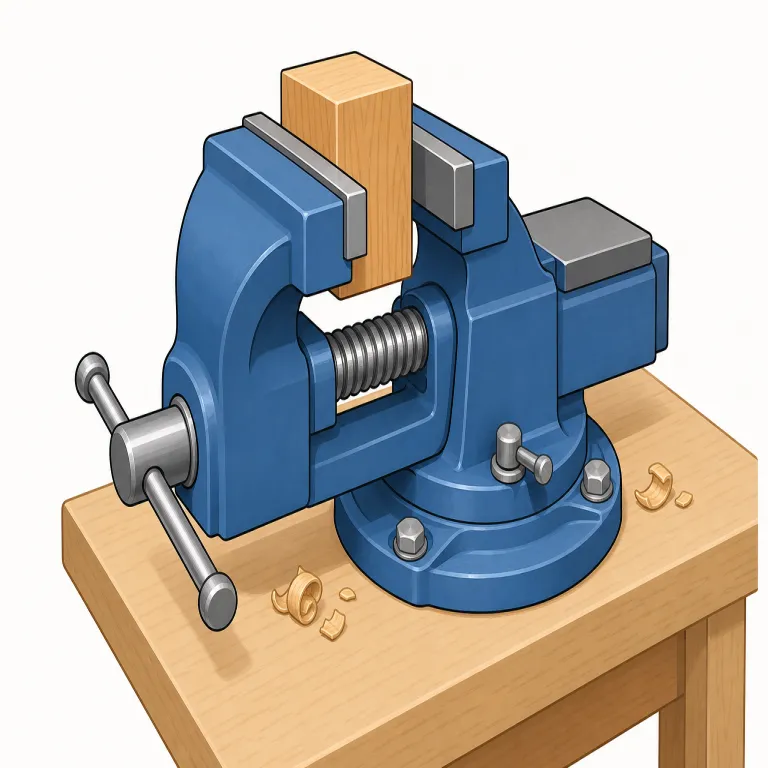
vise はTOEIC 860・TOEFL 80・IELTS 6.5レベルの英単語で、「万力」という意味があります。発音記号は /vaɪs/ です。
木や金属などの物を固定して作業するために使う道具です。スクリューバイスとも呼ばれ、ネジを回して物を挟み込みます。
A vise is a tool that holds an object tightly in place while you work on it. It is commonly used in workshops for cutting, shaping, or repairing materials.
覚えるときは「物をぎゅっと固定して、手を離しても作業できる道具」という場面で結びつける。metal や wood を hold したまま cut, drill, file したいときに使うのが a vise。ポイントは、手で持つのではなく screw を回して tighten し、動かないようにすること。bench vise, put it in a vise の形で覚えると実際の使用場面まで浮かぶ。つづりは米語で vise、英語圏では vice と書くこともあり、bad habit の vice と混同しない。
Think of a tool that holds something so tightly that your hands are free to work. A `vise` is used to grip wood or metal while you cut, drill, or file it. Remember common images like `bench vise` or `put it in a vise`.
He secured the wood in the vise before cutting it.
彼は切る前に木を万力で固定しました。
The machinist used a bench vise to hold the metal piece.
その機械工はベンチバイスを使って金属片を固定しました。
Tighten the vise to keep the workpiece stable.
万力を締めて加工物を安定させてください。
文脈によって、次の意味でも使われます。
人や物を強く締めつける力、または逃げ場のない圧迫状態を比喩的に指します。in a viseやthe vise of ...の形で、苦痛・恐怖・経済的圧力などに挟まれて自由に動けない状況を表します。
vise は古フランス語 vis「ねじ」から入り、さらにラテン語 vitis「つる」へさかのぼります。つるのように巻く・ねじれる感覚が核なので、ねじで締めて固定する万力の意味になり、関連語に vice(英綴)・viticulture があります。
Vise came from Old French vis, meaning "screw." That word goes back to Latin vitis, originally "vine," probably because of the twisting shape. From the idea of a screw that tightens and holds, English developed vise for the tool that grips something firmly. British English usually spells the tool vice.
この英単語をクイズで覚えよう