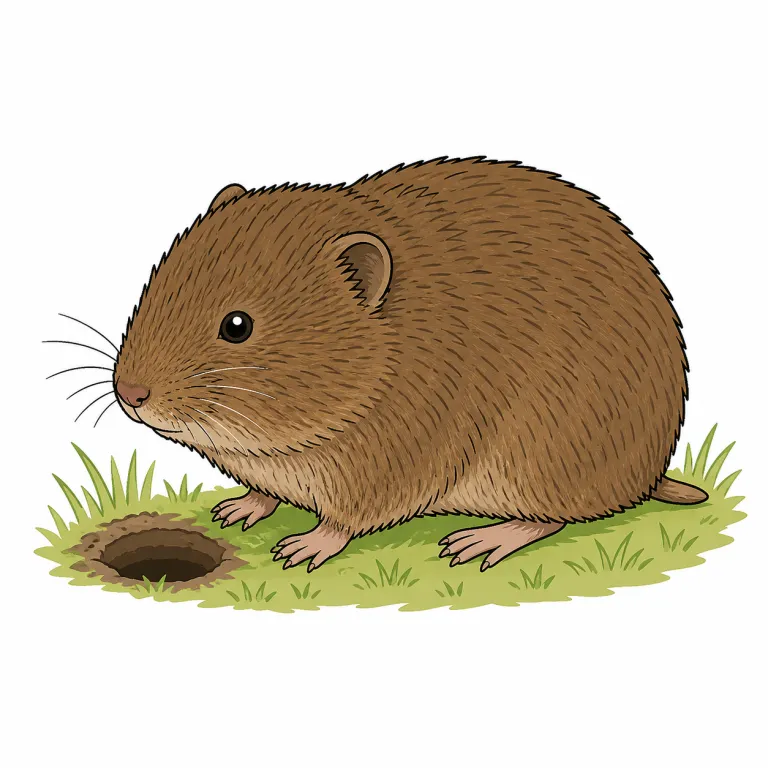
ハタネズミ
解説 Definition
野原や畑に生息する、ずんぐりした体と短い尾を持つ小型のネズミ類。
A small, stocky rodent that lives in fields and grassy areas. It usually has small ears and a much shorter tail than a typical mouse.
覚え方のコツ Memory Tip
vole は野原や畑の草むらを走る、丸みのある小さな「ハタネズミ」です。一般的な mouse より、ずんぐりした体、小さな耳、短い尾を目印にして姿を固定すると見分けやすくなります。地下にトンネルを掘る mole「モグラ」と綴りが一字違いなので、V字に分かれた畑の草の間を vole が走り、mole は土の下にいる、と対照させると混同しにくいです。a vole in the grass、an owl caught a vole、voles damage plants の三場面で、草地にすみ、猛禽に捕らえられ、庭の植物もかじる動物として覚えると定着します。
Picture a vole running through the V-shaped gap between two clumps of field grass. Its round body and short tail distinguish it from a mouse, while the similar-looking mole stays underground.
例文
A vole ran across the field.
一匹のハタネズミが野原を走り抜けました。
The owl caught a vole in the grass.
フクロウが草むらでハタネズミを捕まえました。
Voles sometimes damage plants in gardens.
ハタネズミは庭の植物を傷めることがあります。
vole の類義語・関連語
紛らわしい語
vole の語源・成り立ち Etymology
vole はもと Orkney 方言の vole-mouse から縮まった語で、先頭の vole は古ノルド語 vǫllr「野・原」に由来します。つまり本来は「野のネズミ」で、野原にすむ小型げっ歯類の名になったわけです。関連語は wold, weald。
The word was apparently shortened from vole-mouse, a term associated with Orkney dialect. Its first element may come from Old Norse vǫllr, meaning “field” or “open ground,” suggesting the image of a field mouse.
同じレベルの語彙をもっと
外部辞書で調べる
この英単語をクイズで覚えよう