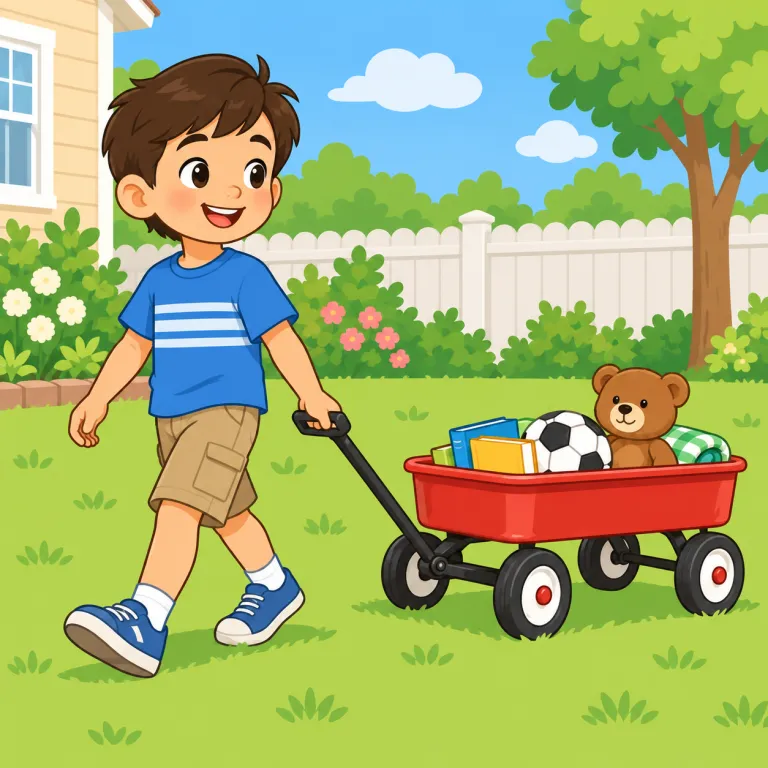
ワゴン
解説 Definition
wagon は、荷物や人を運ぶための車、台車、ワゴンという意味です。子ども用の手押し車や、昔の馬車のような乗り物にも使われます。日本語の「ワゴン」よりも、乗り物や運搬用の車という意味が広く出ます。
A wagon is a vehicle with four wheels used for carrying goods or people, often pulled by an animal, a person, or another vehicle. The word can also refer to a small wheeled cart used by children or for moving items.
覚え方のコツ Memory Tip
日本語の「ワゴン」より広く、車輪付きの荷車や子どもが引く小型車、馬に引かせる大型車を指します。pull a wagon、load boxes into a wagon の組み合わせで、「物や人を載せて運ぶ車」と覚えましょう。自動車の station wagon だけに限定しないのがポイントです。
Think of a wagon as a wheeled carrier. A child can pull a little red wagon, boxes can be loaded into a utility wagon, and horses historically pulled large wagons. This gives the English word a wider range than the Japanese loanword ワゴン, which may strongly suggest a particular kind of car or sales cart. Learn the useful combinations pull a wagon, load a wagon, and wagon train. A station wagon is only one special type; the basic image is any sturdy wheeled vehicle used to carry people or things.
例文
The child pulled a red wagon.
その子どもは赤いワゴンを引いていました。
We put the boxes in the wagon.
私たちは箱をワゴンに載せました。
A small wagon carried tools across the yard.
小さなワゴンが庭の向こうへ道具を運びました。
wagon の類義語・関連語
wagon の語源・成り立ち Etymology
wagon は中期オランダ語 wagen から英語に入り、さらにゲルマン祖語 *wagnaz、印欧祖語 *wegh-「運ぶ・動かす」へさかのぼります。核にあるのは『物を運ぶもの』という発想で、だから荷車やワゴンの意味になるわけです。wain や vehicle も遠く同じ“運ぶ”系列です。
Wagon entered English from Middle Dutch wagen and belongs to a Germanic group of words for wheeled vehicles. It can be traced to Proto-Germanic wagnaz and ultimately to the Indo-European root wegh-, “to carry, convey, or move.” That underlying idea explains the word’s central meaning: something on wheels that transports a load. English wain is a related inherited word, while vehicle descends from a different branch of the same ancient root.
同じレベルの語彙をもっと
外部辞書で調べる
この英単語をクイズで覚えよう