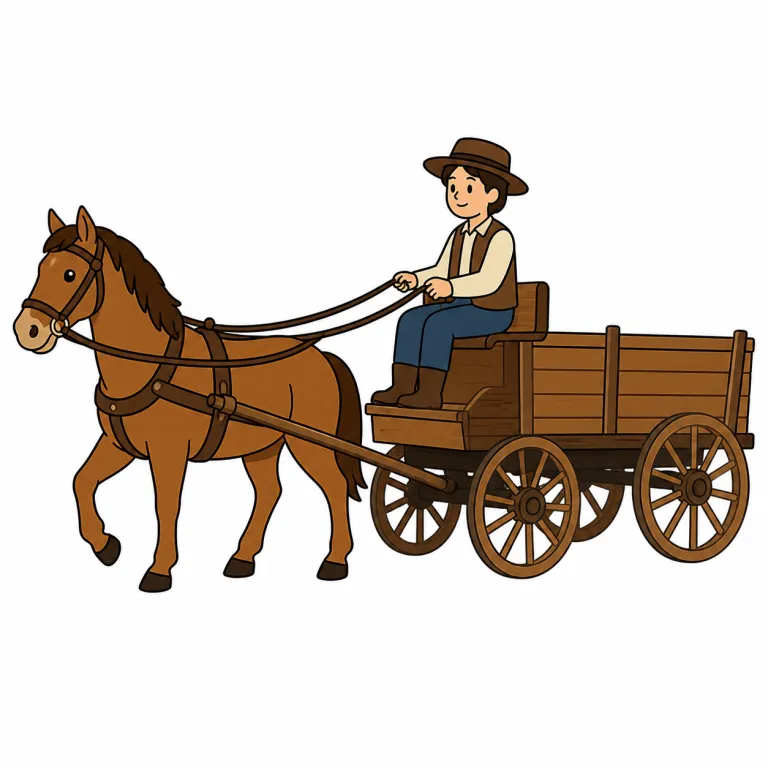
馬車乗り
解説 Definition
馬車を操る人。荷馬車の御者として働く職業。
A wagoner is a person who drives or works with a wagon, especially one pulled by horses or other animals. The word is mostly historical and is used when talking about older times, travel, or transport. In modern English, it is not very common.
覚え方のコツ Memory Tip
まず wagon が「荷馬車・ワゴン車」だと分かれば、-er は「〜する人」なので wagoner は直感的に「ワゴンを扱う人」。driver の古い時代版と捉えると覚えやすいです。ride する客ではなく、運ぶ側・操る側なのがポイント。意味は現代の car driver よりも、荷を載せて道を進む wagon の御者という場面で固定すると残ります。wagon train や horse-drawn wagon の情景と結びつけると忘れにくく、warrior のような人名風の語感と混同しないよう注意。
Break it into `wagon + -er`. The ending `-er` often means a person who does something, so a `wagoner` is the person working with the wagon, not a passenger. Think of an old-time driver with a horse-drawn wagon.
例文
The wagoner guided his horses carefully along the muddy mountain road.
馬車乗りは、ぬかるんだ山道で馬を慎重に御しました。
In the 19th century, a wagoner could earn a modest living hauling goods between towns.
19世紀には、馬車乗りは町の間で荷物を運んでささやかな生計を立てることができました。
The old wagoner shared stories of his travels across the frontier.
年老いた馬車乗りは、辺境地帯を旅した話を語りました。
wagoner の類義語・関連語
類義語
対義語
wagoner の語源・成り立ち Etymology
wagoner は wagon「荷馬車」に -er「…する人」が付いた語で、wagon は中世オランダ語 wagen、さらにゲルマン祖語へさかのぼる。語根は「乗り物で運ぶ」を表す *wegh- で、way や wain と同根だから、“道を進みつつ運ぶ人”という像が見える。
"Wagoner" comes from "wagon" plus the suffix -er, meaning a person connected with something. "Wagon" came into English from Middle Dutch "wagen" and goes back to an older Germanic root also seen in words like "wain" and related to "way." The history suggests the idea of someone who carries goods along a road in a vehicle.
同じレベルの語彙をもっと
外部辞書で調べる
この英単語をクイズで覚えよう